.webp?width=1280&height=541&name=Blog%20Template%20-%20V1%20-%20Repetitive%20Pattern%20(11).webp)
 Retention & Engagement

An integrated talent management model connects the decisions you make about hiring, onboarding, performance, learning, internal mobility, retention, and succession.
The model works when each talent process feeds the next. Hiring reflects the skills the business needs. Onboarding turns role expectations into a development path. Performance feedback informs learning. Learning builds readiness. Mobility gives employees a way to grow. Succession planning shows where the business has bench strength and where it has risk.
The real test is whether your talent data is trusted enough to support those decisions. Many HR teams already have data spread across an HCM, ATS, LMS, performance system, engagement platform, and spreadsheets. The problem is that the data often does not share one skills language, one view of readiness, or one way to connect people to future work.
That is where integrated talent management becomes more than a lifecycle diagram. It becomes an operating model for building, moving, and retaining talent around the skills your business needs next.
What is integrated talent management?
Integrated talent management is a connected approach to attracting, developing, engaging, moving, and retaining people. It brings the main talent processes together so they support the same business goals and use the same workforce data.
The CIPD describes talent management as the systematic attraction, identification, development, engagement, retention, and deployment of people who are valuable to the organization. An integrated model turns that idea into a practical system where each process shares data, triggers action, and improves the next decision.
If your workforce plan shows a future need for data analysis skills, that signal should influence hiring, learning, career pathing, gigs, and succession. Recruiting should know whether internal employees could grow into those roles. Learning should know which skills to build. Managers should know which employees are close to ready. Employees should see the paths and development actions that make those moves possible.
Without integration, every team works from a different version of the truth. With integration, the same skills data helps HR, managers, employees, and business leaders make better decisions.
Why integrated talent management matters now
Talent management used to be easier to separate into programs. Recruiting found people. Learning trained them. Performance reviewed them. Succession planned for leadership roles.
That split does not work well when skills are changing quickly and work keeps shifting across teams. The World Economic Forum's Future of Jobs Report 2025 says technological change, economic uncertainty, demographic shifts, and the green transition are expected to transform the labor market by 2030. The same report is based on more than 1,000 employers representing over 14 million workers.
That level of change puts pressure on HR to answer harder questions. Which skills do you already have? Which roles are becoming more critical? Where are you hiring externally because you failed to build readiness internally? Which succession plans are based on evidence rather than familiarity?
You cannot answer those questions with a disconnected talent stack. You need a shared view of skills, roles, aspirations, performance signals, learning activity, internal opportunities, and succession readiness.
Integrated talent management model vs traditional talent management model
| Traditional talent management model | Integrated talent management model |
|---|---|
| Each HR function runs its own process. | Each talent process shares workforce, skills, and readiness data. |
| Hiring starts when a role opens. | Hiring starts with workforce demand, internal supply, and skill gaps. |
| Onboarding focuses on admin, compliance, and role setup. | Onboarding connects new hires to skills, expectations, development, and future paths. |
| Performance reviews document past work. | Performance signals inform development, mobility, and succession decisions. |
| Learning is measured by participation and course completion. | Learning is measured by skill growth, readiness, mobility, and business impact. |
| Internal mobility depends on visibility, manager support, or employee self-advocacy. | Internal mobility uses skills, aspirations, and opportunity data to surface better matches. |
| Succession planning happens through annual reviews and leadership nomination. | Succession planning uses live skills, mobility, learning, performance, and aspiration signals. |
The traditional model can still run programs. The integrated model helps you understand whether those programs are building the workforce the business needs.
The 7 components of an integrated talent management framework
A strong integrated talent management framework should cover seven connected components.
1. Workforce planning
Workforce planning is where the model starts because it defines what the business needs.
You need to know which roles are critical, which capabilities are becoming more important, where demand is rising, and where the organization has weak bench strength. That work should connect to a clear view of current workforce skills through a live skills inventory.
If your planning process only looks at headcount, you may miss the most important question. The issue is often capability, not capacity. You may have enough people and still lack the skills needed for a transformation, product launch, market shift, or leadership transition.
Connecting workforce planning to skills intelligence lets leaders see current capability, future gaps, and internal supply before they make hiring or restructuring decisions.
2. Talent acquisition
In many organizations, hiring starts too late. A manager opens a role, recruiting searches externally, and internal candidates are only considered if someone already knows them. That creates avoidable external hiring, longer ramp time, and frustration for employees who wanted a path forward.
Integrated talent acquisition starts with internal awareness. Before you open a role externally, you should know who inside the organization has adjacent skills, who could be ready with targeted development, and whether the role reflects a repeated gap that learning or mobility should address.
When talent acquisition connects to skills gap data and internal talent visibility, the hiring question changes. You stop asking only who you can hire and also ask who you can grow, move, or stretch into the work. That shift can reduce the cost of external hiring significantly.
3. Onboarding
Most onboarding programs cover paperwork, systems access, policy training, and introductions. Those steps matter, but they do not tell a new hire how to succeed, what skills they need, or where the role can take them.
Integrated onboarding connects the employee to role expectations, required skills, development actions, and manager support from the start. It also gives HR and managers early signals about ramp speed, skill confidence, and development needs.
The practical questions a better onboarding handoff answers include what skills you hired the person for, what skills need to grow in the first six months, which goals the manager should reinforce, which learning or mentors could help the person build context faster, and which future roles this person could grow toward.
When onboarding connects to talent development and career pathing, the employee does not have to wait a year to understand how growth works.
4. Performance management
Reviews often become isolated events. Managers give feedback, employees receive ratings, and HR collects completion data. The organization may know that reviews happened, but it may learn very little about capability.
In an integrated model, performance data becomes a signal. It shows where someone is strong, where expectations were unclear, which skills need development, and whether someone may be ready for a stretch role or succession path.
Feedback should inform learning plans. Goals should connect to role skills. Strong performance should open visibility into mobility opportunities. Repeated performance gaps should help HR see whether the issue is skill, manager support, job fit, or unclear expectations.
A performance process that stops at documentation is not integrated. A performance process that triggers development and movement is.
5. Learning and development
Many L&D teams are under pressure to show engagement with learning platforms. Course completions and attendance are easy to track, but they do not prove the organization is building the skills it needs.
Integrated learning starts from business demand and employee growth. It uses performance feedback, workforce planning, role requirements, and career aspirations to recommend development that has a reason behind it. An employee can see which skill matters for a target role. A manager can coach against the same skill. HR can see whether learning is improving readiness. Leaders can see whether repeated external hiring points to a build-versus-buy problem.
Talent gap analysis should connect directly to L&D. If the same gap keeps showing up in hiring, performance, and succession planning, learning needs to address it with more precision. Learning agility becomes the bridge between skills visibility and real capability growth.
6. Career pathing and internal mobility
Career pathing shows employees where they can grow. Internal mobility helps them move. Together they turn skills data into opportunity, and without them, employees may complete learning, receive positive feedback, and still see no path forward.
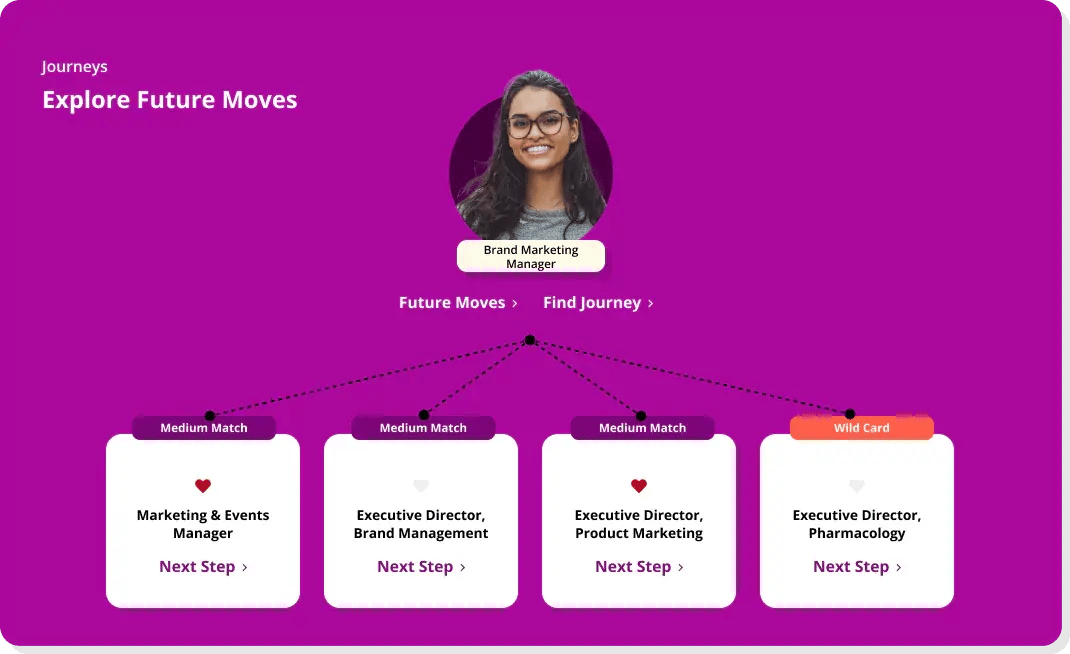
A good talent mobility model helps employees understand which roles, projects, gigs, mentors, and learning opportunities match their skills and aspirations. It also helps managers see talent beyond their own teams.
Many internal labor markets are blocked by low visibility. Employees do not know what is available. Hiring managers do not know who is ready. Managers may hold onto strong people because internal movement feels risky. These are well-documented barriers to internal mobility that integration helps reduce by making skills, aspirations, and opportunities more transparent.
7. Succession planning
A narrow succession process usually focuses on senior leaders and annual nomination. That leaves too much hidden. It may miss rising employees, adjacent skills, and readiness signals from gigs, learning, mentoring, career interests, and performance trends.
Integrated succession planning uses more evidence. It looks at skills, aspirations, development progress, performance, mobility history, and critical-role requirements. It also connects back to workforce planning so leaders can see where the organization needs to build deeper pipelines.
Critical technical roles, frontline leadership, scarce skills, and transformation roles all need pipeline visibility. Succession planning that depends on memory and personal visibility will always undercount the people who are proving readiness through movement and development.
The data handoffs that make talent management truly integrated
Integration is not the number of HR modules you own. It is the quality of the handoffs between them.
Gartner recommends building an integrated talent management operating model by linking interrelated processes and mapping the data inputs and outputs between them. The model only works when the right data moves at the right time.
| Talent handoff | What should flow | What breaks when it does not |
|---|---|---|
| Workforce planning to hiring | Future skill gaps, critical roles, internal supply, build-versus-buy decisions | Recruiting fills roles externally without knowing whether internal talent could grow into them. |
| Hiring to onboarding | Role expectations, skills hired for, early development needs, manager context | New hires complete admin tasks but do not get a clear growth path. |
| Onboarding to performance | Ramp goals, early skill confidence, manager observations, support needs | Performance reviews happen without context from the employee's first months. |
| Performance to learning | Skill gaps, strengths, feedback themes, readiness blockers | Learning becomes generic and disconnected from real capability gaps. |
| Learning to mobility | New skills, development actions, completed learning, career interests | Employees build skills but do not see roles, gigs, or projects where they can use them. |
| Mobility to succession | Stretch experience, role exposure, aspirations, demonstrated adjacent skills | Succession planning misses people who are proving readiness through movement. |
| Succession to workforce planning | Bench strength, critical-role risk, repeated readiness gaps, pipeline depth | Leaders plan headcount without seeing where the business is exposed. |
Most articles on this topic explain the lifecycle. The operating logic behind the lifecycle is where integrated models succeed or fail, and it comes down to whether each handoff carries the right data forward.
What should an integrated talent management system include?
An integrated talent management system should connect the data and workflows that shape talent decisions.
The foundation starts with a shared skills framework that gives hiring, learning, mobility, performance, and succession the same language. A skills taxonomy helps, but it needs clear definitions, proficiency levels, and governance. The system should also include skills architecture that connects skills to roles, job families, career paths, and future workforce needs, turning a skills list into a structure people can use.
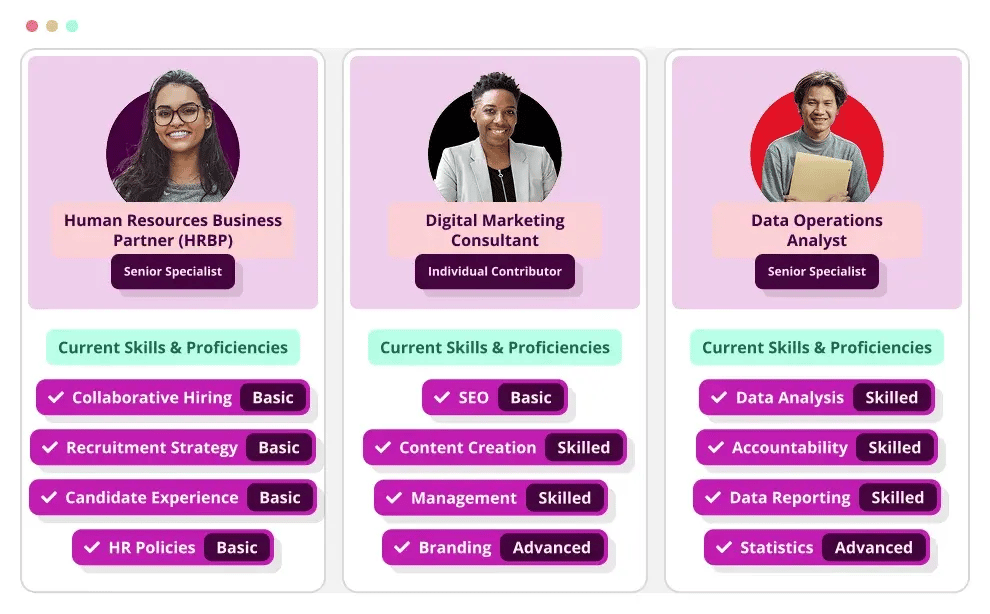
Leaders also need a current view of workforce capability through a skills inventory that shows what skills exist, where gaps sit, and how capability changes over time. On the employee side, clear career pathing makes growth less abstract, while internal mobility tools connect people to roles, gigs, projects, mentors, and learning.
Learning should connect to skill gaps, role requirements, and career goals, and send updated development data back into the talent profile. Performance data should help identify strengths, gaps, goals, and readiness signals rather than sitting in a separate review system with no connection to growth. Succession should use current skills, mobility, performance, aspiration, and development data to give leaders a deeper view of bench strength.
Workforce analytics tie it together. Talent insights help connect talent actions to business outcomes so leaders can see trends, gaps, readiness, mobility, and retention in context.
If AI is involved in matching, recommendations, mobility, or succession, the system needs explainable logic, human oversight, data controls, and bias checks. The EU AI Act treats many AI systems used in employment and worker management as high risk, including systems used for recruitment, candidate evaluation, promotion, task allocation, and performance monitoring.
Why HCM data alone is not enough
Your HCM is still important. It holds employee records, job history, manager relationships, payroll, benefits, and organizational structure.
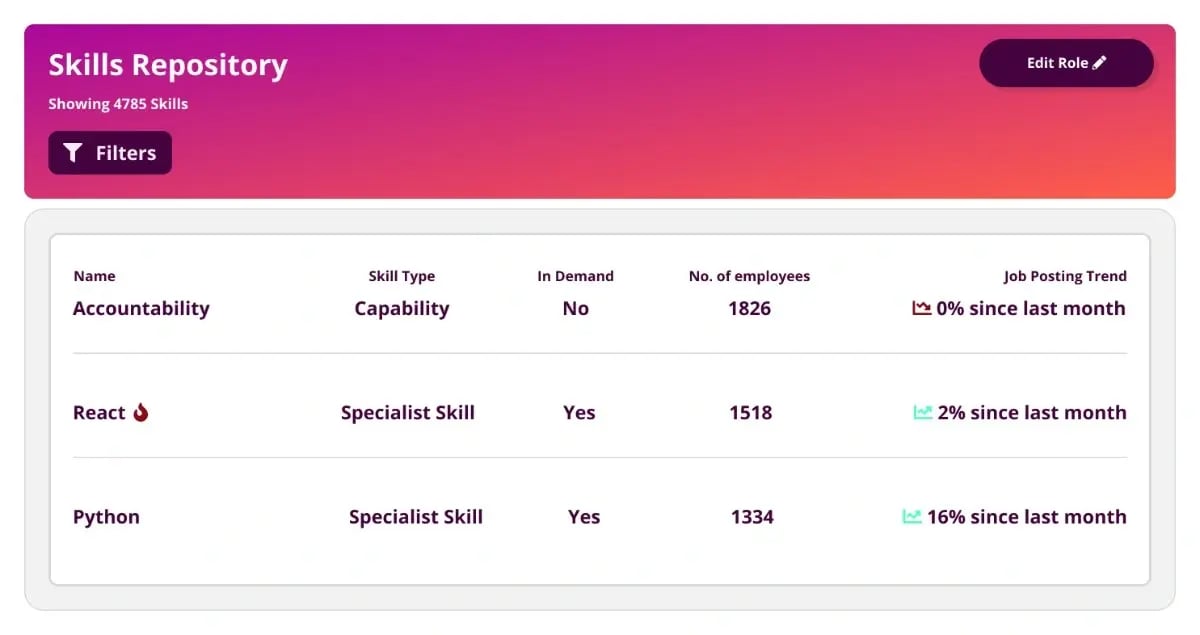
The issue is that HCM data often was not designed to answer deeper workforce questions. Who has adjacent skills for a future role? Which employees want to move? Which proficiency levels are strong enough for succession? Which learning actions are changing readiness? Which teams have hidden capability? Which gaps keep forcing external hiring?
Those questions need trusted skills data, career signals, mobility activity, and a way to connect talent processes. A skills ontology gives skills clearer structure by defining them, connecting them to roles, and supporting more consistent decisions across development, mobility, and succession.
Common mistakes that weaken integrated talent management
Mistake 1. Treating integration as software consolidation
A single suite does not guarantee integrated talent management. You can own one system and still have disconnected decisions.
The better question is whether the system connects the decisions that matter. Can hiring see internal readiness? Can learning respond to skill gaps? Can performance trigger development? Can mobility inform succession? Can leaders see whether talent programs change outcomes?
Mistake 2. Using skills data that no one trusts
Skills data can look useful in a dashboard and still fail in real decisions.
If skills are self-reported, poorly defined, or disconnected from proficiency, leaders may hesitate to use them for mobility, succession, or workforce planning. Employees may also distrust recommendations if they do not understand why a role or learning path appears. A useful model needs skills data that is clear, current, and explainable.
Mistake 3. Measuring activity instead of movement
Course completions, review submissions, and profile updates are useful signals, but they do not prove the model is working.
You need to measure movement. Are employees growing into new roles? Are internal fill rates improving? Are skill gaps closing? Is bench strength deeper? Are people staying longer because they see a future inside the business? Tracking skills ROI at this level separates reporting from insight.
Mistake 4. Leaving managers outside the model
Managers shape whether integrated talent management works. They coach employees, approve movement, reinforce learning, and identify readiness.
If managers do not have visibility into skills, career paths, and internal opportunities, the model stays theoretical. A good system helps managers support growth without relying on memory, bias, or manual work.
Mistake 5. Making succession too narrow
Succession planning should cover more than a small group of senior roles. Critical roles exist across the business, especially in regulated, technical, operational, and transformation-heavy environments.
A stronger model looks at leadership pipelines, scarce skills, technical depth, and roles that would create business risk if left uncovered.
How Fuel50 supports integrated talent management
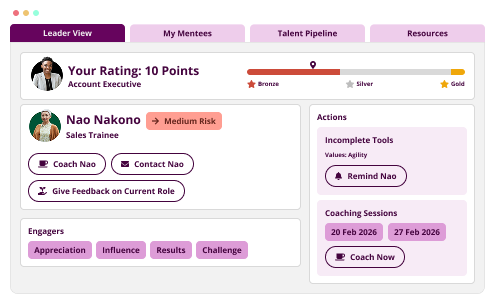
Fuel50 helps organizations connect skills data to real talent movement. The platform brings together skills intelligence, a governed skills ontology, skills architecture, and a live skills inventory so leaders can see current capability, future gaps, and internal supply in one place.
That foundation becomes useful when people can act on it. Fuel50's talent marketplace and mobility tools connect employees to roles, gigs, mentors, learning, and career paths. Succession helps leaders build stronger pipelines for critical roles. Insights connect skill gaps, workforce trends, and talent outcomes.
.png?width=2140&height=1308&name=2026%20Skills%20Pipline%20-%20Matrix%20(1).png)
Integration fails when the skills foundation and employee experience sit apart from each other. A taxonomy that no one uses becomes a database. A marketplace without trusted skills data becomes a feed of opportunities people may not trust. Fuel50 brings skills data and employee engagement together so skills data improves through use, and recommendations improve as the data matures. The platform's people science approach, built around skills, motivations, aspirations, and career drivers, helps recommendations feel more relevant to employees and more defensible to HR.
Customer outcomes show what happens when skills visibility becomes actionable. Lennox tracked about 4,800 internal moves through Fuel50 and found that each move added an average of five months of tenure, adding up to more than 2,000 years of retained institutional knowledge. KeyBank assessed more than 9,800 skills across the workforce, with 72% of users returning regularly.
How to measure integrated talent management success
Measure integrated talent management by whether people and skills are moving in the direction the business needs.
Internal fill rate and time to fill show whether the organization is building its own talent or defaulting to external hiring. Lateral movement and promotion readiness show whether employees see and reach growth paths. Succession bench strength shows whether critical-role pipelines are getting deeper or staying thin. Skill gap closure and learning-to-mobility conversion show whether development is changing capability in ways that lead to action.
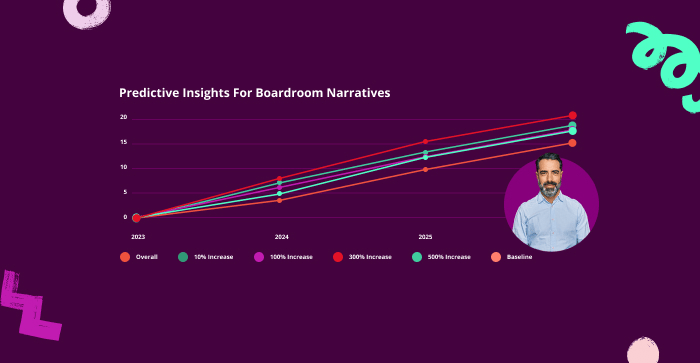
Participation in gigs, mentoring, and career paths shows whether employees are engaging with the model. Retention by role, team, or critical skill group shows whether growth opportunities are reducing unwanted attrition. Manager participation in development conversations shows whether the model has moved beyond HR and into the daily work of leading people.
The strongest metrics connect talent activity to business outcomes. If learning increases but readiness does not improve, the system is still weak. If employees complete profiles but never move, the marketplace is not working. If succession plans exist but critical roles remain exposed, the model is not giving leaders enough evidence.
A mature model helps you see the full loop: where a gap appeared, what action was taken, who developed, who moved, and whether the business risk went down. If you can trace that loop for a critical role, you are past the lifecycle diagram and into the operating model that makes integrated talent management worth the work.
FAQs about integrated talent management
What is integrated talent management?
Integrated talent management is a connected approach to planning, hiring, onboarding, developing, moving, and retaining employees. It links talent processes through shared workforce data, especially skills, roles, aspirations, performance, learning, mobility, and succession data.
What are the main components of an integrated talent management model?
The main components are workforce planning, talent acquisition, onboarding, performance management, learning and development, career pathing, internal mobility, and succession planning. Workforce analytics and governance should support the full model.
What is the difference between a talent management model and a talent management framework?
A talent management model explains how the main talent processes fit together. A talent management framework gives you the structure, data, roles, metrics, and governance needed to run the model in practice.
What is an integrated talent management system?
An integrated talent management system connects HR data, skills data, learning, performance, career pathing, mobility, and succession planning. It helps HR, managers, employees, and leaders make decisions from shared information.
How do talent management systems integrate with learning and performance systems?
They connect performance feedback to skill gaps, then use those gaps to recommend learning, mentoring, gigs, or development actions. As employees build skills, that progress can inform mobility, career pathing, and succession.
How does integrated talent management improve retention?
Integrated talent management improves retention by helping employees see a future inside the organization. When people can see career paths, understand the skills they need, and access internal opportunities, they have more reason to stay and grow.
Why does skills data matter in integrated talent management?
Skills data gives the model a shared foundation. It helps leaders see capability, identify gaps, match people to opportunities, target learning, and plan succession. The data needs clear definitions, proficiency levels, role connections, and governance so people can trust it.
How do you keep data consistent across interconnected talent systems?
Start with one shared skills language. Connect roles, learning, performance, mobility, and succession to the same skills framework. Then use governance to keep definitions, proficiency levels, and role mappings current as work changes.
How do you know if your talent management model is working?
You know the model is working when skills are becoming more visible, learning is closing real gaps, internal movement is increasing, succession pipelines are stronger, and employees are staying because they can see growth inside the business.
Related reading
Explore more Fuel50 resources on making skills data actionable, skills intelligence, skills taxonomies, skills inventories, talent gap analysis, skills-based organizations, internal mobility best practices, and fixing internal mobility.
Close skill gaps, strengthen internal mobility, and build stronger succession pipelines with Fuel50. Talk to Sales.
.webp?width=359&height=260&name=Blog%20Template%20-%20V1%20-%20Repetitive%20Pattern%20(37).webp)
.webp?width=359&height=260&name=Blog%20Template%20-%20V1%20-%20Repetitive%20Pattern%20(26).webp)
.webp?width=359&height=260&name=Blog%20Template%20-%20V1%20-%20Repetitive%20Pattern%20(38).webp)
.webp?width=359&height=260&name=Blog%20Template%20-%20V1%20-%20Repetitive%20Pattern%20(35).webp)