
.webp?width=1280&height=541&name=Blog%20Template%20-%20V1%20-%20Repetitive%20Pattern%20(36).webp)
 Workforce Agility

Technical skills show whether someone can complete a task. Soft skills show whether they can apply that ability with judgment, clarity, and context.
You need both to build strong teams. A person can know the tool, pass the test, and still struggle to move work forward if they cannot communicate, adapt, collaborate, or handle feedback. A strong communicator still needs the technical ability required for the role.
For organizations, the bigger issue is trust. A skills-based workforce needs more than a list of the skills that are easiest to measure. You need a clear view of technical skills and soft skills, with enough context to make real talent decisions.
What is the difference between technical skills and soft skills?
Technical skills are job-specific abilities that help someone complete a task, use a tool, or apply specialized knowledge. Examples include coding, data analysis, financial modeling, machinery operation, cybersecurity, and using enterprise systems like Salesforce, Workday, or Tableau.
Soft skills are transferable behaviors that shape how someone works with others. Examples include communication, adaptability, emotional intelligence, collaboration, feedback, critical thinking, and problem-solving.
Technical skills show what someone can do. Soft skills show how effectively they can apply that ability in real work.
| Area | Technical skills | Soft skills |
|---|---|---|
| What they show | Task ability | Work behavior |
| How they are learned | Training, education, practice, and certifications | Feedback, coaching, experience, and reflection |
| How they are measured | Tests, credentials, work samples, and assessments | Observed behavior, feedback, outcomes, and team impact |
| How long they last | Often shorter because tools and systems change | Often longer because they transfer across roles |
| Where they apply | Usually tied to a role, function, or domain | Often useful across roles, teams, and industries |
| Business risk when missing | Work quality suffers or the task cannot be completed | Work slows down, collaboration breaks, and execution gets harder |
Technical skills examples
Technical skills are the abilities tied to a specific type of work. They are usually easier to test because they produce a visible output.
Common examples include:
- Programming languages such as Python, Java, or SQL
- Data analysis, reporting, and dashboard building
- Financial modeling and forecasting
- Cybersecurity and risk management
- Machine operation and maintenance
- Clinical or regulatory knowledge
- Project management software
- CRM, HRIS, ATS, or LMS platforms
- AI literacy and prompt design
- Cloud architecture and systems integration
Technical skills matter because they prove someone can perform the work required for a role. You cannot hire a data analyst without data skills or promote someone into a technical leadership role if they cannot understand the systems their team depends on.
Technical skills also need active maintenance. Tools change, workflows shift, and new technologies replace old methods. A skill that mattered five years ago may carry less value today. This is why skills intelligence matters. You need to understand which capabilities exist today, which skills are losing relevance, and where new capability needs to be built.
Soft skills examples
Soft skills describe how someone works with people, pressure, change, and ambiguity. They are harder to measure, yet they often explain why two people with similar technical ability perform very differently.
Common examples include:
- Communication
- Active listening
- Adaptability
- Emotional intelligence
- Critical thinking
- Creative problem-solving
- Collaboration
- Conflict resolution
- Coaching
- Stakeholder management
- Resilience
- Decision-making
- Leadership
- Learning agility
- Giving and receiving feedback
Soft skills are sometimes called human skills, workplace skills, interpersonal skills, or professional skills. Those terms can be useful because “soft” often makes these capabilities sound easy or secondary. They are neither.
A technical expert who cannot explain trade-offs will struggle to influence decisions. A manager who cannot coach will struggle to grow a team. A project lead who avoids conflict will let small issues become expensive problems.
Soft skills become more valuable as work becomes more cross-functional. Most meaningful work now depends on people across teams making decisions together, sharing context quickly, and adapting when priorities change. That is why capabilities like learning agility and skill development need to be treated as part of the workforce strategy, rather than as one-off learning topics.
Technical skills vs soft skills by role
The balance between technical and soft skills changes by role, but every role needs both.
| Role | Technical skills | Soft skills |
|---|---|---|
| Software engineer | Programming, testing, architecture, cloud tools | Code review communication, collaboration, problem-solving |
| Data analyst | SQL, statistics, dashboards, data visualization | Storytelling, stakeholder alignment, judgment |
| HR business partner | Workforce planning, HRIS, employee relations | Coaching, influence, conflict resolution |
| Sales manager | CRM, forecasting, pipeline analysis | Feedback, negotiation, motivation |
| Operations leader | Process design, compliance, systems management | Change management, decision-making, resilience |
| Healthcare manager | Clinical workflows, scheduling, compliance | Communication, empathy, prioritization |
| Manufacturing supervisor | Machinery, safety procedures, quality control | Team leadership, accountability, coaching |
Many skills strategies list technical skills with precision, then treat soft skills as vague personality traits. That creates weak data. If communication, adaptability, or leadership are loosely defined, they become hard to assess and harder to develop.
A stronger approach defines both types of skills with clear expectations. What does strong communication look like for a software engineer? What does adaptability look like for a nurse manager? What does critical thinking look like for a finance analyst? These questions matter because skills data only becomes useful when it is specific enough to support a real decision.
This is where skills ontology becomes important. A well-built ontology gives skills clearer definitions, connects them to roles, and helps organizations avoid treating every skill as a flat keyword.
Which matters more?
Technical skills usually qualify someone for a role. Soft skills often shape how well they grow beyond the task itself.
You need technical skills to meet the basic requirements of the job. You need soft skills to apply that expertise in changing, messy, human environments.
For hiring, technical skills help you confirm whether someone can do the work. Soft skills help you understand whether they can succeed inside the team, communicate under pressure, and keep growing as the role changes.
For internal mobility, the balance matters even more. Someone may lack one technical skill for a stretch role, while already having strong adjacent skills, learning agility, and stakeholder management. Another person may tick every technical box and still struggle in a role that requires collaboration across functions.
That is why organizations need skills data they can trust. A basic skills list shows keywords. A stronger skills foundation shows proficiency, context, adjacency, and evidence. It helps you see who is ready now, who could be ready soon, and what development would close the gap.
Why the balance is changing in the AI era
AI is changing which skills stay valuable, which skills need to be refreshed, and which skills become more important because technology is changing the work around them.
The World Economic Forum’s Future of Jobs Report 2025 says workers can expect 39% of their existing skill sets to be transformed or outdated between 2025 and 2030. The same report points to rising demand for technical skills like AI, big data, networks, cybersecurity, and technological literacy, alongside human capabilities like analytical thinking, resilience, flexibility, agility, leadership, and social influence.
LinkedIn’s 2026 Skills on the Rise report also shows why the old split between technical and soft skills is becoming less useful. LinkedIn says employers are looking less at titles and degrees and more at what people can actually do. It also highlights growing demand for people skills such as cross-functional collaboration, team management, mentorship, executive communication, and stakeholder communication.
The future of work is more blended. You need people who can use new tools, learn fast, question AI outputs, explain trade-offs, collaborate across teams, and make decisions when the answer is unclear. Technical skills help people work with new systems. Soft skills help them use those systems responsibly and effectively.
For HR and talent leaders, this creates a visibility problem. If your skills data captures certifications and tool knowledge but misses judgment, collaboration, learning agility, and adaptability, you are only seeing part of the workforce. That partial view can lead to poor hiring, weak skills-based succession planning, missed internal candidates, and learning investments that look busy without closing the real gap.
Fuel50’s Skills Crisis Report 2025 frames this as a visibility problem. Organizations can start skills initiatives and still struggle if they cannot see, measure, and act on the skills inside their workforce.
What is the opposite of technical skills?
The opposite of technical skills is usually called soft skills, non-technical skills, human skills, workplace skills, interpersonal skills, or professional skills.
The right term depends on the context.
“Soft skills” is the most common search term. “Human skills” is often better when you want to show that these skills are durable and strategic. “Professional skills” works well in career development. “Interpersonal skills” is more specific and usually refers to communication, teamwork, empathy, and relationship-building.
In workforce planning, the label matters less than the definition. If the skill is too vague to assess, develop, or connect to a role, the data will not be trusted. If the skill has clear behaviors and proficiency levels, it becomes useful.
Technical skills vs hard skills
Technical skills and hard skills are often used in the same way, but they are not always identical.
Hard skills are measurable abilities that can usually be taught, tested, or certified. Technical skills are a major type of hard skill, especially when they relate to tools, systems, methods, or specialized knowledge.
For example, Python, Excel, financial modeling, and machine operation are both hard skills and technical skills. A foreign language may be a hard skill, even when it is less technical for a specific role.
Technical skills vs professional skills
Professional skills usually refer to the skills that help someone work well in a workplace. They often include communication, teamwork, time management, problem-solving, and accountability.
Technical skills help someone perform a specific task. Professional skills help them work effectively with people, priorities, and expectations.
The distinction matters because many organizations underestimate professional skills when they build role profiles. A role profile that only lists tools and credentials may miss the behaviors that determine whether someone can succeed in the environment where the work happens.
Technical skills vs functional skills
Functional skills are the abilities needed to perform within a job function. Some are technical, and some are behavioral.
A marketing role may require technical skills like campaign analytics, SEO, or marketing automation. It may also require functional skills like audience research, messaging, campaign planning, and stakeholder alignment.
This distinction matters when you build role profiles. If every requirement is placed into one flat skills list, managers struggle to tell which skills are must-haves, which skills can be developed, and which skills show readiness for the next move. The same problem shows up in broader skills architecture challenges, where unclear role and skill structures make workforce decisions harder to trust.
Technical skills vs interpersonal skills
Interpersonal skills are a subset of soft skills. They focus on how someone communicates and works with other people.
Examples include active listening, collaboration, empathy, conflict resolution, and stakeholder management.
A technical role still needs interpersonal skills. Engineers need to explain trade-offs. Analysts need to influence decisions. Operations leaders need to coach teams through change. The more complex the work, the more technical and interpersonal skills depend on each other.
How organizations can develop both technical and soft skills
You can develop both types of skills when development is connected to real work, clear skill definitions, and trusted workforce data.
Start with clear skill definitions. People need to understand what a skill means, what good looks like, and how proficiency changes by role or level. Fuel50’s guide to skills taxonomy explains why structure matters before skills data can support decisions.
Connect skills to roles and opportunities. A skill becomes more meaningful when employees can see how it relates to career paths, gigs, projects, mentoring, learning, and succession. This is where a talent marketplace can turn skills data into movement.
Use multiple signals. Self-reported skills can help, but they should not carry the whole decision. Better skills data combines assessments, manager input, work history, learning activity, employee aspirations, and observed behavior. A strong skills inventory helps you keep that data visible and useful over time.
Make development practical. Technical skills may need courses, certifications, practice environments, or project work. Soft skills often need coaching, feedback, reflection, mentoring, and real opportunities to practice. For a broader view of the learning side, see Fuel50’s guide to upskilling and reskilling statistics.
Measure whether skills are being used. A completed course is a useful signal, but it should not be treated as proof of capability on its own. A stronger system looks at whether people apply skills in roles, projects, mobility, and performance outcomes.
If you are moving toward a broader skills-based model, Fuel50’s guide to building a skills-based organization can help you think through the operating model behind the technology.
How Fuel50 helps organizations build a balanced skills strategy
Fuel50 helps organizations see, develop, and mobilize both technical and soft skills through a connected skills intelligence and talent marketplace platform.
Fuel50’s Skills Intelligence gives you a governed view of workforce skills, so leaders can understand what skills exist, where gaps are forming, and which capabilities need investment. The platform is grounded in skills ontology and people science, with expert-curated skills, proficiency levels, and development actions that make skills data more reliable.
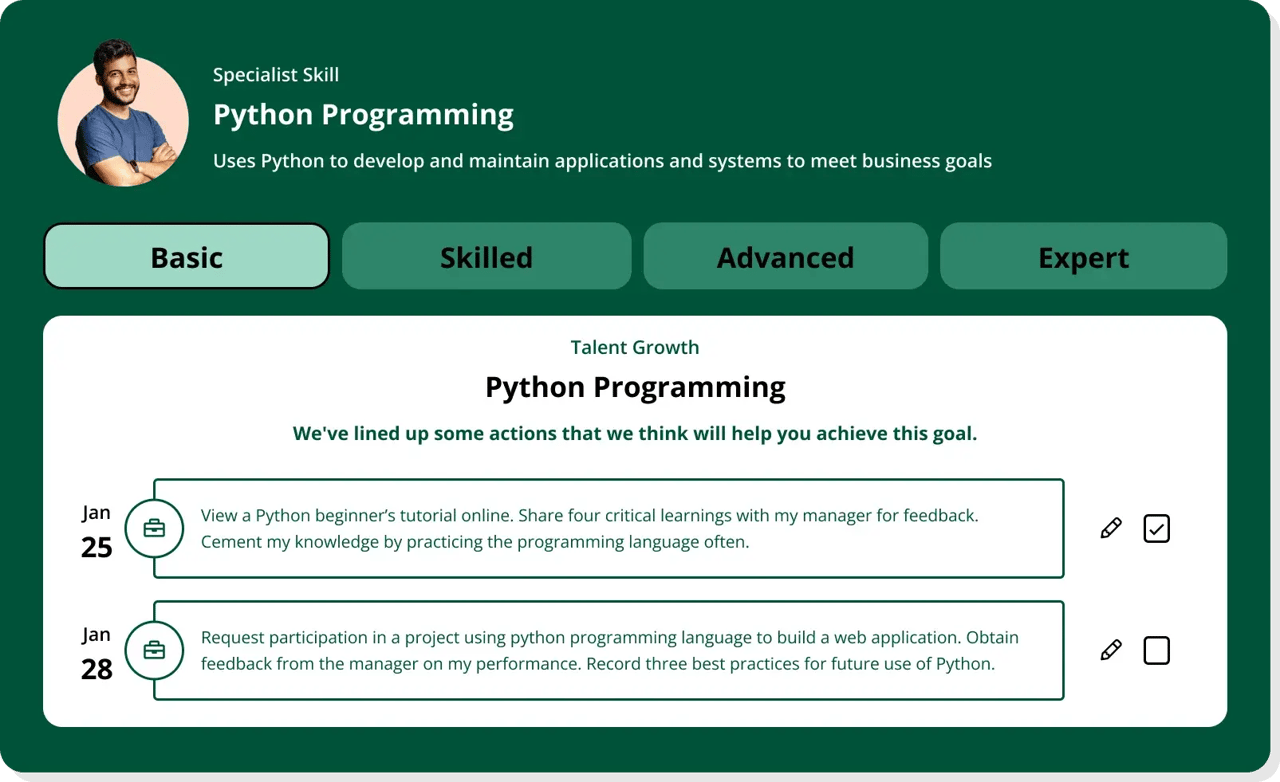
That matters because talent decisions need more than keyword matching. If you are making decisions about mobility, succession, reskilling, or workforce planning, you need skills data that is trustworthy enough to defend.
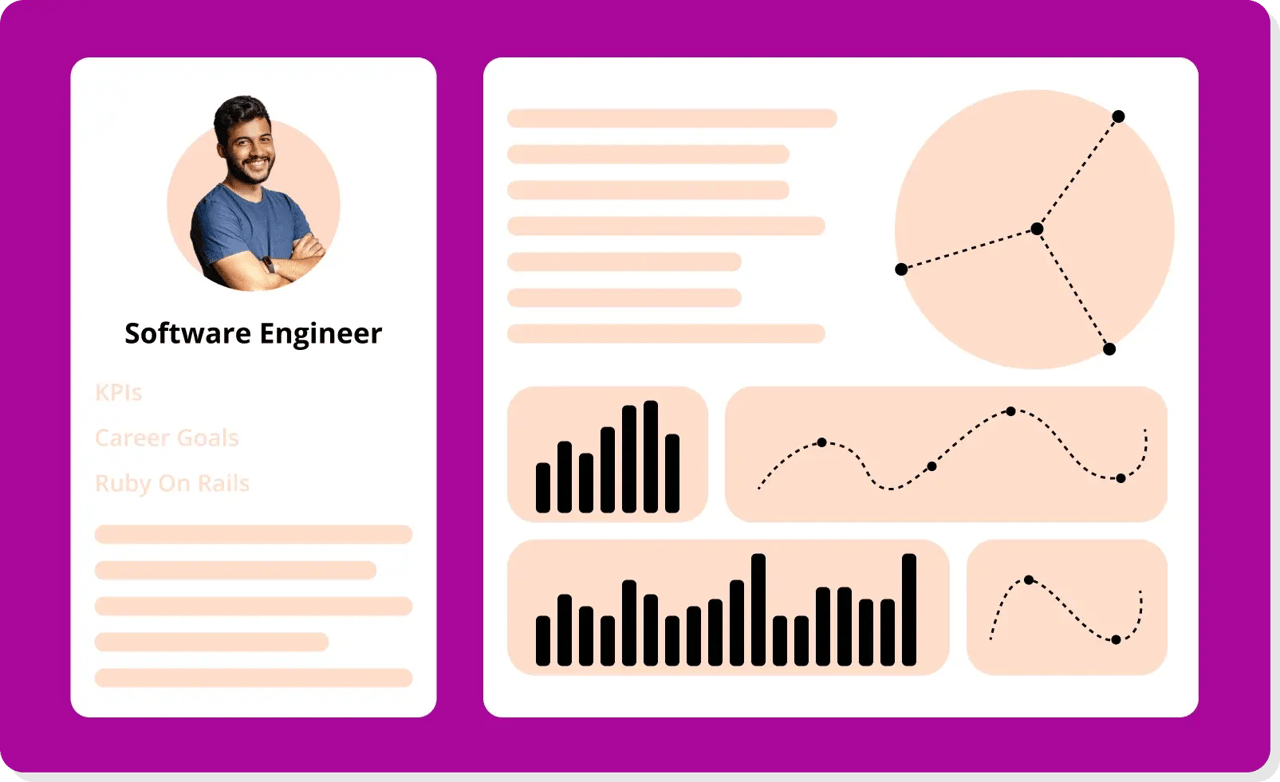
Fuel50’s Skills Architecture connects skills to roles, job families, and career paths, helping you move beyond static job titles. Fuel50’s Skills Inventory gives you better visibility into current skills and gaps, while Insights helps leaders understand workforce trends, capability gaps, and progress against transformation goals.
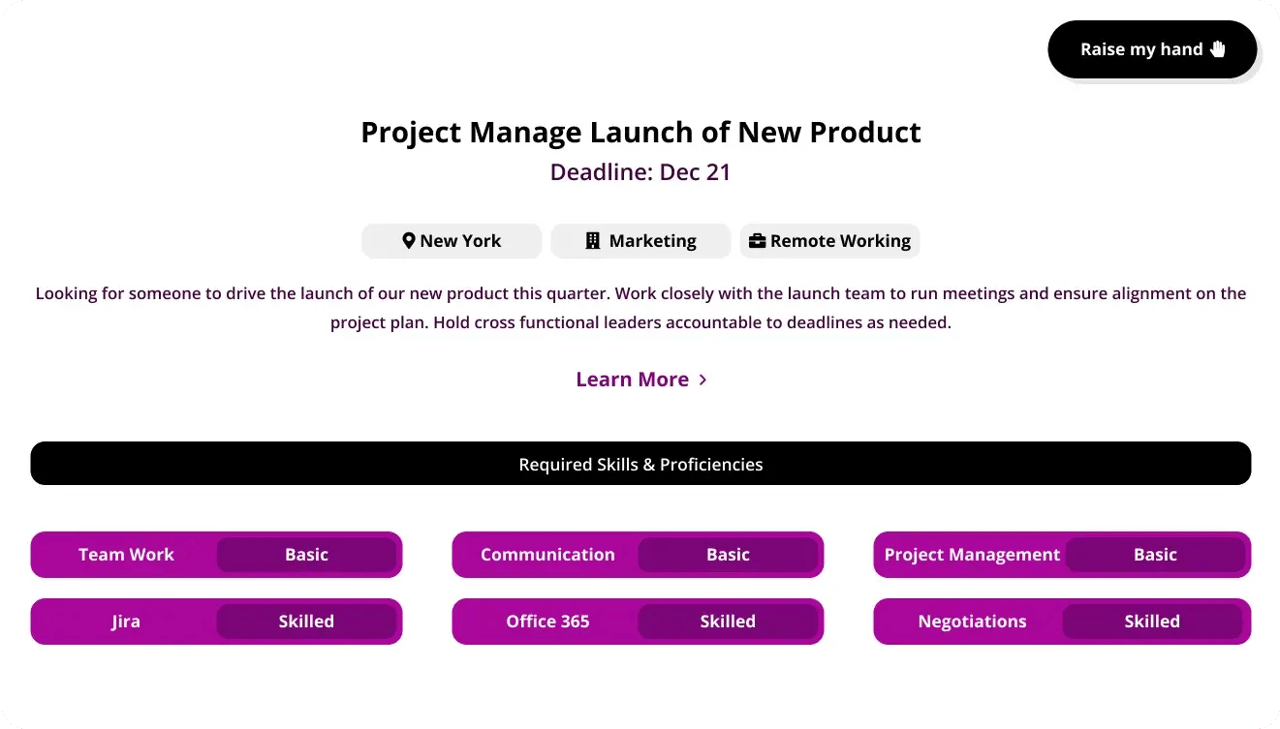
The Talent Marketplace activates that skills foundation. Employees can explore career paths, gigs, mentors, coaching, and learning opportunities connected to both technical skills and human skills. That means a data analyst can build deeper analytics capability while also developing stakeholder communication. A technical employee can explore adjacent roles that stretch collaboration, leadership, or customer-facing skills. A future leader can see which technical and human capabilities they need before the next move opens.
Fuel50 also supports a more defensible approach to AI in talent decisions. Its people science foundation helps define what skills mean, how proficiency should be understood, and how recommendations should support human decisions. That gives organizations a stronger basis for decisions that affect people’s careers.
The result is a more complete view of capability. You can see what people can do today, what they could grow into next, and which development paths will help the business close its most important gaps.
FAQs
Are technical skills hard skills?
Yes, technical skills are usually considered hard skills because they can often be taught, tested, or certified. Examples include coding, data analysis, financial modeling, and using specific software or equipment.
Are soft skills teachable?
Yes. Soft skills can be developed through coaching, feedback, mentoring, reflection, and practice in real work situations. They are harder to measure than technical skills, but they are observable when clearly defined.
Is communication a technical skill?
Communication is usually a soft skill or interpersonal skill. In some roles, specific forms of communication can become technical, such as technical writing, medical documentation, or legal drafting.
Are soft skills more important than technical skills?
Soft skills and technical skills matter in different ways. Technical skills help someone perform the work. Soft skills help them apply that work with others, adapt to change, and grow into broader responsibilities.
What are technical and non-technical skills?
Technical skills are specialized abilities tied to a task, tool, or field. Non-technical skills are human or workplace skills such as communication, teamwork, adaptability, leadership, and problem-solving.
What is another word for technical skills?
Technical skills may also be called hard skills, specialist skills, job-specific skills, practical skills, or technical abilities. The best term depends on the role and how the skill is used.
Why do organizations need both technical and soft skills?
Organizations need both because work depends on capability and behavior. Technical skills help people complete tasks. Soft skills help teams make decisions, share knowledge, handle change, and turn expertise into business results.
How do technical and soft skills connect to skills gaps?
A skills gap can involve technical capability, soft skills, or both. A team may lack AI skills, data skills, or cybersecurity skills, while also struggling with collaboration, communication, or adaptability. Fuel50’s guide to what a skills gap is explains how organizations can identify and close these gaps more clearly.

.webp?width=359&height=260&name=Blog%20Template%20-%20V1%20-%20Repetitive%20Pattern%20(44).webp)
.webp?width=359&height=260&name=Blog%20Template%20-%20V1%20-%20Repetitive%20Pattern%20(17).webp)

.webp?width=359&height=260&name=Blog%20Template%20-%20V1%20-%20Repetitive%20Pattern%20(42).webp)