
.webp?width=1280&height=541&name=Blog%20Template%20-%20V1%20-%20Repetitive%20Pattern%20(24).webp)
 Reskilling & Upskilling

Worldwide spend on corporate training runs near $130 billion a year, and only 25% of those programs produce a measurable improvement in business performance. Only 4% of L&D leaders report on outcomes at all.
The gap between what skill development is supposed to do and what most programs actually do has become wide enough that executives now treat the budget as discretionary, employees treat the courses as performative, and managers treat the whole exercise as someone else's job. The handful of organizations that get measurable capability growth out of their investment share a different operating model, one built around proof rather than activity.
This post explains what skill development really is, the five reasons most programs stall, the skills that matter most through 2026, the ten components of a plan that produces capability rather than completions, and the moves to make in your first ninety days.
What skill development is, and what it isn't
Skill development is the deliberate process of building, validating, and applying capabilities that show up in the quality and speed of someone's work. The applied half of that definition is the half most often missed. A course completed and forgotten is not skill development. A certification awarded and never used is not skill development. The artifact that proves a skill exists is observable performance, which means the work itself has to change.
Several terms get used interchangeably with skill development and shouldn't be. Training is one input among many, usually the most over-relied-on, and is best understood as a delivery mechanism rather than an outcome. Learning and development (L&D) is the function that owns the inputs but rarely owns the outcomes.
Career development is the longer arc of progression across roles and is fueled by skill development but operates on a different time horizon. Talent development is the umbrella term most often used to describe the operating system that connects all of the above. Upskilling refers to deepening capability within an existing role; reskilling refers to building capability for a different one. The current post uses skill development as the operating term because it focuses on the unit that drives all of these outcomes, namely the individual capability and its observable application.
Inside a skills-based organization, skills are the currency, roles are constructed from skill bundles, mobility is determined by skill match, and development is the process that moves people from one skill state to another with evidence that the move actually happened.
Why most skill development programs don't work
The first pattern is measuring activity rather than outcomes. Only 4% of L&D leaders report on the business outcomes of their skill-building programs, while the remainder report on training hours, course completions, and learning record metrics that say nothing about whether work changed. Executives lose confidence in the function not because the function is failing but because the function is reporting on the wrong things, leaving the actual value of the work invisible and the budget vulnerable.
The second pattern is taxonomy collapse. A Salary.com study found that 54% of HR professionals don't know what a skills taxonomy is and 76% have not implemented one. Among organizations that try, the most common failure mode is treating the taxonomy as a project rather than an operating practice, which causes it to go stale within twelve to eighteen months. Generic skill databases purchased off the shelf are too abstract to support real decisions, while taxonomies built internally tend to become so granular that no one uses them. Either way, managers stop referencing the data and employees stop updating their profiles, and the foundation of every downstream decision quietly erodes.
The third pattern is over-reliance on self-assessment. When employees rate their own skills without external calibration, the resulting data overstates reality by a wide margin. Totara's 2026 research found this overstatement worsens skill gaps for 36% of organizations, reduces productivity for 34%, and increases manager stress for 31%. Self-assessment as one input among several is useful, while self-assessment as the only signal is actively misleading, and most platforms still treat it as the primary source.
The fourth pattern is the forgetting curve. Humans forget around 40% of new content within twenty minutes of a training event and 60% within six hours, which means one-day workshops and certification sprints are mathematically guaranteed to produce minimal retained capability. The programs that work spread practice over weeks, embed the new skill into real assignments, and create deliberate moments of application that escalate in complexity. Most programs do none of this and then conclude that learners are disengaged.
The fifth pattern is treating managers as bystanders. Decades of training transfer research show that what a manager does before and after a training event is the single strongest predictor of whether the employee uses what they learned. Most programs equip the L&D team and the learners but ignore the manager layer entirely, presuming managers will support the work without tools, time, or accountability. The result is a workforce trained but not redirected, with new capability that quietly atrophies because the daily work didn't shift to accommodate it.
Why continuous upskilling and reskilling matter more in 2026
The World Economic Forum's Future of Jobs 2025 report, based on a survey of 1,043 companies representing 14.1 million workers, projects that 39% of workers' core skills will be transformed by 2030, with 59% of workers requiring training of some kind to remain effective in their current roles. The same report found that 83% of HR leaders now say workforce skill demand is developing faster than their workforce's skills.
Agentic AI has accelerated this curve in ways that earlier waves of automation did not. Previous technology shifts changed which tools people used to do their work, while agentic AI is changing what the work itself consists of, removing routine cognitive load and shifting human contribution toward judgment, orchestration, and exception handling. Programs designed even two years ago weren't built for this redistribution of work, and most organizations are now discovering that the gap between their training catalog and the work in front of their employees is larger than they realized.
Continuous skill development is also the most cost-effective response to this curve. External hiring runs an average of several thousand dollars per hire and stretches time-to-fill past a month, while external hires take eighteen to twenty-four months to reach the productivity of an internal candidate moving into the same role. Upskilled or reskilled employees carry their institutional knowledge into the new position, reducing both the cost of the transition and the risk of underperformance during it. What the retention numbers actually show makes the same point from the attrition side. Employees who see their employer investing in their growth stay measurably longer, and LinkedIn's data shows internal mobility roughly doubles average tenure.
Strategic alignment is the third compound benefit. Organizations that maintain real-time visibility into workforce capability can forecast which initiatives are staffed for execution and which are not, allowing leaders to fund the few development moves that unlock the most value rather than spreading investment across training that has no link to delivery. Without this visibility, the gap between ambitious strategy and underprepared teams keeps showing up as missed deadlines, scope reductions, and the unplanned external hires that follow.
The skills that matter most in 2026
The Future of Jobs 2025 data and Fuel50's own hot skills report point to a tighter list of high-leverage skills than the catalog-style lists most vendors publish. Five clusters stand out as the ones organizations are actively trying to build.
Analytical and systems thinking remains the top skill cited by employers, with 69% identifying it as core. The shift in 2026 is that analytical thinking now has to operate on AI-generated outputs, which means the skill includes the judgment to interrogate model results and recognize where automation is producing confident-sounding nonsense.
AI literacy and orchestration is the fastest-growing skill cluster, with 87% of employers expecting growth in this area. The applied version of this skill is less about model mechanics and more about knowing which work to delegate to AI, how to evaluate the output, and how to redesign workflows around the time freed up.
Resilience, adaptability, and learning agility are valued at the same level as the technical skills above, partly because the half-life of any specific technical skill keeps shortening. The capability to learn a new skill quickly has become more valuable than any single skill on the list.
Cross-functional collaboration and communication matter more in flatter, hybrid organizations where work moves between teams more often than between roles. The specific behaviors that count here are the ability to write clearly, navigate ambiguity, and produce outcomes through people who don't report to you.
Skills-based leadership is the management capability of allocating work and developing people based on what they can actually do, which sounds obvious but is rare in practice. Most management training is still built around role and hierarchy, and the leaders who learn to manage at the skill layer get measurably more capacity out of the same headcount.
The 10 components of a skill development plan that produces capability
Each component below addresses one of the failure patterns named earlier. The components work as a system rather than a sequence, which means weak execution on any one of them will cap the value of the others.
1. Business-aligned skills thesis
Every effective plan begins with a clear thesis that anchors development to business outcomes rather than to generic learning goals. Define the capabilities that differentiate your strategy over the next six to eighteen months, expressed in the language of products shipped, markets entered, risks managed, and experiences delivered. Identify the few critical outcomes that matter most, then state the skills, roles, and team types required to achieve those outcomes with reliable quality and speed. This thesis becomes the north star for every subsequent decision, including which roles move first, which cohorts receive priority, and which skills will drive measurable impact on revenue, cost, risk, or customer value.
2. Skills taxonomy or skills ontology
Clarity on "what good looks like" enables consistent decisions across the organization, and the choice between a taxonomy and an ontology determines how much that clarity can do for you. A taxonomy classifies skills hierarchically into categories and sub-skills, like a dictionary. An ontology adds the relationships between skills, mapping which skills depend on which others, which roles draw on which skill bundles, and how those bundles change as roles evolve. Taxonomies support reporting, while ontologies support decisions like matching, mobility, and succession.
Pair whichever structure you choose with behaviorally anchored proficiency levels that describe observable performance at each stage, so managers and employees share the same definition of beginner, proficient, and expert. Link skills to roles and work outcomes, because relevance drives adoption and reduces disagreement during assessments and promotions.
3. Baseline skills inventory and signal collection
Credible planning requires a defensible starting point that blends human judgment with objective signals from real work. Use multiple inputs to establish a baseline, including calibrated self-assessments against behavioral rubrics, manager assessments anchored in recent artifacts, verified certifications, performance data tied to role expectations, and signals from projects, code repositories, design systems, or customer outcomes. Time-box this inventory to a reasonable cadence such as quarterly light-touch check-ins, so the data stays current without becoming administratively heavy.
Treat the baseline as a living map of present capability, because subsequent gap analysis depends on accurate and recent information, and a stale inventory produces stale decisions.
4. Gap-to-initiative mapping and prioritization
A useful plan translates strategic goals into a precise capability backlog that leaders can sequence and fund. Map upcoming initiatives to the specific skills and proficiency levels they require, quantify present gaps from the baseline, and convert those gaps into prioritized work packages for development. Build heatmaps by function, location, or product line to highlight where shortages will block execution, and define threshold levels that indicate when a team is genuinely ready to start. This approach lets leaders fund the few development moves that unlock the most value, and it prevents the common pattern of training broadly without closing the gaps that actually stall delivery. Fuel50's six-step approach to closing skill gaps breaks this process down into the specific moves that take an organization from gap visibility to closure.
5. Development pathways and applied practice
People change fastest when learning is structured, contextual, and applied to real work under expert guidance. Pathways that combine concise learning resources, coached practice on relevant tasks, mentoring or peer feedback, and repeated cycles of application escalating in complexity produce real capability growth, while pathways consisting of curated reading lists do not. Sequence each pathway as a series of visible milestones with artifacts that prove skill growth, such as working prototypes, customer presentations, process redesigns, or documented decisions. Reserve calendar time for practice and reflection, because pathways that remain theoretical rarely change performance on the job.
The goal is sustained capability that shows up in work quality and speed, demonstrated through artifacts produced and outcomes delivered, not accumulated course completions in a learning record.
6. Internal mobility mechanisms and career architecture
Capability development delivers value when people can move into opportunities at the moment those opportunities appear. Build explicit mechanisms that convert new capability into new work, including short-term gigs, rotational programs, stretch assignments, and transparent job postings with skill-based eligibility. Document career paths that describe realistic transitions between roles and the proficiencies required for each step, and make those paths visible without requiring employees to rely on informal networks.
Introduce operating guardrails that reduce talent hoarding, including service-level expectations for releasing talent and capacity planning that protects near-term delivery. Mobility mechanisms transform development from an academic exercise into visible progress for employees and usable capacity for leaders. The data on internal mobility shows how large the productivity and retention gains can be when this layer is built properly. For organizations at the senior end of the org chart, succession-driven pipelines add the long-horizon view that prevents critical-role gaps from becoming surprises.
7. Manager enablement and accountability
Managers translate plans into weekly reality through coaching, feedback, and the assignments they choose to hand out. Equip managers with practical tools that make development easier than inertia, including skill-based 1:1 templates, feedback rubrics aligned to the proficiency model, project scoping guides that embed stretch opportunities, and dashboards that surface team readiness against upcoming initiatives. Tie expectations to the performance system by recognizing managers who produce measurable skill growth, higher internal mobility, and stronger succession coverage, because incentives shape behavior more reliably than slogans. When managers possess the tools and the motivation to coach effectively, the entire plan gains momentum and credibility.
8. Measurement, decision rules, and an honest ROI model
Leaders fund what they can see and scale what they can prove, which means measurement has to move beyond training counts into operational outcomes. Track leading indicators such as skill acquisition velocity, pathway completion with artifact quality, internal move rates, and time to readiness for priority initiatives. Pair those with lagging indicators such as time-to-fill for critical roles, time-to-productivity after moves, retention of targeted cohorts, defect or rework rates, and customer or revenue outcomes where attribution is feasible.
Publish decision rules that state what happens when thresholds are met, such as unlocking rotations or shifting budget to high-yield pathways, so data drives action rather than reports. A lightweight ROI model that ties investment to avoided hiring costs, accelerated delivery, and reduced attrition will sustain executive sponsorship through planning cycles. Workforce analytics tools vary widely in how they support this layer, and choosing the right one early avoids expensive replatforming later.
9. Technology and data architecture
A coherent technology stack keeps the plan operational by connecting people, skills, work, and outcomes in one flow. Integrate core systems such as HRIS and ATS with learning platforms and talent intelligence, using a consistent skills ontology and stable identifiers so data follows the employee across roles and projects. Automate ingest of work signals where possible, and keep humans in the loop for validation where automated inference may drift from reality. Provide employees and managers with role-aware views that show current skills, recommended pathways, and visible opportunities, because insight without action rarely changes behavior. Strong data plumbing prevents manual reconciliation, reduces noise in measurement, and enables timely decisions when priorities shift.
10. Operating cadence, governance, and change
Plans succeed when they run on a cadence that sustains momentum and adapts to new information without friction. Establish a quarterly capability review that inspects baselines, gap heatmaps, pathway throughput, and mobility outcomes against the business roadmap, followed by clear decisions on priorities and funding. Define ownership across People, Business, and Finance leaders, and document how conflicts are resolved when delivery pressure collides with movement opportunities. Communicate progress with concrete stories, visible artifacts, and simple dashboards that line leaders can read in minutes, because trust grows when people see evidence of movement in their context. A deliberate change plan that combines executive narratives with local manager enablement ensures the plan becomes a way of working rather than a program that fades after launch.
Where to start in the first ninety days
The ten components above describe a mature operating model, which is the right destination but the wrong starting point for most organizations. A first ninety days designed to build proof, rather than to roll out a framework, produces faster executive buy-in and avoids the failure patterns named earlier.
The first move is to pick one critical role family rather than the whole workforce. Software engineers, account executives, branch managers, clinical operations leads, or supply planners all work as candidates, provided the family has high strategic importance and a population large enough to learn from. The narrow scope keeps the first iteration finishable in a quarter and creates the artifacts that make the case for expansion.
The second move is to baseline that role family against an external skills source so the data has external credibility from day one. Open-source frameworks like ESCO and O*NET give you a defensible starting structure, and a skills intelligence platform with a maintained ontology lets you adapt it to your business without rebuilding from scratch. Avoid the trap of waiting six months for a perfect taxonomy before doing anything else.
The third move is to build one pathway with real artifacts attached, for the single most consequential capability gap in that role family. The artifacts are the point. A code review checklist for a senior engineering pathway, a customer discovery scorecard for a sales pathway, or a board-paper template for a leadership pathway all qualify as evidence that learning has produced work-changing capability. Artifacts give managers something to coach against and give employees something concrete to point to as evidence of growth.
The fourth move is to instrument one business metric and one talent metric tied to the pathway, then publish the baseline. Time to deliver a feature, win rate on a deal type, time to ramp a new hire, retention in the role family, internal-fill rate for the next role up the ladder. The metric matters less than the discipline of publishing it before the work starts, because the published number forces honest reporting later.
By the end of the ninety days, you should have one role family baselined, one pathway running, one published metric, and a small set of artifacts that line leaders can see and react to. That output, however modest it looks against the full ten-component model, is more proof than most skill development programs produce in their first two years.
How Fuel50 supports skill development that is measurable
Fuel50 is a workforce transformaton platform thatsits on a skills ontology built by I/O psychologists rather than a static taxonomy, which means the relationships between skills, roles, and work are explicit and queryable from day one. Organizations like Trane Technologies, Lennox International, and Smartsheet use this foundation to make decisions about mobility, succession, and development that would otherwise depend on manager intuition.
A skills architecture built on your business
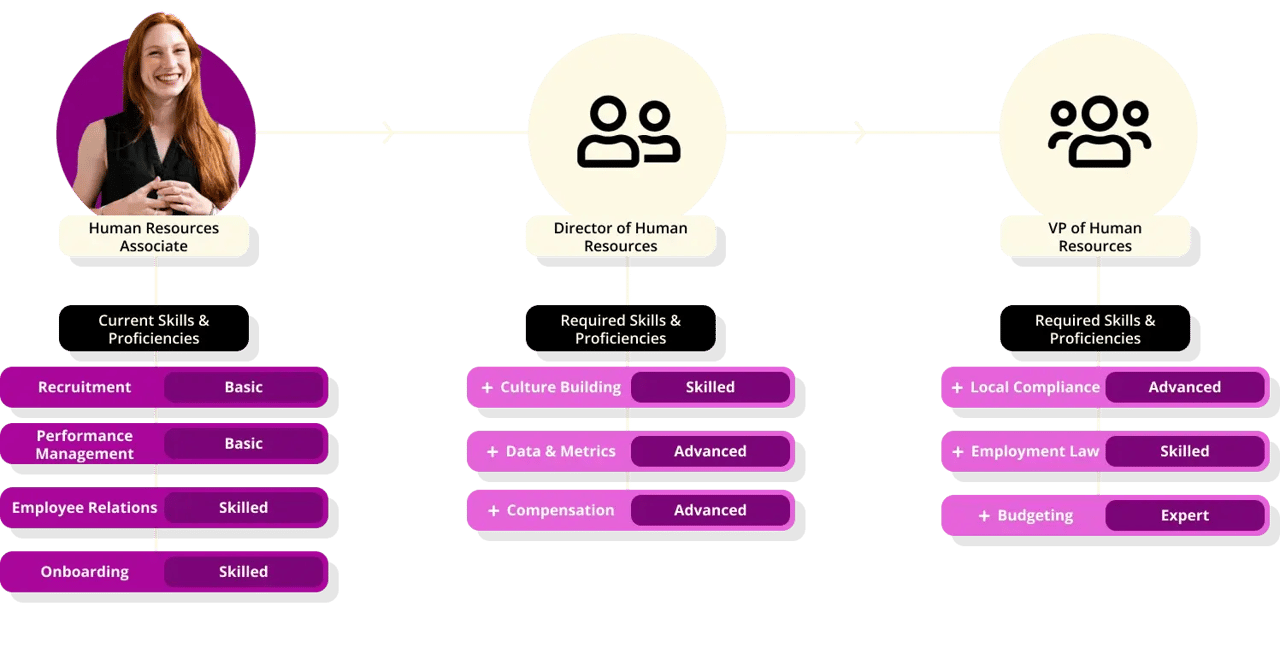
Fuel50 begins by creating a skills architecture that reflects the work your organization actually does, mapping each role to a profile that defines its core skills, observable behaviors, and contribution to business outcomes. The design process combines internal knowledge from the people doing the work with external market signals from labor data, so the resulting model is current and future-aware. Leaders use the architecture to anchor every subsequent decision in the same shared definition of capability, which removes the disagreement that usually slows skills-based programs in their first year.
Talent intelligence that's actionable
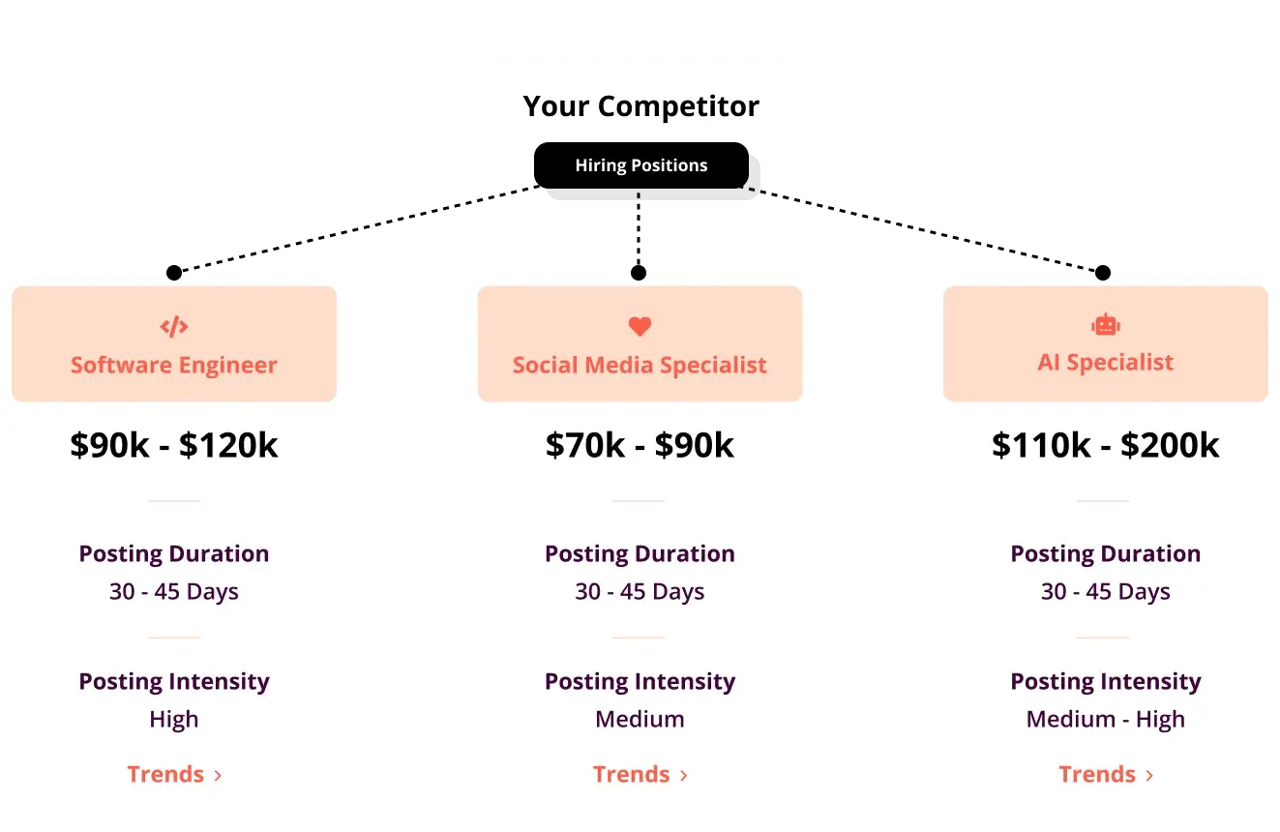
Most skills platforms produce dashboards that show gaps. Fuel50's talent intelligence layer surfaces prioritized capability gaps and recommends concrete moves to close them, including which roles to upskill, which to reskill, and where to redeploy existing capability rather than hire externally. The same intelligence layer is what made how Johnson & Johnson scaled this approach operationally repeatable rather than dependent on a single team's effort.
A talent marketplace that puts skills development to work
Insight only changes capability when people can apply it to real work. Fuel50's Talent Marketplace matches employees with projects, gigs, mentoring, and internal roles aligned to their skill profiles and aspirations, closing the loop between development and visible application. The marketplace gives employees career progress inside the organization and gives leaders the speed to redeploy talent into critical work without waiting for an external hiring cycle.
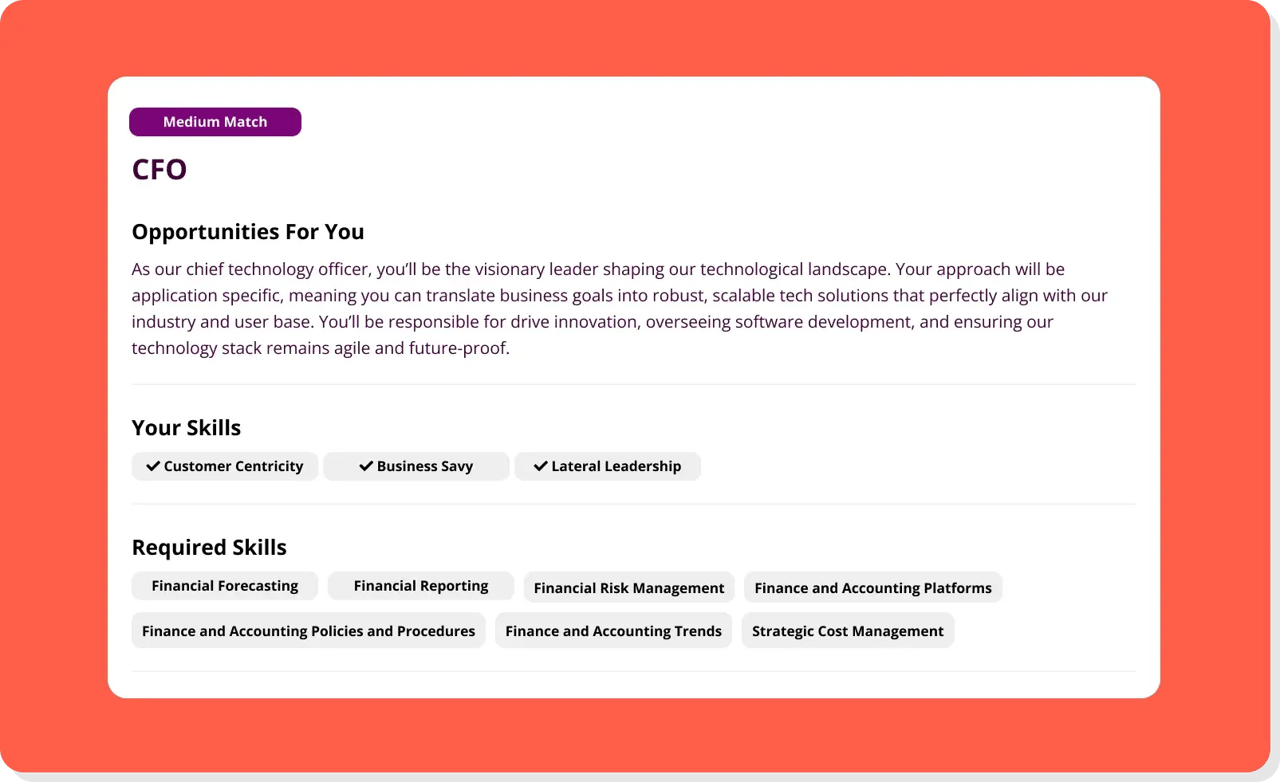
This marketplace closes the loop between learning and doing, ensuring that development efforts translate into visible growth, new contributions, and measurable mobility. For employees, it means career progress without leaving the organization; for leaders, it means redeploying talent quickly and flexibly to where it is needed most. Internal mobility becomes a systemic practice, reducing reliance on external hiring and keeping valuable institutional knowledge in circulation.
Embed personalized pathways that blend learning with action
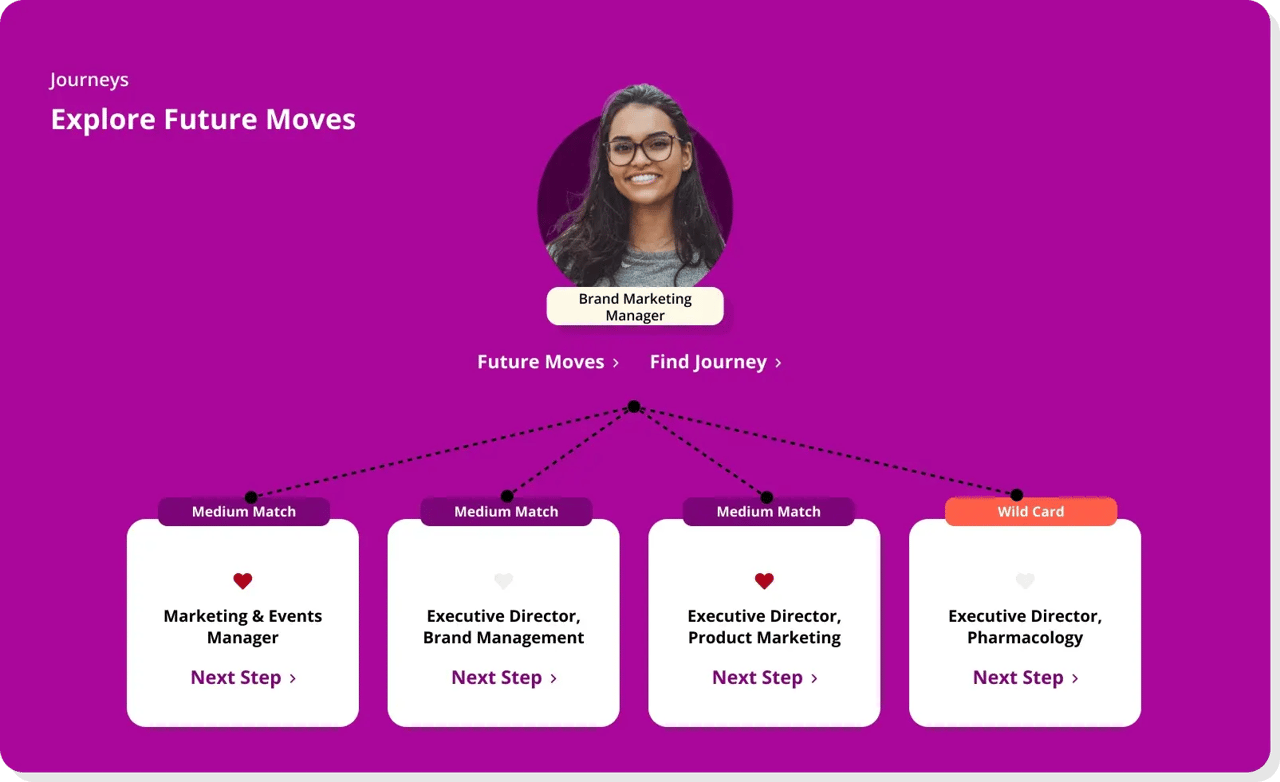
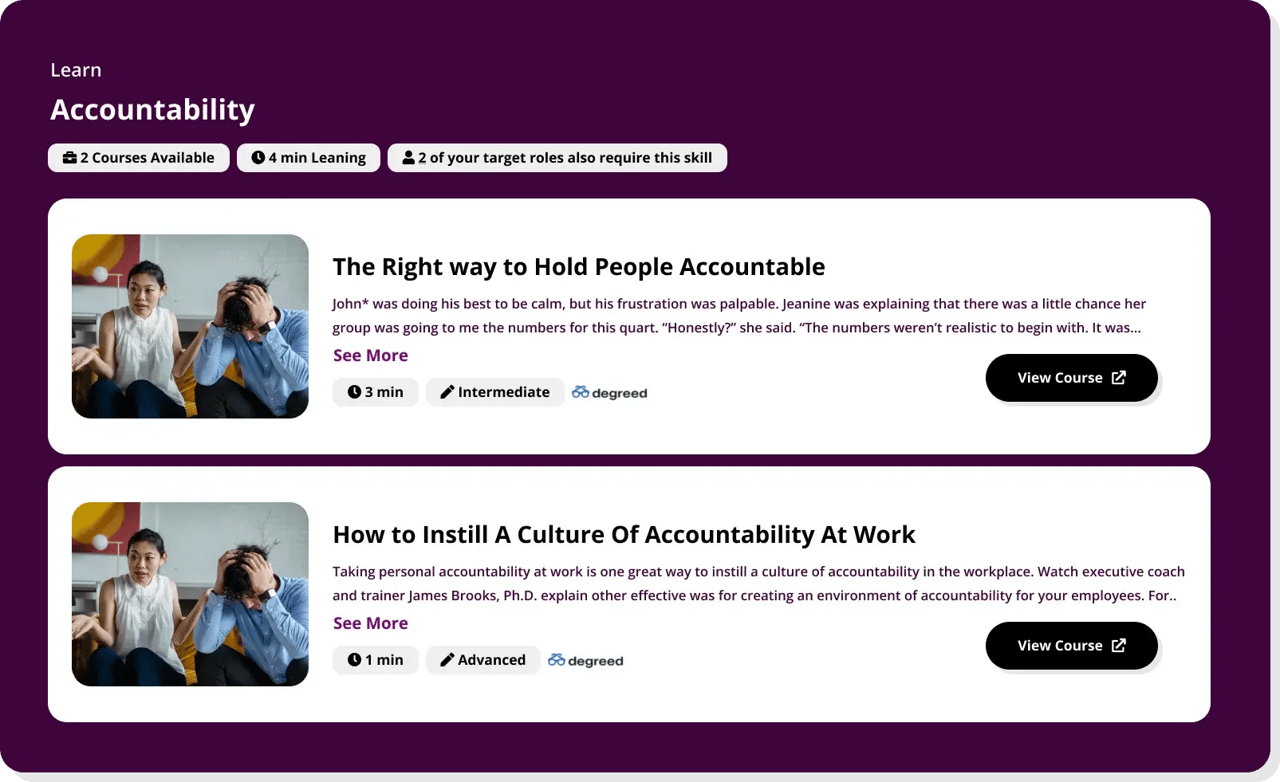
Fuel50 recognizes that development is not one-size-fits-all. The platform builds personalized pathways that integrate curated learning resources, coaching, and mentoring alongside career navigation tools that help employees see what skills they need for the roles they want.
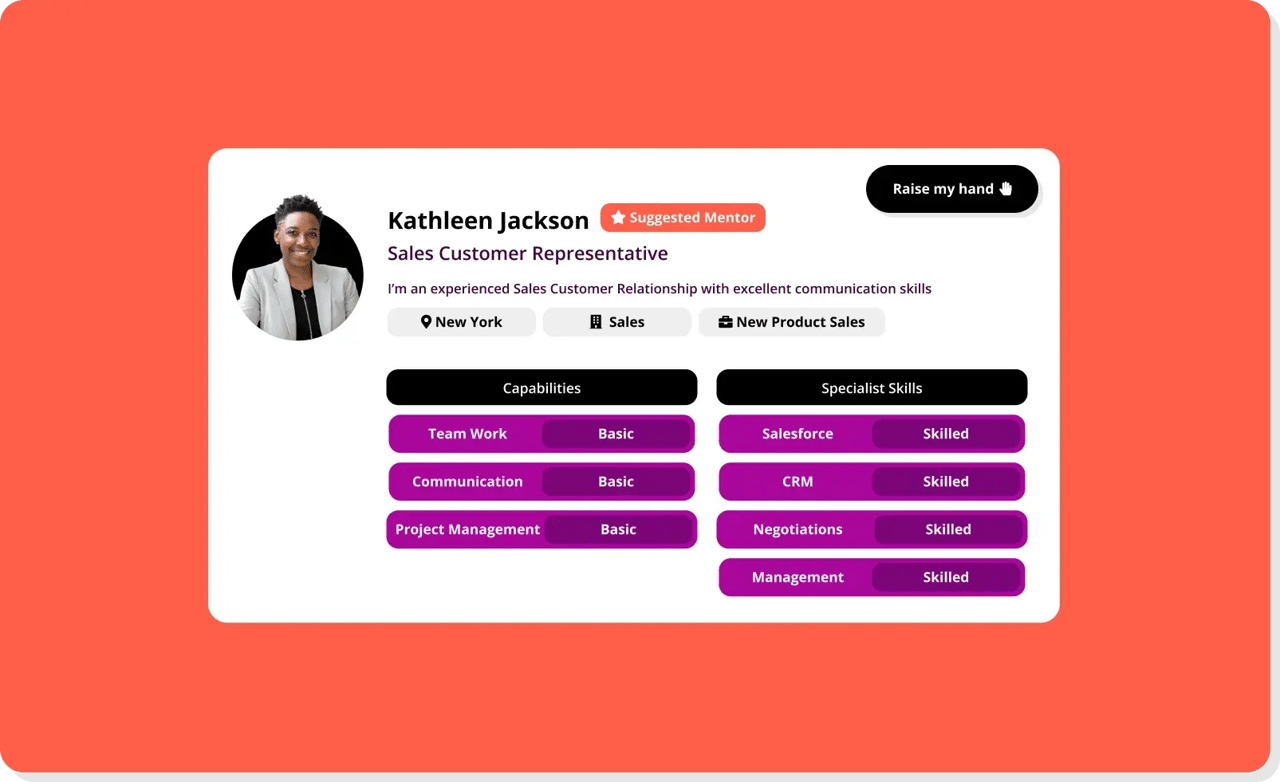
These pathways are dynamic—adapting to progress, feedback, and changes in business demand—and they keep individuals moving forward with clarity and purpose. By combining structured learning with opportunities for application, the pathways ensure that employees don’t just accumulate knowledge but build competence that shows up in performance. The result is a workforce that is not only continuously learning but continuously applying new skills in meaningful ways.
Provide continuous visibility and real-time workforce analytics
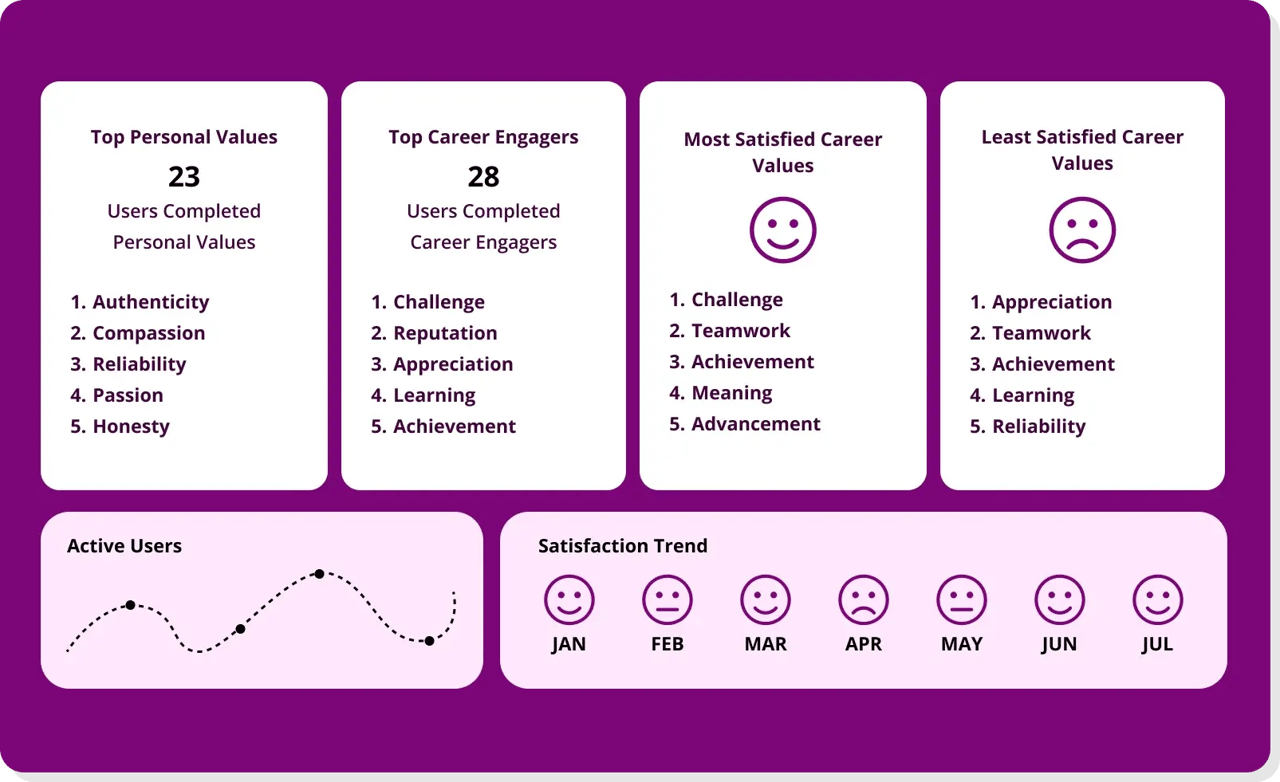
Traditional workforce planning often relies on outdated snapshots of skills that lose relevance before decisions are even made. Fuel50 avoids this by maintaining dynamic skill profiles that are updated through self-assessments, manager validation, learning completions, and signals from actual project work.
Leaders gain a real-time view of workforce capability and can model readiness for strategic initiatives with accuracy. This continuous visibility allows executives to forecast capacity, allocate resources more effectively, and identify where interventions are most urgent. Instead of reacting to shortages once they stall progress, organizations can proactively prepare teams for the opportunities and risks ahead.
Drive retention, mobility, and career clarity at scale
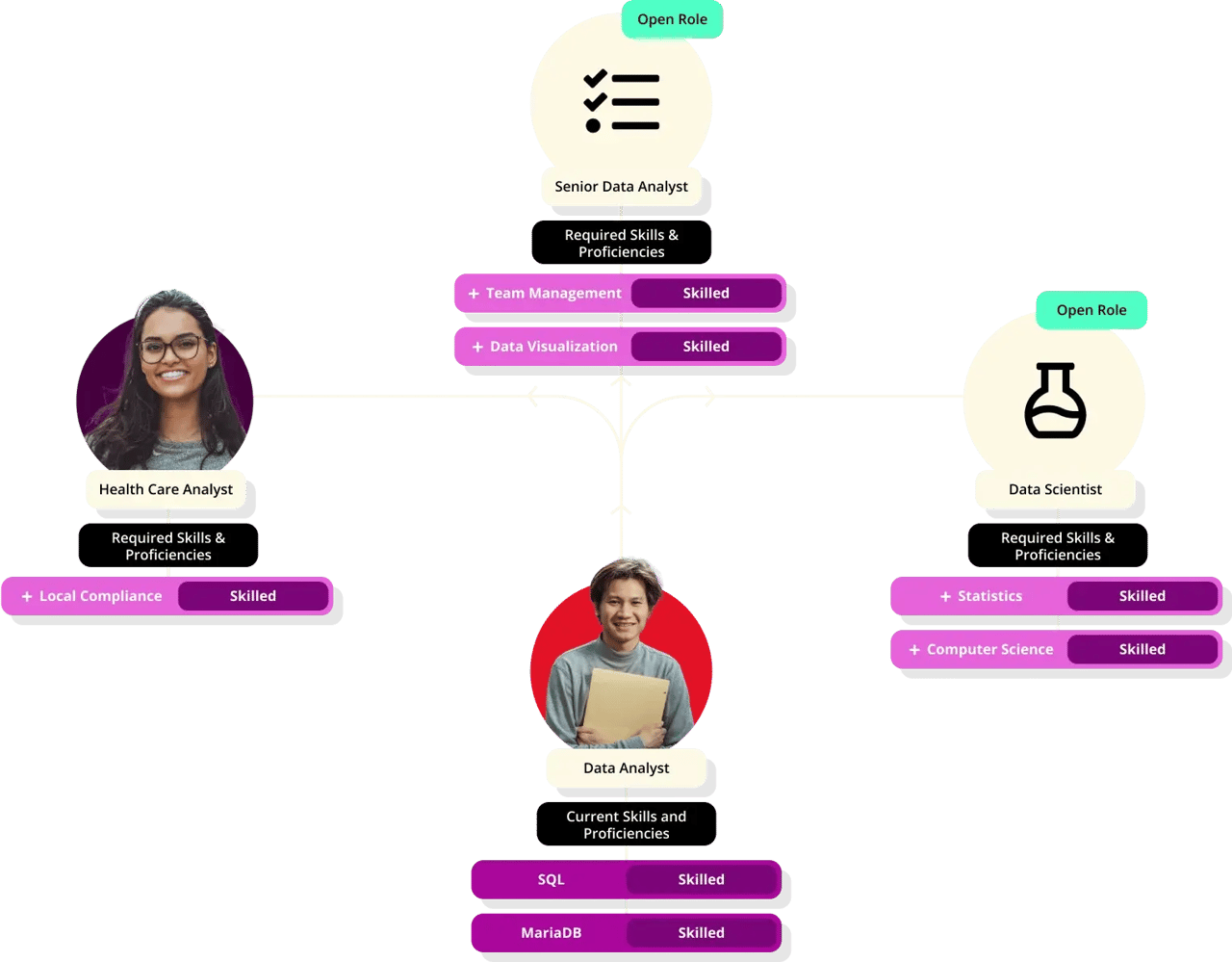
One of the strongest predictors of employee turnover is a lack of visible opportunity. Fuel50 research shows that nearly three-quarters of organizations fail to achieve objectives because they lack clarity about their workforce’s capabilities and pathways. Talent Intelligence directly addresses this by making roles, career moves, and skill requirements transparent. Employees can see what is possible for them, understand what is required to progress, and access support to get there.
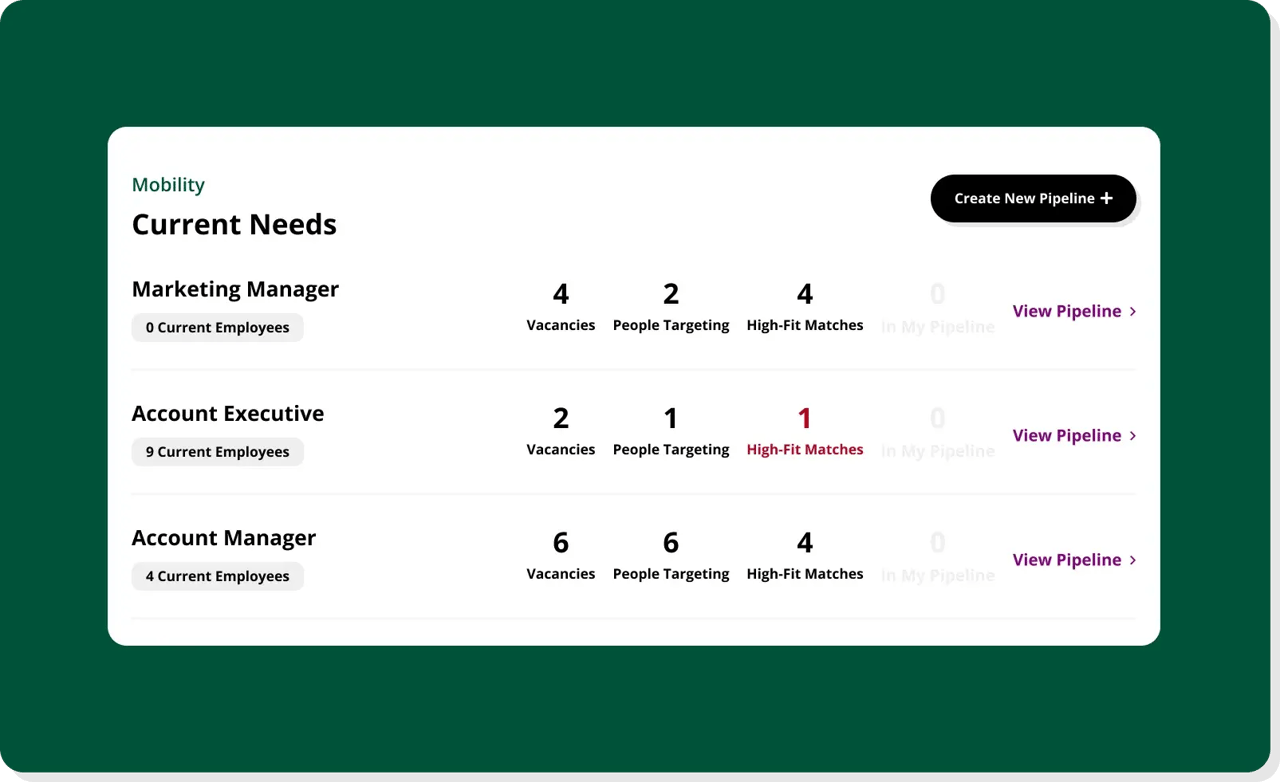
This clarity builds engagement and commitment, reducing attrition and giving people reasons to grow with the company rather than seek advancement elsewhere. For leaders, it creates a pipeline of internal talent that can be mobilized quickly into critical roles, strengthening succession and reducing the cost of turnover.
Scale with continually validated and evolving skills data
Skills are not static, and neither is Fuel50’s data model. The platform continuously refreshes its skills ontology with insights from labor markets, employee feedback, and business evolution, ensuring that what you track remains aligned with the real world.
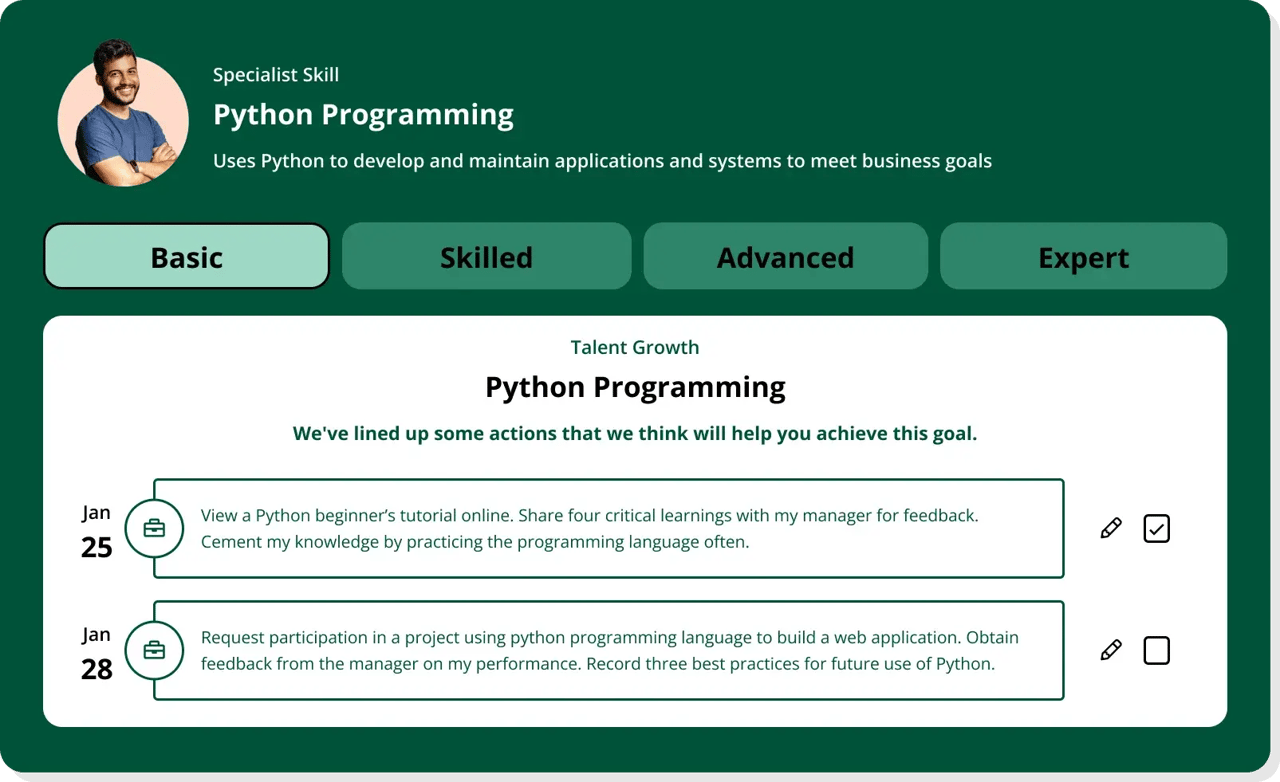
This validation process keeps skill frameworks relevant as new technologies, roles, and practices emerge. Organizations avoid the common pitfall of investing in outdated skill sets that no longer deliver competitive advantage. Instead, they operate from a living system of skills data that adapts alongside strategy and positions the workforce for the future.
The one decision that determines whether any of this works
Most skill development programs fail at the manager layer rather than the platform layer. Frameworks can be designed, pathways can be built, taxonomies can be licensed, and dashboards can be deployed, none of which will produce capability growth if the people who set assignments and run weekly one-to-ones aren't equipped to coach against the skills the program is trying to develop. The organizations whose programs produce measurable outcomes have decided to fund the manager layer first, including the time, the tools, and the accountability, before funding everything else. The decision is not technical, and the budget is rarely large. Whether it gets made is what separates the programs that show up in retention numbers and delivery speed from the ones that show up only in completion reports.
.webp?width=359&height=260&name=Blog%20Template%20-%20V1%20-%20Repetitive%20Pattern%20(49).webp)
.webp?width=359&height=260&name=Blog%20Template%20-%20V1%20-%20Repetitive%20Pattern%20(39).webp)
.webp?width=359&height=260&name=Blog%20Template%20-%20V1%20-%20Repetitive%20Pattern%20(47).webp)
.webp?width=359&height=260&name=Blog%20Template%20-%20V1%20-%20Repetitive%20Pattern%20(4).webp)