

 Skills Visibility & Management

Paycor HCM is HR software made by Paycor, a Cincinnati-based company that started in 1990. HCM stands for Human Capital Management, an industry term for software that helps a company manage its employees. Companies use Paycor HCM to run payroll, manage benefits, track hours, post jobs, onboard new hires, and report on their workforce.
Paycor serves more than 30,000 customers, most of them small and mid-sized businesses with between 10 and 1,000 employees. The software runs in the cloud, which means it lives on Paycor's computers and customers use it through a web browser or a mobile app.
In April 2025, the payroll giant Paychex bought Paycor for $4.1 billion in cash. Paycor now operates as a Paychex company. The two product lines are still sold separately, and Paychex has said the combined offering will give customers access to a wider set of services, particularly around tax compliance and HR advice. The acquisition is also recent enough that some of the changes are still working their way through to customers.
This guide explains what Paycor HCM is, what it does, what it does well, where customers run into problems, and how some organizations are filling the gaps without replacing the system.
Note: Looking for a HCM centered around talent management, employee engagement and retention? Fuel50’s suite of capabilities will give you visibility on your workforce’s skills and help you maximize on internal talent. Book a demo now.
What Paycor HCM does
Paycor HCM is split into modules. A module is a section of the software that handles one part of the HR job. All the modules share a single employee database, so information added in one module shows up in the others.
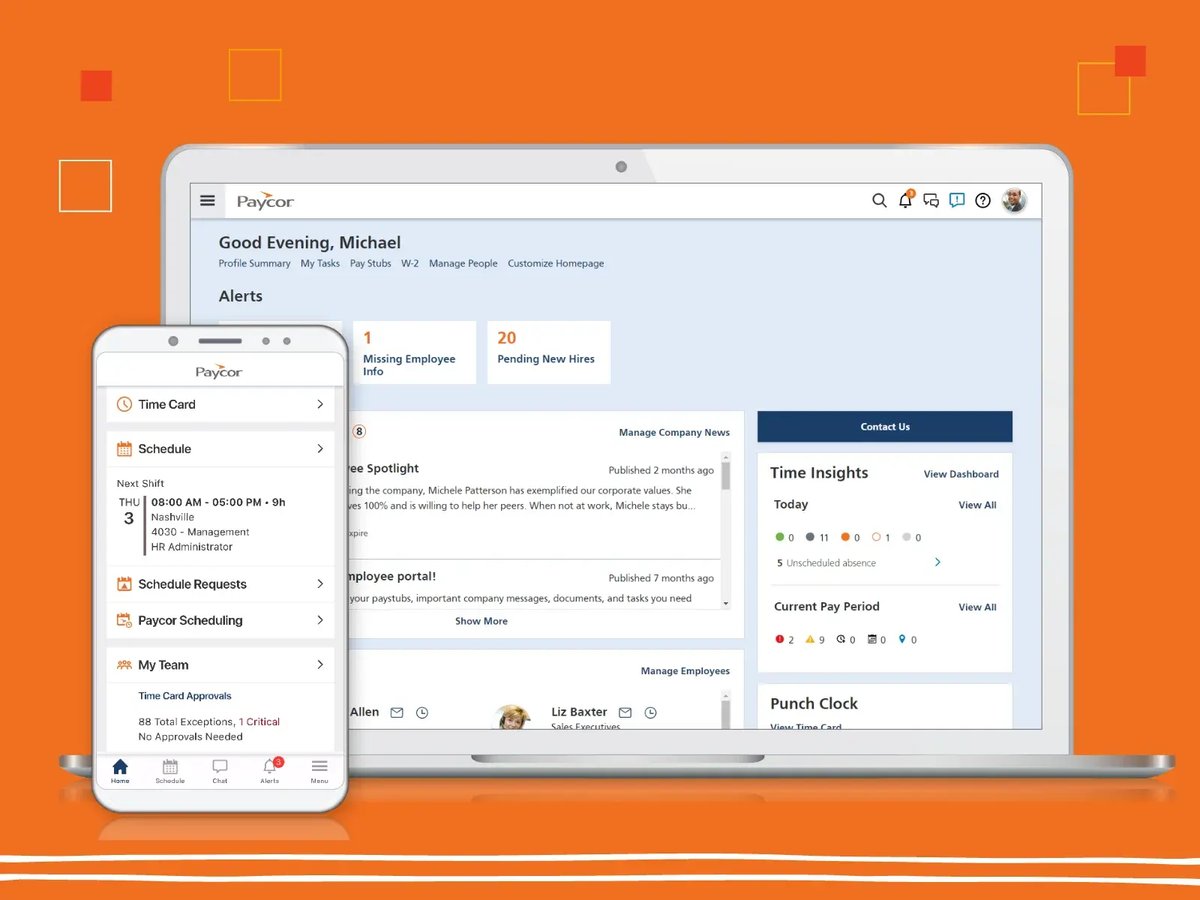
Payroll and tax filing is Paycor's original product and the one most customers buy first. The software calculates wages, taxes, and deductions, files payroll taxes with federal and state agencies, and generates W-2s and other year-end forms. Recent changes brought in automation that flags errors before payroll runs.
Benefits administration manages health insurance, retirement plans, and other employee benefits, including the once-a-year open enrollment period when employees choose their plans.
Time and attendance tracks hours worked, including time punched in from a mobile phone or a physical time clock. The system applies overtime and shift rules, then feeds the hours into payroll.
Recruiting and onboarding posts job openings, collects applications through an applicant tracking system (the standard tool recruiters use to manage candidates), runs background checks, and walks new hires through paperwork before their first day.
Talent management covers what happens after hire, including goal setting, performance reviews, and basic career planning. Paycor calls this part of the platform "Paths," one of several product names that customers see across the suite.
Workforce analytics turns the data from the other modules into reports and dashboards. Paycor brands its analytics layer "COR Leadership Insights" and pitches it as a way for managers to see team trends without pulling raw data themselves. The broader workforce analytics tool landscape includes more specialized options for organizations that need deeper analysis than a core HCM typically provides.
Employee self-service lets employees view their pay stubs, request time off, update personal details, and see their benefits without calling HR. Most customers access this through Paycor's mobile app.
Paycor HCM works well
Paycor has built a real business serving mid-market companies, and the product has genuine strengths worth naming.
The interface is approachable. Paycor scores 8.4 out of 10 on G2 for ease of use, which is high for an HCM platform. HR staff at small and mid-sized companies often do not have technical backgrounds, and Paycor's design works for them. Mobile access is one of the most consistent praise points in user reviews, with employees pulling up pay stubs and time off balances from their phones without needing training.
Payroll is the core competency. Customers who use Paycor primarily for payroll generally report that the basic flows work. The platform handles multi-state tax filings, automated tax updates as rates change, and standard year-end reporting.
The platform is unified. All the modules sit in one system, so an employee record updated in core HR flows automatically into payroll, benefits, and time tracking. This is the main reason organizations move from a stack of separate point tools to an integrated HCM.
The mid-market fit is genuine. Paycor is sized for the 10-to-1,000 employee segment, which is a tier where enterprise platforms like Workday are too expensive and small-business tools like Gusto eventually run out of room. For a growing company in that band, Paycor often hits the right balance on price, feature depth, and implementation effort.
Where Paycor customers run into friction
The same reviews that praise the interface also surface a consistent set of complaints. Looking at G2, Capterra, Trustpilot, and Better Business Bureau filings together gives a fuller picture than any one source alone.
Customer support is the most-cited problem. Paycor's quality of support score on G2 is 7.6 out of 10, the lowest among direct competitors including Rippling (9.3), Paylocity (8.7), and Paycom (8.5). TrustRadius scores support even lower at 4.7 out of 10. Reviewers describe long response times, tickets closed without resolution, and tax support specifically that runs 8 to 12 weeks to reach. A pattern of complaints since the Paychex acquisition closed in April 2025 suggests support quality has gotten worse rather than better in the months following the deal.
Reporting is the second-most-cited problem. Paycor's reporting score on G2 is 7.3 out of 10, also the lowest in the comparable competitor set. Customers describe difficulty building custom reports, fields that are not available for inclusion, and standard reports that returned incorrect data after a June 2025 system update and were not fixed for months afterward. Organizations that need flexible reporting typically pay extra for custom report development, which catches some customers by surprise.
Product naming creates confusion. Paycor sells the same platform under a rotating set of brand names: COR, Paths, Gravity, Perform, CareerCast, SmartSourcing, and more. Reviewers report not knowing which features they have access to and having to call support to find out. The naming pattern also makes it hard to find documentation, since the name a customer hears from sales does not always match what they see in the product.
Customization is limited compared to enterprise platforms. Paycor was built for small and mid-sized businesses that want a working system out of the box rather than a configurable one. Companies with unusual workflows or industry-specific rules can hit the limits of what the platform will let them change. A common example: managers cannot upload employee documents without also being granted permission to view confidential files, which forces a tradeoff that larger HCM platforms handle with more nuanced controls.
Talent development is basic. Paycor's talent modules cover the fundamentals of performance reviews, goals, and basic career planning. The newer capabilities that have appeared across the HR tech market over the past five years, including internal talent marketplaces where employees can take short-term projects called gigs without changing jobs, AI-assisted skills development, dynamic career pathways tied to real opportunities, and succession planning based on live skills data, sit outside Paycor's current scope. Mid-market companies that start investing in talent development often find that Paycor handles the administrative side well and the strategic side not at all.
Note: Looking for a HCM centered around talent management, employee engagement and retention? Fuel50’s suite of capabilities will give you visibility on your workforce’s skills and help you maximize on internal talent. Book a demo now.
How Fuel50 complements Paycor
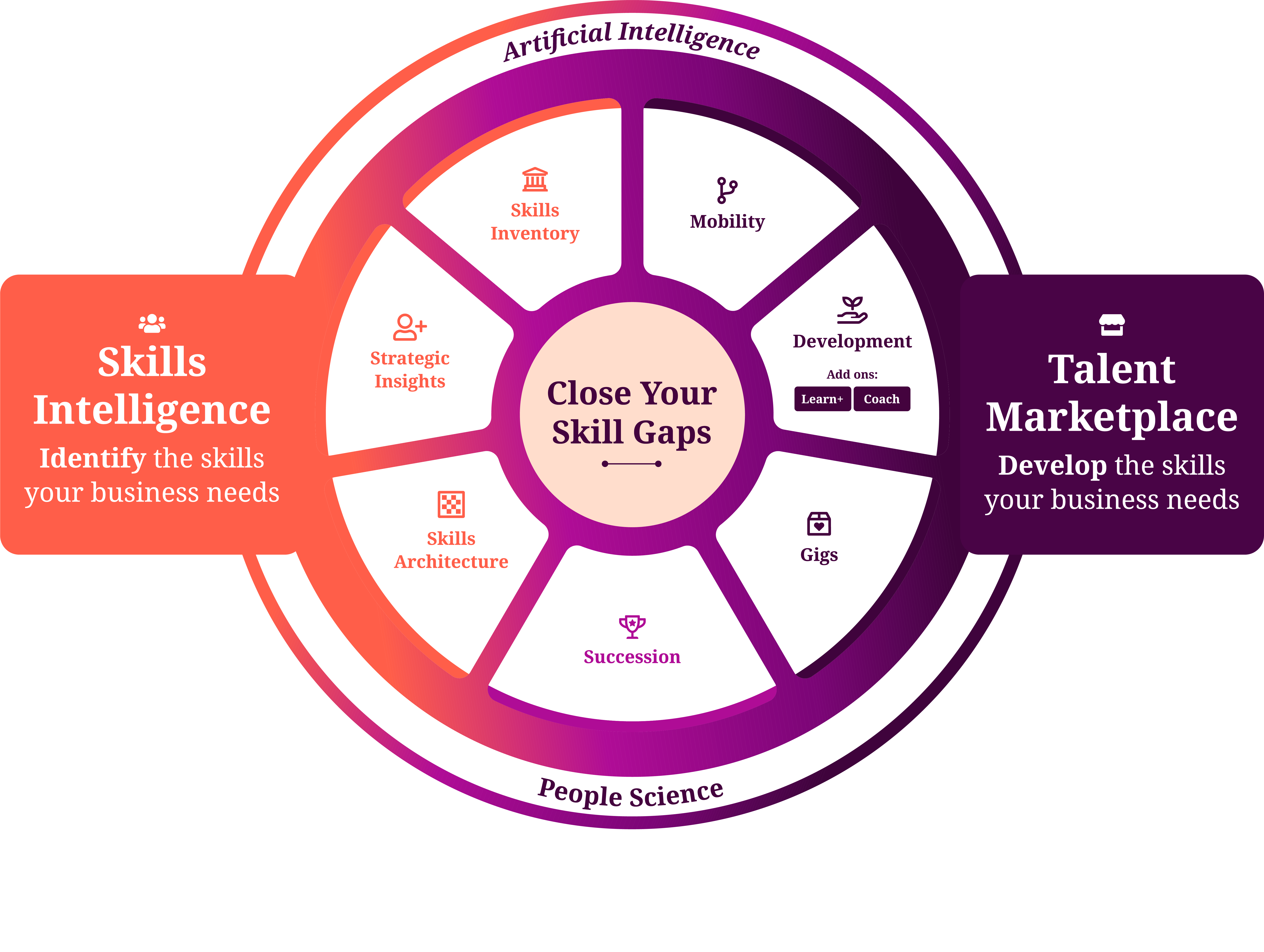
Fuel50 is a workforce transformation platform built to sit on top of an HCM rather than replace it. The setup works because the two systems do different jobs. Paycor holds the master record for each employee, runs payroll, and tracks the day-to-day administrative work HR teams have to do. Fuel50 sits above that record and runs the work that decides whether employees stay, grow, and move into bigger roles. The two systems connect through standard integrations, so employee data flows from Paycor into Fuel50 without manual entry, and the skills and mobility data Fuel50 generates can flow back into Paycor for reporting.
What Fuel50 actually does breaks into three connected pieces. The first is a skills ontology, which is a structured map that defines what skills exist in the world of work and how they relate to each other. Fuel50's ontology covers thousands of skills with proficiency levels for each one, built and maintained by industrial-organizational psychologists, a field that studies how people work and what makes them effective at it. Most HR teams cannot build a skills map this detailed on their own, and the ontology is what makes everything above it possible.
The second piece is an internal talent marketplace, which is a hub inside the company where employees see opportunities matched to their skills and career goals. Opportunities include full-time roles, short-term projects called gigs, mentorships, and learning. The match is done automatically based on the skills ontology, so an employee in marketing who has picked up data analysis skills will surface for relevant analytics gigs without having to know they exist. How NetApp uses a talent marketplace to thrive shows the pattern in practice at a 12,000-person company.
The third piece is AI-assisted career planning. Fuel50 suggests realistic next steps for each employee based on their current skills and the skills required by other roles in the company. The Career Advisor Agent, an AI assistant already running in production at enterprise customers, lets employees ask career questions in plain language and get answers grounded in their own skills and the opportunities actually open to them. Succession pipelines work the same way, built from live skills data rather than static plans, so leaders see who is genuinely ready for a critical role today rather than who was tagged as a successor at the last talent review.
The business case for adding this layer on top of an HCM shows up in retention. Employees who can see a path forward at their current employer stay longer than employees who cannot, and internal movement is the strongest predictor of long-term retention in the workforce data Fuel50 has published across 55 talent mobility statistics for 2026. Johnson & Johnson built their skills-based talent strategy on the same logic at Fortune 50 scale, and the playbook generalizes well to mid-market companies running Paycor.
Alternatives to Paycor HCM
Traditional Paycor competitors
These traditional alternatives to Paycor HCM often offer more extensive customization options and may be better suited for larger organizations or those with complex HR needs. However, they may also come with higher implementation costs and longer deployment times compared to more modern, cloud-native solutions like Paycor.
When considering these alternatives, businesses should evaluate factors such as:
-
Scalability and ability to handle future growth
-
Depth of functionality in specific areas of importance (e.g., payroll complexity, workforce management)
-
Integration capabilities with existing systems
-
Total cost of ownership, including implementation and ongoing support
-
Industry-specific features and compliance requirements
Here are three traditional HCM alternatives to Paycor:
ADP Workforce Now
ADP (Automatic Data Processing) is one of the oldest and most recognized names in payroll and HR solutions. ADP Workforce Now is their comprehensive HCM platform designed for mid-sized businesses. Key features include:
-
Payroll processing with tax compliance
-
Time and attendance tracking
-
Talent management and recruitment
-
Benefits administration
-
HR management and employee self-service
ADP Workforce Now is known for its reliability and extensive experience in payroll processing. It offers strong compliance features and a wide range of integrations with third-party applications.
UKG Pro (formerly Ultimate Software)
UKG Pro, formed from the merger of Ultimate Software and Kronos, offers a robust HCM solution that competes with Paycor in the mid-market segment. UKG Pro provides:
-
Payroll and tax management
-
Benefits administration
-
Talent acquisition and onboarding
-
Performance management
-
Workforce management and scheduling
UKG Pro is recognized for its strong people analytics capabilities and its focus on employee experience. It offers flexibility in deployment options, including cloud and on-premises solutions.
Ceridian Dayforce
Ceridian Dayforce is a cloud-based HCM platform that offers a single database for all HR functions. Its key features include:
-
Payroll and tax
-
Workforce management
-
Talent management
-
Benefits administration
-
Employee self-service and mobile access
Ceridian Dayforce is known for its real-time processing capabilities, which allow for immediate updates across all modules when changes are made. This can be particularly beneficial for companies with complex payroll needs or those requiring up-to-the-minute workforce data.
Modern HCM alternatives
Rippling
Rippling is a modern, cloud-based workforce management platform that combines HR, IT, and Finance functionalities. Key features include:
-
Employee onboarding and offboarding
-
Payroll processing and tax filing
-
Time and attendance tracking
-
Benefits administration
-
Device and app management
Rippling stands out for its ability to manage both HR and IT processes from a single platform, making it particularly attractive for tech-savvy companies and startups.
Namely
Namely is a cloud-based HR platform designed specifically for mid-sized companies. It offers:
-
Payroll and benefits administration
-
Time and attendance tracking
-
Talent management
-
Compliance tools
-
Customizable reporting and analytics
Namely is known for its user-friendly interface and strong focus on company culture and employee engagement features.
Key Takeaways
-
Paycor HCM offers a comprehensive, user-friendly solution for small to medium-sized businesses, with strong compliance management and analytics capabilities, but may have limitations in customization and integration for some organizations.
-
Traditional HCM alternatives like ADP Workforce Now, UKG Pro, and Ceridian Dayforce provide robust, scalable solutions with extensive customization options, particularly suitable for larger organizations or those with complex HR needs.
-
Modern cloud-based alternatives such as Rippling and Namely offer innovative features and user-friendly interfaces, often with a focus on specific aspects like combined HR and IT management or employee engagement.
-
When choosing an HCM solution, organizations should carefully evaluate their specific needs, considering factors such as scalability, functionality depth, integration capabilities, and total cost of ownership.
-
Specialized solutions like Fuel50, while not full HCM systems, offer advanced capabilities in critical areas such as talent marketplace and career development, potentially providing a more targeted and cost-effective approach to talent management when combined with basic HRIS or payroll systems.
Note: Looking for a HCM centered around talent management, employee engagement and retention? Fuel50’s suite of capabilities will give you visibility on your workforce’s skills and help you maximize on internal talent. Book a demo now.
.webp?width=359&height=260&name=Blog%20Template%20-%20V1%20-%20Repetitive%20Pattern%20(48).webp)
.webp?width=359&height=260&name=Blog%20Template%20-%20V1%20-%20Repetitive%20Pattern%20(10).webp)