
ONTOLOGY ENGINE
Keep Every Role’s Skills Up to Date with Real Market Data
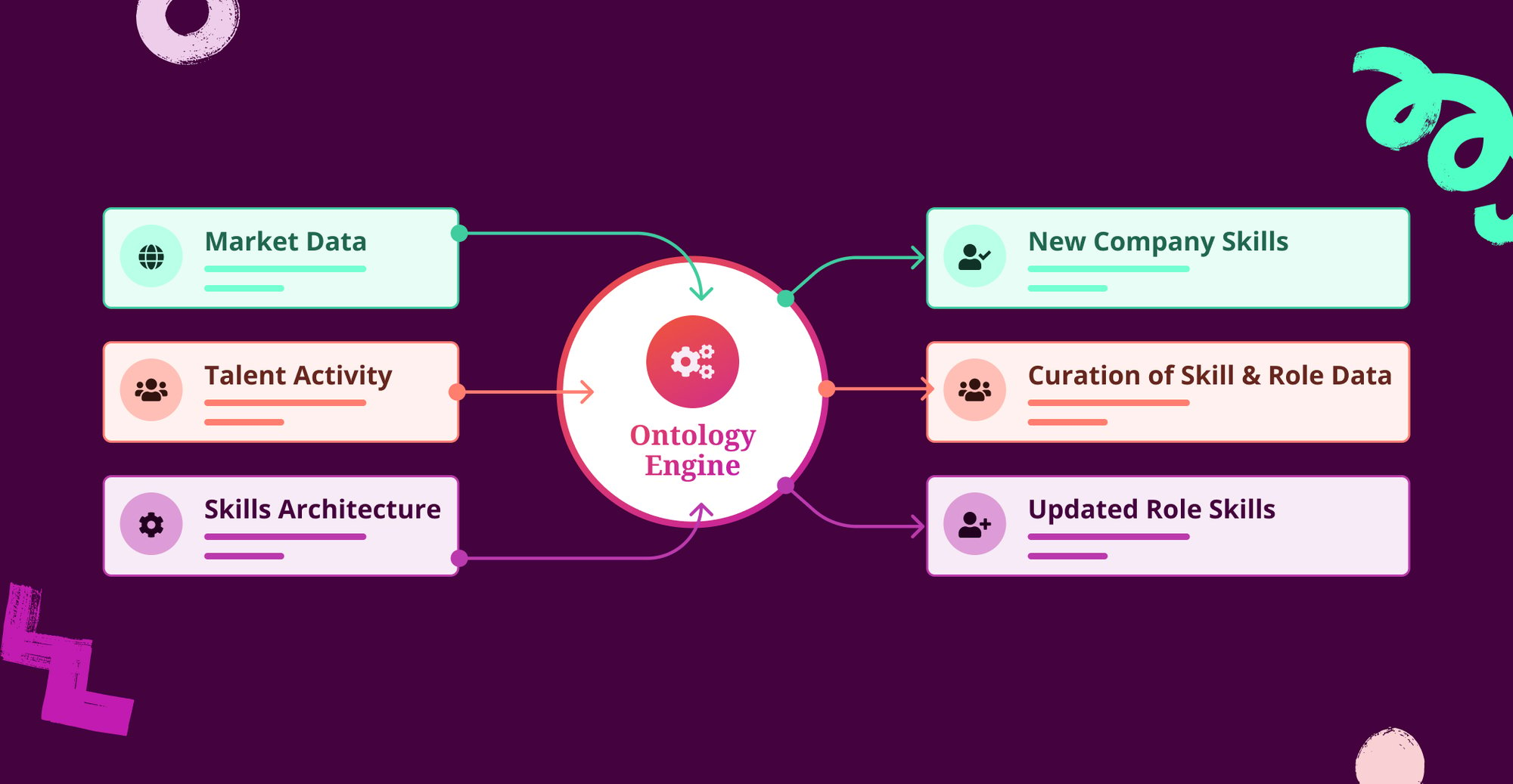
Fuel50’s Ontology Engine checks your roles against real job postings and shows which skills to add or remove.
Your roles stay current. Your career paths stay connected.






A Living Map of Your Roles and Skills
Why "ontology"? An ontology is a map of how things connect. Your skills ontology connects each role to skills it needs and to the roles around it. The Ontology Engine keeps that whole map current, using real job-market data.


Plan on today’s skills
See which suggested changes affect the most of your employees, before you plan your next hire or reskilling program.


Keep up,
even with a small team
When the same skill change shows up in 40 roles, your team reviews it once, not 40 times.


Keep career paths connected
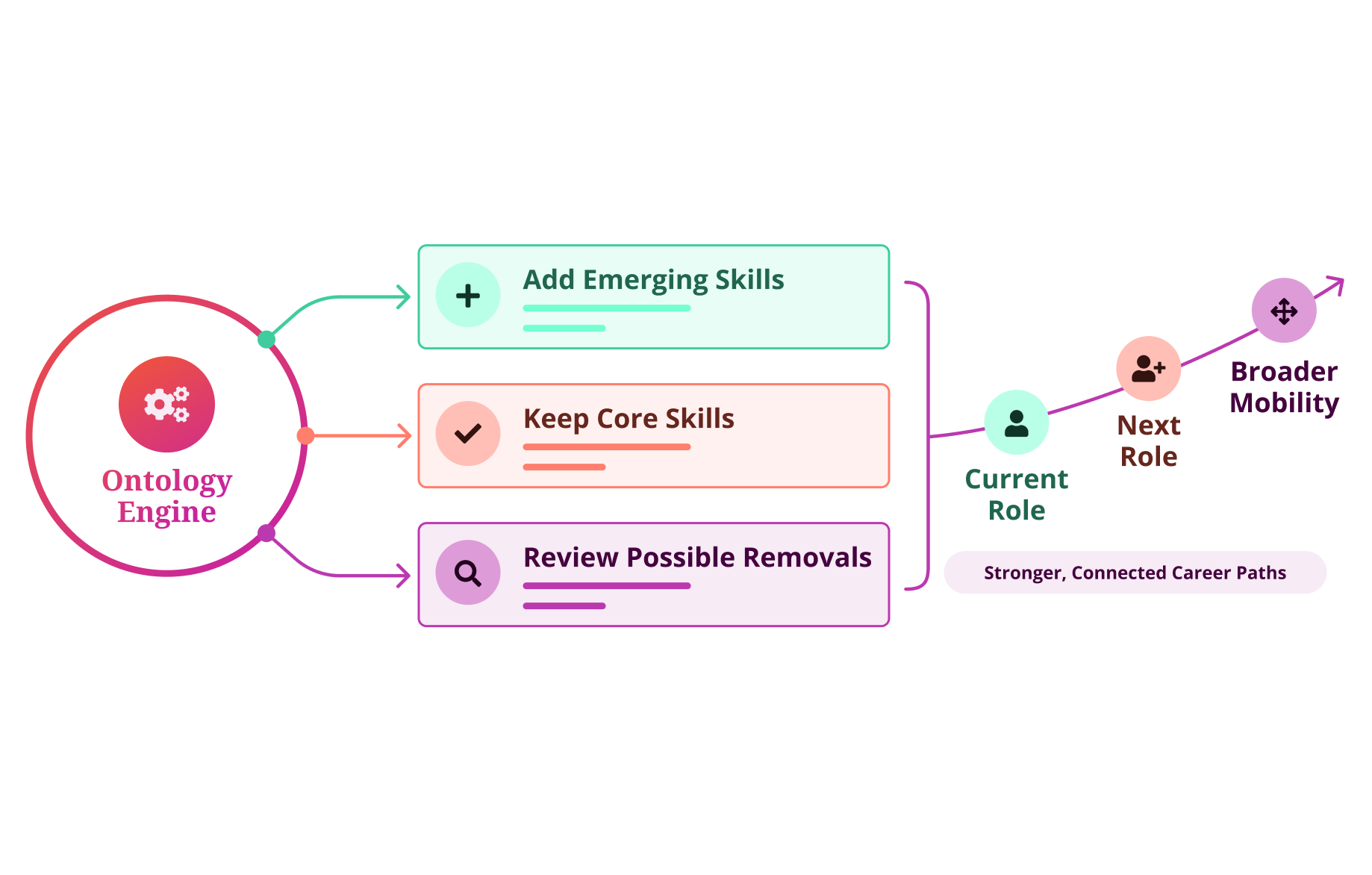
Review a change across every role in the same career path, so each one gets a proficiency level that fits the level of the role.
ROLE-SKILL INTELLIGENCE
Match It. Compare It. Suggest It.
The engine pairs each of your roles with similar roles in the job market, then compares their skills with yours.
Skills to add or review
See which skills a role is missing, and which look out of date.
Backed by market evidence
Every suggestion is based on what similar roles in the job market ask for.
CURATION QUEUE
See It. Check It. Approve It.
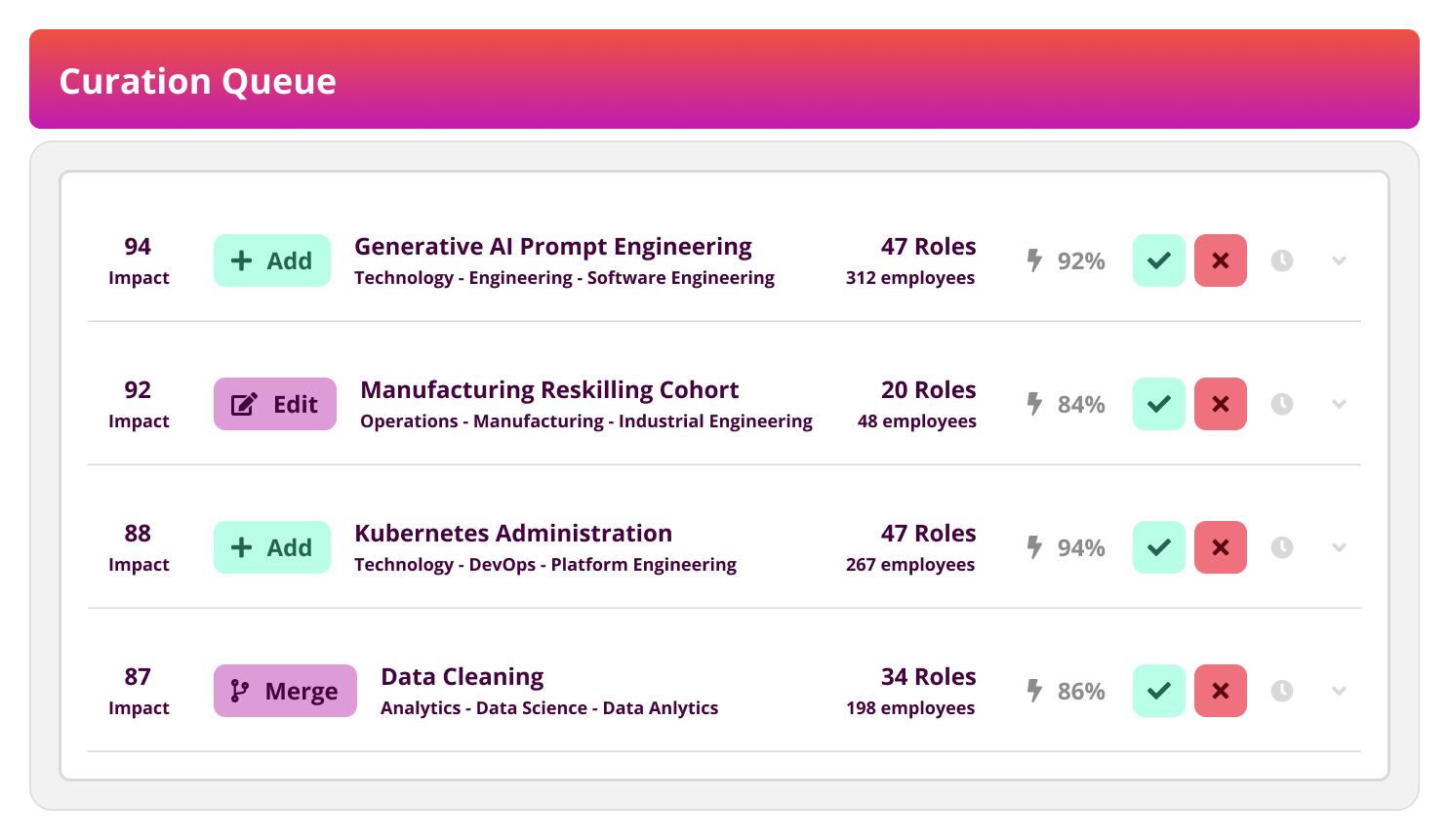
The Fuel50 Ontology Engine powers the suggestions. Curation Queue is where your team reviews them, inside Fuel50’s Skills Inventory, where you manage your roles and skills.
Everything in one place
Each suggestion shows the roles, employees and suggested levels involved – ranked by impact.
Approve, then apply
Accept, adjust or discard each suggestion. Nothing changes in your inventory until it’s approved by you.
Built to Work with Your
Tech Stack
Fuel50's Ontology Engine is part of the Fuel50 Skills Intelligence platform, which connects to the HR systems you already run.
Role, people, and org data flows in from your connected HCM. The Ontology Engine keeps the architecture behind that data current, while your HCM stays the system of record.


Success Stories
Fuel50’s expert‐driven skills ontology powers skills‐based transformation for global
industry‐leading brands.


FAQs
Everything you need to know about Fuel50's Ontology Engine.
What is Fuel50's Ontology Engine?

Fuel50's Ontology Engine brings market intelligence into how your workforce architecture evolves, so the roles, skills, and people it links stay in sync with the business.
How does the Ontology Engine support workforce transformation?
Transformation means deciding where capability comes from: grown internally, hired in, or moved across the business. Those choices lean on accurate, coherent roles. The Ontology Engine brings role requirements up to date and career paths into line, so those choices start from firm footing.
Why does career progression matter when updating role skills?
Because no role stands alone. Change one level without the others, and employees lose sight of how to grow, development priorities get murky, and internal moves get harder to trust. The Ontology Engine reviews every change within the full path, not one profile at a time.
Isn't comparing roles with the market standard now?
Yes, and it's only step one. The Ontology Engine converts that comparison into a decision you can act on: where the change lands, how it scales, and who feels it.
What evidence does the Ontology Engine use?
Data from comparable roles in the external labor market, set against your current role profiles in Fuel50. Market data shows what other employers hire for. Whether that fits your strategy is for your team to judge.
What is the Curation Queue?
The Curation Queue in Skills Inventory is where your team works through Ontology Engine signals. Repeated suggestions are bundled by skill, sorted by workforce reach, and sent into the workflows your admins already use.
Does the Ontology Engine replace our skills architecture or HCM skills tools?
No. Your skills architecture is the design. The Ontology Engine maintains that design as business needs shift. Your HR systems and skills tools stay right where they are.


Update the Role. Protect the Path.
If you're leading workforce transformation, skills, or internal mobility, talk to a Fuel50 expert to see how to start with your highest-impact signals and see exactly where your architecture needs attention.