.webp?width=1280&height=541&name=Blog%20Template%20-%20V1%20-%20Repetitive%20Pattern%20(21).webp)
 Skills Intelligence

Your team just finished four vendor demos, and every platform walked you through the same sequence. An AI ingests your HR data, builds a skills taxonomy, maps proficiency levels, surfaces gaps. Four different dashboards, four similar-looking skill profiles, four versions of the same pitch. You already know what these platforms do. You're trying to figure out which one produces skills data you'd actually stake a promotion decision on, or a restructuring plan, or a succession slate that goes to your board.
We looked at five skills intelligence platforms and focused on the thing you can't evaluate from a demo, which is how the skills data actually gets built. Who designed the proficiency levels, and can they explain why "advanced" in data analysis means what it means? If an employee disagrees with their AI-generated skill profile, what happens? Can you defend a talent decision made with this platform's data when someone challenges it? Those questions shaped every evaluation below.
What to look for when you're making this decision
The table below gives you the facts, but the real evaluation happens when you get back into the demo room and start asking different questions. Instead of asking a vendor to show you their dashboard, ask them to show you a specific skill profile and walk you through how the proficiency level was determined. Ask what "advanced" means for a particular skill and whether that definition is consistent across every role in your organization. Ask whether an employee can dispute a skill rating and what happens when they do.
If AI governance matters to your organization, and it increasingly does as the EU AI Act classifies employment-related AI as high-risk, ask whether the vendor has completed a third-party bias audit and can share the methodology. Ask whether the AI's recommendations are explainable at the individual level, meaning you can show an employee why the platform assessed their skill at a particular level.
These aren't theoretical questions. They're the questions that determine whether you're buying a data platform or a decision-making platform, and whether the skills data you're about to invest in will hold up the first time someone at your organization says "I don't think that rating is right."
Top 5 skills intelligence platforms compared
Here's a comparison table summarizing each platform's capabilities.
| Fuel50 | Eightfold AI | iMocha | Phenom | TechWolf | |
|---|---|---|---|---|---|
| How skills data is built | Ontology designed by I/O psychologists, AI-augmented | AI-inferred from 1.6B career data points | Assessments (2,500+ tests) plus AI inference | AI-inferred from organizational data | AI-inferred from 2B+ job postings and HR data |
| Who designed the proficiency models | I/O psychologists with four defined proficiency levels | AI-generated from career trajectories | Assessment-based; behavioral competency methodology not publicly documented | Methodology not publicly documented | Task-based inference; references Stanford Human Agency Scale for automation scoring |
| Bias audit | Diversity and inclusion reviews built in; NYC LL144 third-party audit completed | Not publicly documented | Not publicly documented | Not publicly documented | Not publicly documented |
| Deployment model | Standalone platform with full talent marketplace | Standalone platform | Standalone platform | Module within talent experience suite | Data layer embedded in Workday/SAP |
| Published adoption evidence | 72% return rate (KeyBank), 85% adoption (CarTrawler) | G2 reviewers praise AI matching quality; adoption data not published separately | IDC MarketScape recognized; adoption data not published separately | Gartner reviewers praise ease of use; adoption data not published separately | >91% skills accuracy reported by one customer; HSBC, Ericsson as named customers |
| G2 rating | See reviews | 4.2/5 (205 reviews) | 4.4/5 (276 reviews) | See Gartner reviews | Limited public review data |
Fuel50
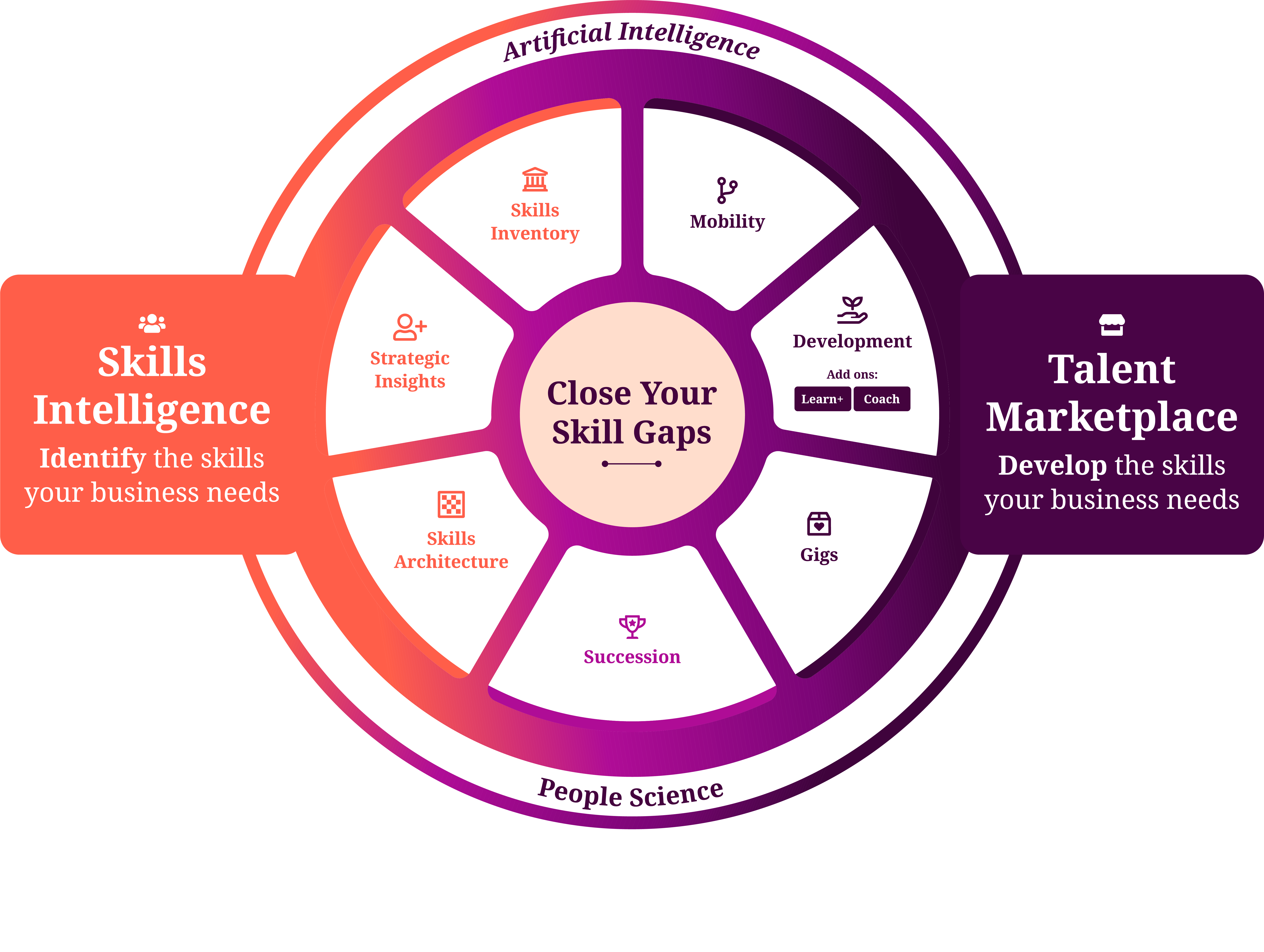
Fuel50 is built around a skills ontology of thousands of skills that were designed by industrial-organizational psychologists, the same people who study how to measure human capability reliably in workplace settings.
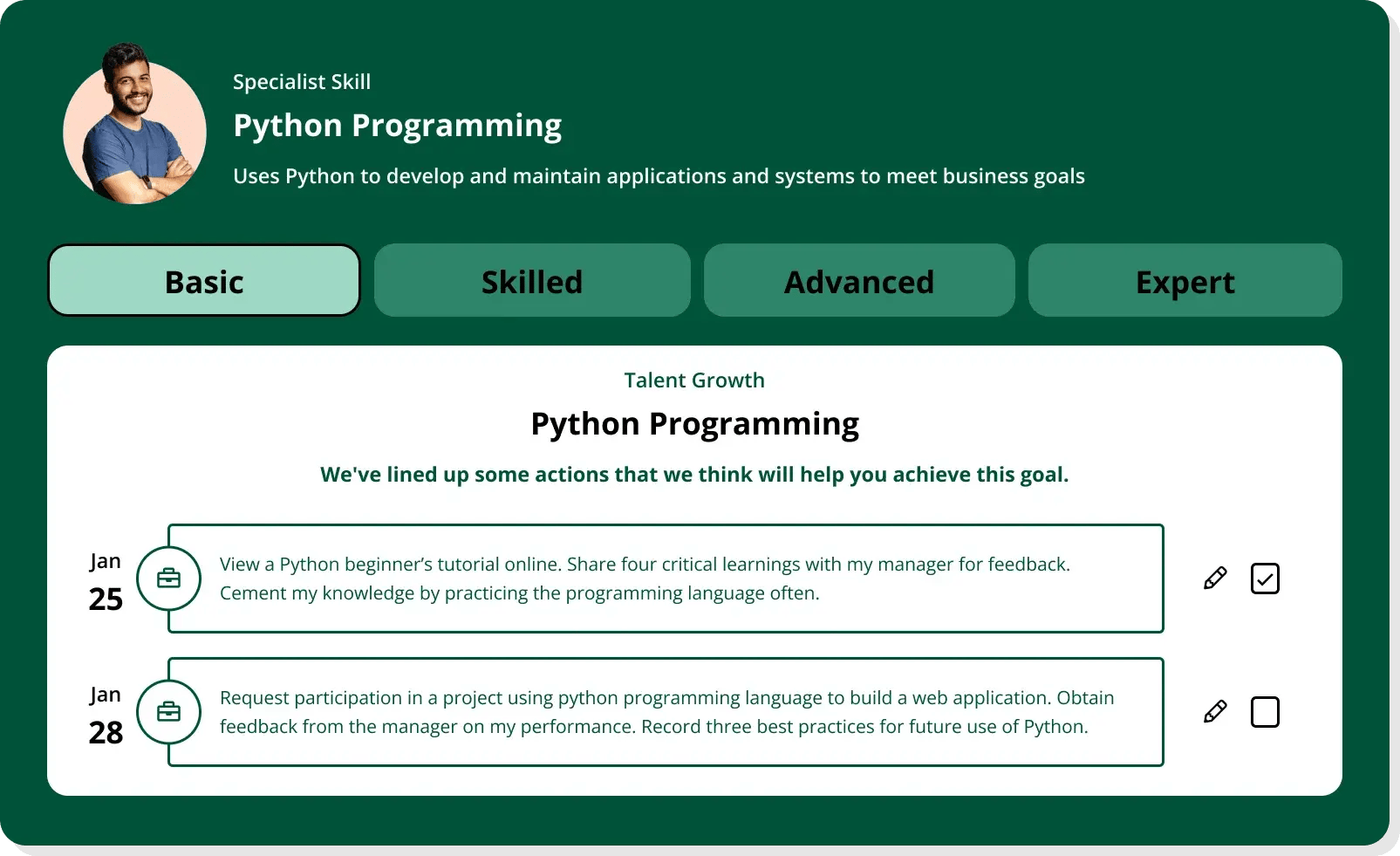
In practice, when you open a skill in Fuel50, say Python Programming, you see four proficiency levels (basic, skilled, advanced, expert) with specific descriptions of what someone at each level can actually do. The platform then suggests concrete development actions tied to where the employee is right now.
A basic-level Python programmer might see "complete a beginner tutorial and share key learnings with your manager." An advanced-level programmer sees entirely different actions.
Those descriptions and actions were written by psychologists who specialize in this kind of measurement, which means the difference between "basic" and "skilled" is consistent whether you're looking at an engineer in Singapore or one in Dublin.
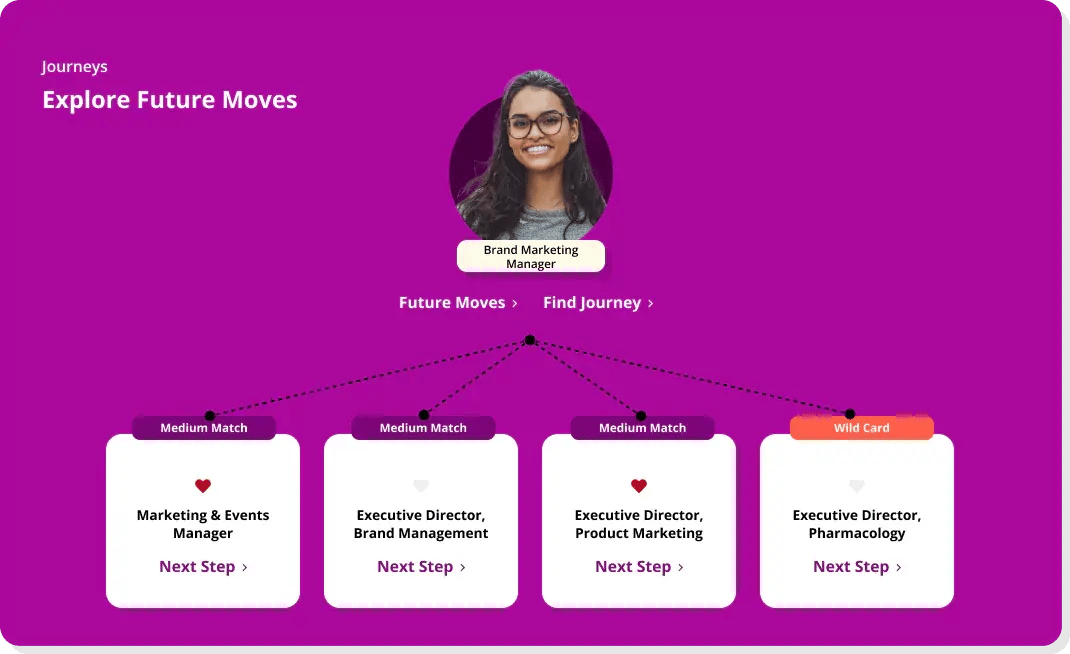
The skills architecture maps what's required at each step of a career path. An HR Associate might need basic-level recruitment and skilled-level employee relations. A Director of HR role requires new skills like culture building and advanced compensation knowledge. A VP of HR role adds employment law and expert-level budgeting.
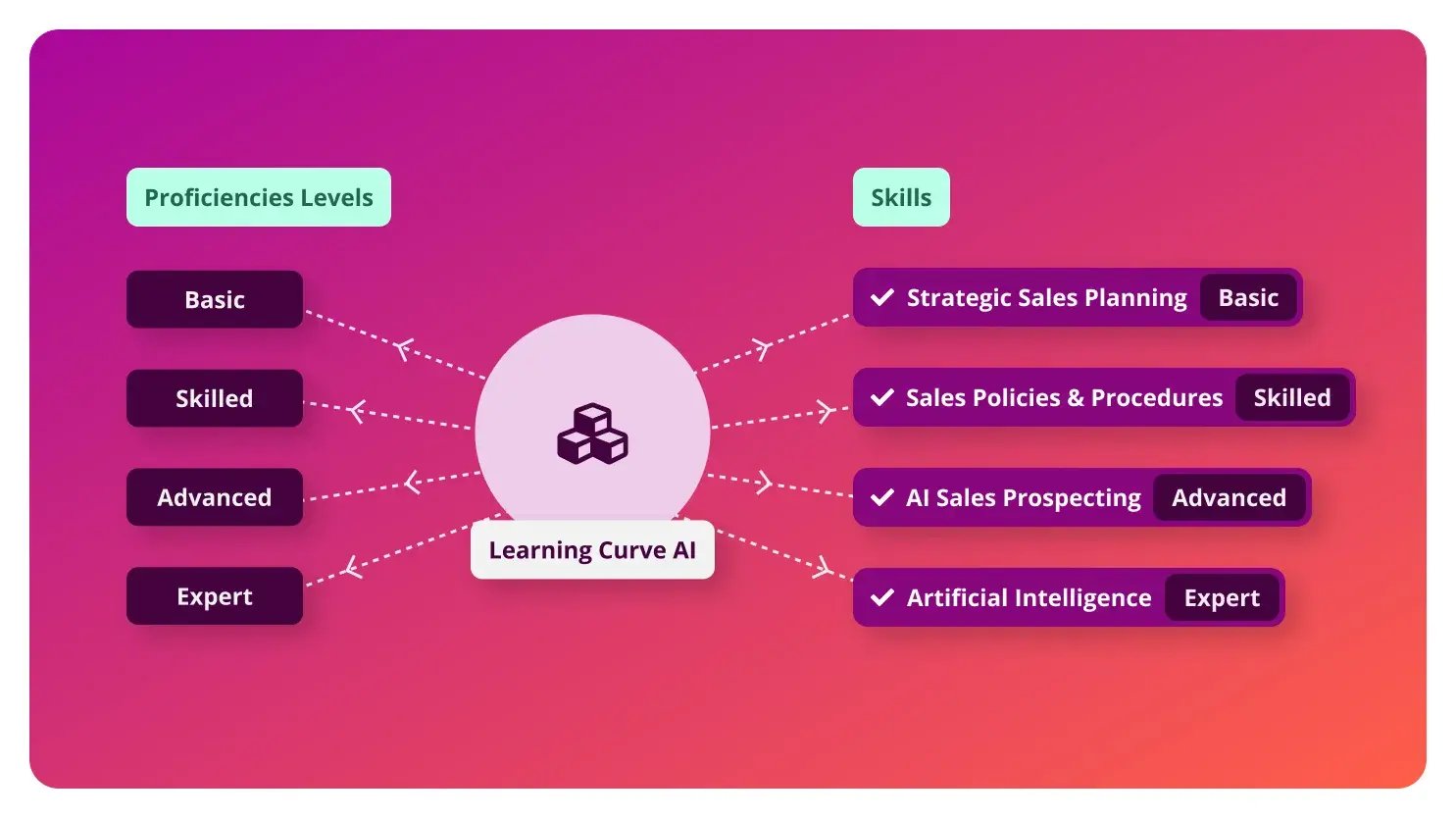
Fuel50 builds this mapping automatically from your organization's role data combined with its ontology, and your HR team can edit any of it. The AI that suggests skills for roles is called Learning Curve AI, and every recommendation it makes is explainable and auditable, which means you can see why the platform suggested a particular skill for a particular role and override it if the suggestion doesn't fit your context.
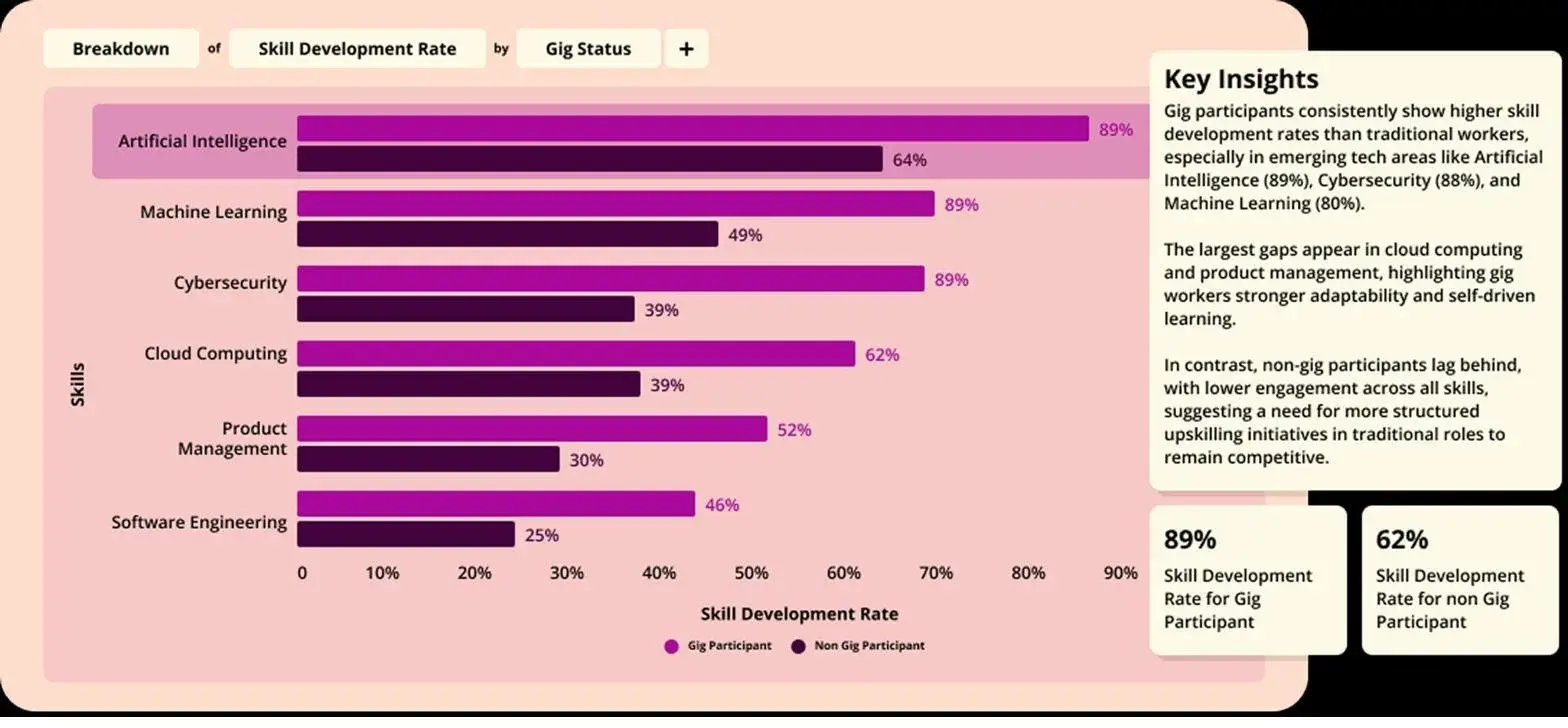
Bias testing is built into the ontology itself rather than applied as a layer on top after deployment. The language in every skill description goes through diversity, equity, inclusion, and belonging reviews to catch biased or exclusionary phrasing, and Fuel50 has completed a NYC LL144 bias audit, which is the kind of third-party validation you can point to when your compliance team asks how the AI makes decisions. Fuel50 Insights gives you dashboards that show who has a skill, who wants it, how it's growing across the organization, and what competitive companies are hiring for.
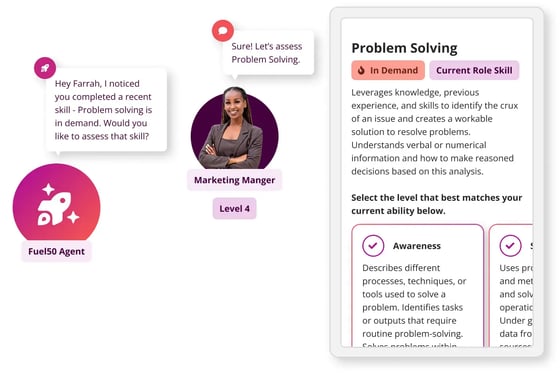
The Career Advisor Agent is Fuel50's agentic AI for career guidance, and it's live in production today.
KeyBank deployed Fuel50 as part of its Future Ready initiative and saw a 72% return rate on platform usage with nearly 10,000 skills assessed across the workforce. CarTrawler achieved an 85% adoption rate after using the ontology to modernize their career framework. City & Guilds has publicly praised the accuracy of skills profiles built through the platform. Fuel50 is available in 13 languages and is deployed across 80+ organizations globally, with particular depth in financial services, healthcare, and manufacturing. (Source: Fuel50 customer stories, G2 reviews)
One thing to know going in. Fuel50 includes a full talent marketplace alongside skills intelligence, with career pathing, gigs, mentoring, and succession planning built into the same platform. If you're looking for a pure skills data layer to plug into an existing system, you'll be getting more than you came for.
Gloat
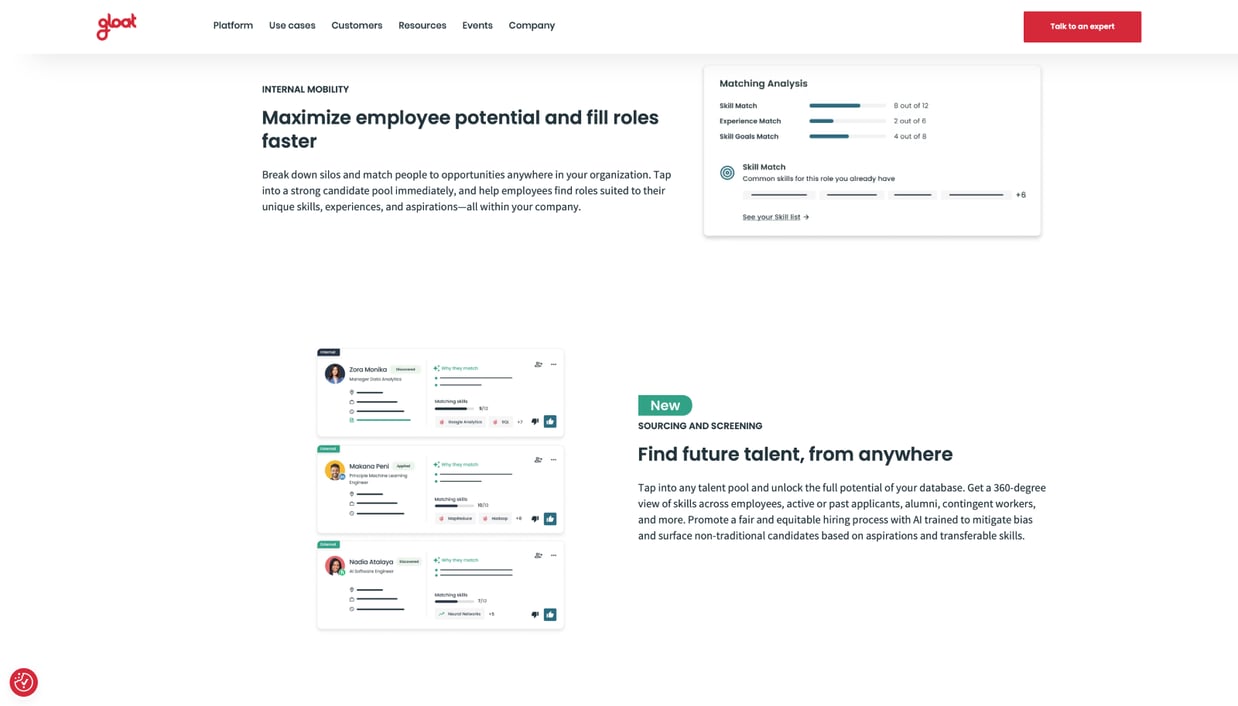
Gloat offers an internal talent marketplace for enterprise organizations. Employees browse opportunities through a dedicated Opportunities page that shows gigs, projects, and career planning tools. The platform integrates with Microsoft Teams.
-
Strengths: Workforce planning tools alongside the marketplace. Microsoft Teams integration. Career Coach Agent launched March 2026.
- Limitations: G2 and Gartner reviewers report a steep learning curve and complex initial setup. Skills ontology is fully AI-generated, with no human curation for behavioral competencies or soft skills. Gartner reviewers note significant preparation work required at rollout to populate the marketplace with enough opportunities.
- Where it's strongest: Organizations running Workday or SAP that want a marketplace alongside workforce planning.
- Adoption evidence: Gartner reviewers praise the AI's personalization after sufficient data training. Published employee-level engagement metrics are limited.
Eightfold
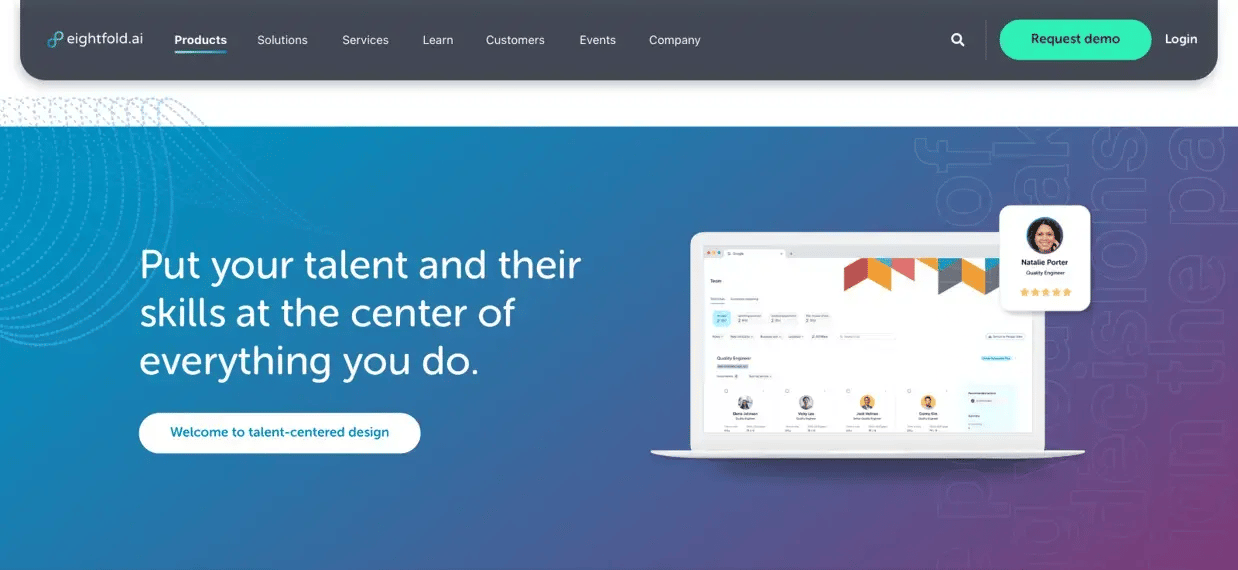
Eightfold takes a different approach. Instead of a curated ontology, it uses a deep learning model trained on over 1.6 billion career data points to infer skills from employee records, career histories, and online profiles. The advantage is that employees don't need to manually build a skills profile because the AI generates one from existing data. The platform spans external hiring, internal mobility, career pathing, and workforce planning within a single skills graph, which makes it a strong fit for organizations that want recruitment and internal talent management on one surface.
G2 reviewers (4.2/5 across 205 reviews) consistently praise the AI's matching quality and the platform's ability to surface candidates for roles based on skills rather than job titles. Eightfold has earned analyst recognition as a leader in the IDC MarketScape, the Everest Group PEAK Matrix, and the Fosway 9-Grid.
Where the tradeoffs appear is in the data itself. Because skills are inferred by AI from career trajectories and external data rather than defined by people with expertise in workforce measurement, the accuracy depends heavily on your organization's data maturity. G2 reviewers flag "data inaccuracy" and "AI limitations" as recurring themes, and several describe the interface as complex to navigate.
Reviewers also note that auditing how the AI reached a particular skills assessment is difficult, which can create challenges if you're in a regulated industry or need to explain a talent decision to a works council. Setup takes weeks to months, and the platform works best in organizations with 2,000+ employees where there's enough data to train the model effectively. (Source: G2 reviews, Gartner Peer Insights, IndustryLabs review)
iMocha
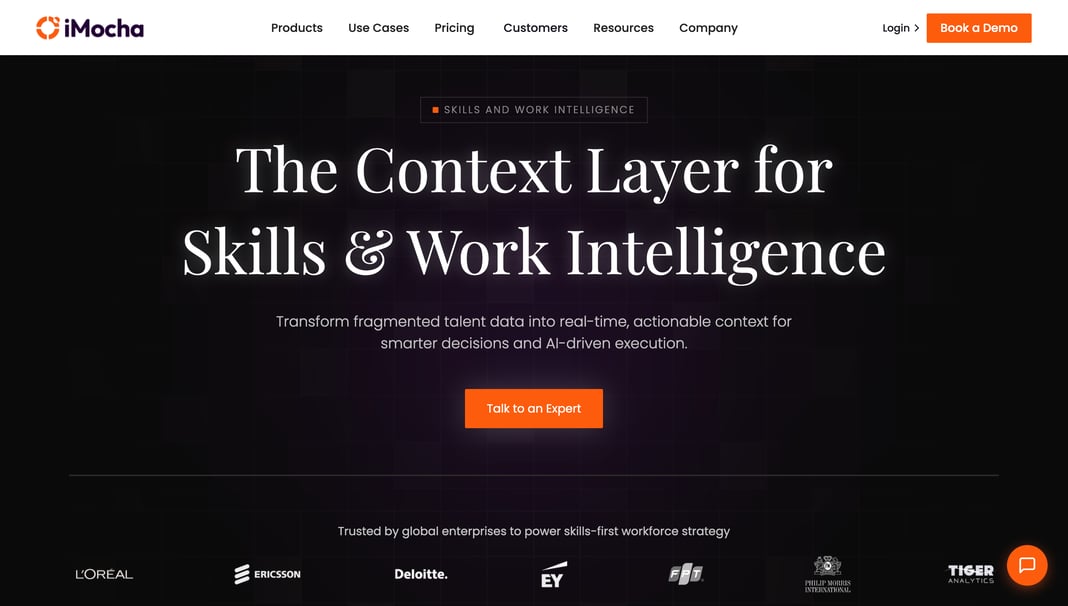
iMocha comes at skills intelligence from the assessment side. Instead of inferring what skills you have from your job history, it tests you. The Skills Intelligence Cloud includes 2,500+ assessments spanning technical and behavioral domains, and skills profiles are built from a combination of test results, HR system data, and AI-powered inference. The platform has been recognized in the IDC MarketScape for Worldwide Talent Intelligence 2026 and holds a 4.4/5 G2 rating across 276 reviews.
The assessment-first approach has a real advantage for the trust question. When an employee's Python proficiency comes from a test they actually took, the data point is harder to dispute than one generated by AI looking at their resume. This makes iMocha especially useful in technical domains where skill levels can be directly measured, like software engineering, data science, or finance.
The tradeoff is friction. Every assessment an employee completes takes time, and at enterprise scale, getting thousands of people to sit through skills tests requires significant change management. G2 reviewers note that the interface can feel complex for first-time users, and the skills intelligence capabilities are newer additions to what started as an assessment and pre-hire testing platform.
iMocha includes behavioral competencies in its skills taxonomy, but the design methodology behind those competencies isn't publicly documented in the way you'd want to see if you're evaluating whether the proficiency levels are scientifically grounded. (Source: iMocha product page, G2 reviews, Gartner Peer Insights)
Phenom
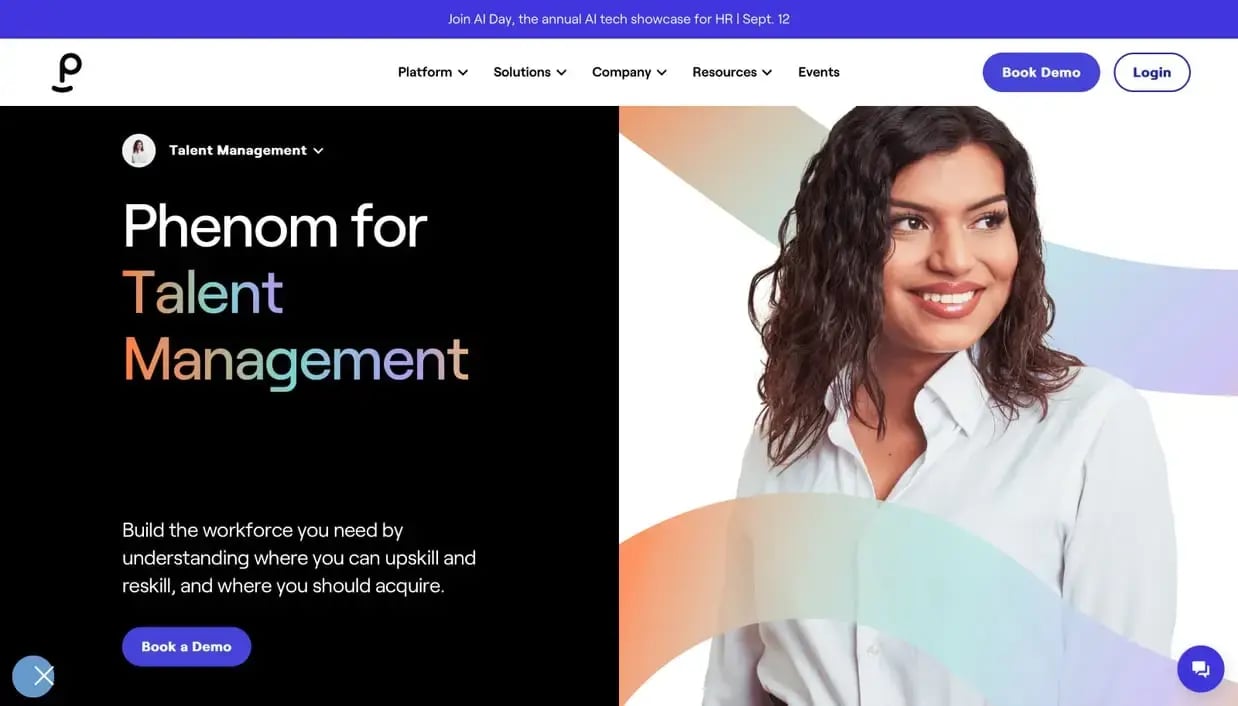
Phenom's skills intelligence lives inside a broader talent experience platform that also covers recruitment, career sites, internal mobility, and employee development. If you're already evaluating Phenom for hiring, the skills intelligence comes along for the ride, and the integration between hiring data and internal skills data is genuinely useful. An employee who sees a skill gap in their profile can access linked learning content immediately, without leaving the platform.
Gartner reviewers consistently highlight ease of use and low adoption burden, which are important if your last platform rollout died on the adoption curve. The platform acquired Included in 2026 to add people analytics and agentic capabilities to the mix.
The tradeoff with breadth is depth. Skills intelligence is a module inside Phenom's suite rather than the foundation the platform was built on, and Gartner reviewers note that some advanced capabilities are behind feature flags that aren't always surfaced to customers. The skills ontology and proficiency model design methodology aren't publicly documented, and reviewers don't comment on data accuracy or validity, which makes it harder to evaluate the trust question from outside the platform.
If you need deep skills intelligence as your primary investment, a dedicated platform may give you more. If you need skills intelligence alongside high-volume hiring from a single vendor, Phenom is worth a close look. (Source: Phenom product page, Gartner Peer Insights)
TechWolf
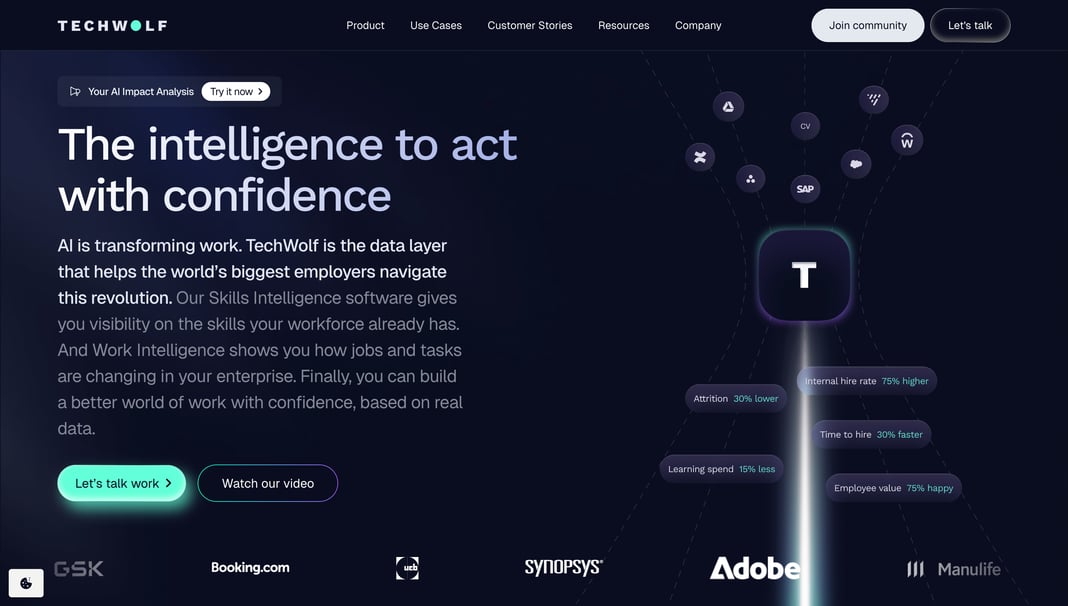
TechWolf doesn't look like the other platforms on this list. It operates as a data layer that integrates directly into Workday or SAP SuccessFactors rather than giving employees a separate interface to log into. The differentiation is that TechWolf combines skills intelligence (what skills your people have) with what it calls work intelligence (what tasks your people actually perform), using AI to map the connection between jobs, tasks, and skills across your organization. Workday was convinced enough to roll TechWolf out across its own 20,400-person workforce in January 2025.
The platform has published customer stories from HSBC, Ericsson, and Atlas Copco Group, and a life sciences client reported that 7,600 employees validated their AI-generated skills profiles with greater than 91% accuracy in four days. TechWolf references the Stanford Human Agency Scale to score AI's impact on specific tasks, which provides academic grounding for the automation side of workforce planning. Brandon Hall Group has cited TechWolf's approach as a differentiated model worth watching.
Because TechWolf is a data layer, it gives you intelligence but not the tools to act on it. If you want career pathing, a gig marketplace, development actions, or an employee-facing experience, you'll need to pair TechWolf with another platform.
The skills data is AI-generated from job postings (2 billion+ globally) and internal HR records, with no published people science methodology or human curation layer for behavioral competencies. Public G2 and Gartner review data is more limited than the other vendors on this list. (Source: TechWolf, Brandon Hall Group)