
.webp?width=1280&height=541&name=Blog%20Template%20-%20V1%20-%20Repetitive%20Pattern%20(3).webp)
 Learning & Development

SAP HCM stands for SAP Human Capital Management. It is SAP's HR software for managing core workforce processes, including employee records, organizational structures, payroll, time management, benefits, personnel development, recruiting, analytics, and workforce planning.
SAP HR was the earlier name many companies used for SAP's human resources module inside SAP ERP (ECC). Today, SAP positions its cloud HCM suite as SAP SuccessFactors HCM, which covers core HR and payroll, talent management, HR analytics, workforce planning, and employee experience management.
For enterprise HR teams, SAP HCM is often the system of record for the workforce. The harder question comes after implementation, when teams need to turn that people data into better talent decisions. Who has which skills, who is ready for internal moves, where succession risk sits, and what development actions matter next are all questions SAP stores the inputs for without always making the answers visible.
What does SAP HCM do?
SAP HCM manages the operational backbone of HR. Each module handles a different part of the employee lifecycle, from hire through to separation.
| Function | What SAP HCM helps manage |
|---|---|
| Employee records (Personnel Administration) | Employee master data, job details, employment history, reporting lines, and contract information |
| Organizational management | Organizational units, positions, jobs, cost centers, reporting structures, and their relationships |
| Payroll | Gross-to-net payroll processing, compensation data, country-specific payroll rules, tax calculations, and retroactive accounting |
| Time management | Clock-in/clock-out data, work schedules, absence and leave management, attendance tracking, and overtime rules |
| Benefits administration | Benefits enrollment, eligibility rules, plan management, and cost allocation |
| Recruiting | Requisition management, applicant tracking, candidate correspondence, and hiring workflows |
| Learning and event management | Training catalogs, course scheduling, attendance tracking, qualification management, and development planning |
| Performance and personnel development | Performance reviews, goal setting, appraisals, qualification profiles, career and succession planning foundations |
| HR analytics and reporting | Standard and ad hoc workforce reports, headcount analysis, compliance reporting, and HR key figures |
| Workforce planning | Position budgeting, scenario planning, headcount forecasting, and cost simulation |
For organizations running SAP ECC, these modules are tightly integrated with finance, controlling, and other ERP functions. That integration is one of SAP HCM's strongest advantages in complex, multi-country environments.
SAP HR vs SAP HCM vs SAP SuccessFactors
The terms SAP HR, SAP HCM, SAP HRMS, and SAP SuccessFactors show up interchangeably in search queries. They refer to different stages of SAP's HR product evolution.
| Term | What it means |
|---|---|
| SAP HR | The older, commonly used name for SAP's human resources module within SAP ERP (ECC). Still widely used informally. |
| SAP HCM | SAP Human Capital Management. Refers to the full set of on-premise HR capabilities inside SAP ERP/ECC, including Personnel Administration, Organizational Management, Payroll, Time Management, Personnel Development, and more. |
| SAP SuccessFactors HCM | SAP's cloud-based HCM suite. Covers core HR and payroll, talent management (recruiting, onboarding, learning, performance, succession, compensation), HR analytics, workforce planning, and employee experience management. |
| SAP HRMS | A common search term people use when they mean SAP's HR management system. Not an official SAP product name. |
SAP provides mainstream maintenance for SAP Business Suite 7 core applications (which includes SAP ECC and its HCM module) until the end of 2027. Optional extended maintenance runs until the end of 2030, with a two-percentage-point premium on existing maintenance fees. SAP's long-term cloud direction centers on SAP S/4HANA and SAP SuccessFactors, with an innovation commitment for S/4HANA extending to at least 2040.
For HR teams still on SAP ECC HCM, this timeline creates a forcing function. Migration planning to SuccessFactors (or a different cloud HCM) is becoming an active workstream, whether or not the team is ready. That shift also opens a window to rethink what the HR tech stack should actually do beyond system-of-record functions.
SAP HCM modules
SAP HCM is organized into functional modules, each handling a specific area of human resources. Most enterprises deploy a subset based on their needs, often starting with Personnel Administration, Organizational Management, Payroll, and Time Management before expanding into talent-related modules.
Personnel Administration (PA)
Personnel Administration stores and manages employee master data, including personal information, employment contracts, job assignments, pay details, and organizational assignments. It is the foundational module that feeds data into nearly every other SAP HCM component. PA also manages infotypes, the data record structures SAP uses to store time-dependent employee information.
Organizational Management (OM)
Organizational Management defines how the company is structured, covering organizational units, positions, jobs, cost centers, tasks, and reporting lines. OM provides the structural framework that connects employees to the organization and supports planning, evaluation, and workflow routing. HR teams use OM to model current structures and simulate future scenarios like reorganizations or new department setups.
Time Management
Time Management tracks working time, absences, leave entitlements, attendance, and overtime. It supports time evaluation rules, shift planning, and integration with payroll for accurate compensation calculations. For organizations with complex shift patterns or multi-country time regulations, this module handles the rule logic that keeps time data consistent.
Payroll
SAP Payroll processes gross-to-net pay calculations, tax withholdings, deductions, and retroactive adjustments. It supports country-specific payroll schemas for over 50 countries, making it one of the reasons large multinationals adopt SAP HCM. Payroll integrates directly with Finance and Controlling (FI/CO) for cost allocation and posting.
Benefits administration
Benefits administration manages employee eligibility, enrollment, plan options, and costs. It supports country-specific benefits programs and integrates with payroll for deduction processing.
Recruiting (Personnel Recruitment)
Personnel Recruitment handles job requisitions, applicant tracking, candidate communication, and hiring workflows. In SAP SuccessFactors, this capability expands significantly with modules like Recruiting Marketing, Recruiting Management, and Onboarding.
Learning and event management
Learning and Event Management covers training catalogs, course scheduling, instructor and resource management, attendance tracking, and qualification updates. In the SuccessFactors environment, SAP Learning replaces this with a more modern learning experience platform.
Performance and personnel development
Personnel Development manages qualifications, career planning, succession planning foundations, development plans, and appraisals. In SuccessFactors, these capabilities expand into dedicated modules for Performance and Goals, Succession and Development, and Compensation.
HR analytics and reporting
SAP HCM includes standard reports, ad hoc query tools, and integration with SAP BW (Business Warehouse) for workforce analytics. Common reports cover headcount, turnover, absence rates, and compliance metrics. SuccessFactors extends this with People Analytics and Workforce Planning modules that support more advanced scenario modeling and predictive workforce insights.
Advantages of SAP HCM
SAP HCM's strengths show most clearly in large, complex, global enterprises where HR data must stay integrated with finance, procurement, and operations.
Centralized workforce data. SAP HCM consolidates employee records, organizational structures, payroll, and time data into a single system of record. For organizations with tens of thousands of employees across multiple countries, that consolidation reduces data fragmentation and makes compliance reporting more reliable.
Deep ERP integration. SAP HCM sits inside SAP ERP, so workforce data flows directly into financial controlling, cost center management, and business planning. Payroll costs post to the general ledger without manual reconciliation. Headcount changes update organizational reporting automatically.
Multi-country payroll and compliance. SAP supports country-specific payroll schemas, tax rules, and regulatory requirements for over 50 countries. For multinationals managing payroll across Europe, Asia-Pacific, and the Americas, this coverage reduces the need for separate in-country payroll providers.
Scalable HR process management. SAP HCM can handle the volume and complexity of very large workforces, including multi-entity organizations, complex union rules, shared services models, and matrix structures.
Strong reporting foundation. SAP's integration with Business Warehouse (BW) and, in the cloud, People Analytics gives HR teams access to workforce data at a level of granularity that many lighter HCM systems cannot match.
Limitations of SAP HCM
SAP HCM's strength as an operational system of record is also its boundary. It manages workforce data effectively, yet turning that data into visible talent action is a different challenge.
Data alone does not create internal mobility. SAP can store employee records, skills fields, and organizational structures. What it does not do as naturally is surface those data points as actionable career paths, internal candidate matches, gig assignments, or succession pipelines. HR teams often still rely on manual processes or spreadsheets to connect people with internal opportunities, even when the data technically exists in the system.
Employee-facing career experiences are limited. Employees using SAP HCM (or even SuccessFactors in many configurations) may not see a clear view of which roles they could grow into, which skills they should develop, which gigs or projects match their interests, or which mentors are available. The system stores information about the workforce yet does not always translate that into something employees can act on.
Leadership visibility into readiness is fragmented. Managers and talent leaders may default to external hiring because internal capability is hard to see. Knowing that an employee exists in the org chart is different from knowing they have 80% of the skills needed for a critical vacancy, expressed interest in that career direction, and could be ready with targeted development.
Implementation and change management remain heavy. SAP HCM implementations are complex, often taking 12 to 24 months or longer for full rollouts. Customization, integration with legacy systems, data migration, and user adoption all require significant investment. Over-customization can create upgrade friction as SAP shifts its innovation focus toward SuccessFactors and S/4HANA.
Cloud innovation is concentrated in SuccessFactors. SAP's product investment has moved to SuccessFactors, meaning new features, AI capabilities, and UX improvements land in the cloud suite rather than the on-premise HCM. With mainstream maintenance for SAP Business Suite 7 ending in 2027, organizations still running on-premise SAP HCM face both a feature gap and a migration decision.
Where SAP HCM needs a talent activation layer
SAP HCM and SAP SuccessFactors are strong systems of record. They help HR teams manage the data and processes behind the workforce. Many enterprises still need a layer that turns that record into a system of movement, converting employee, role, skills, learning, and vacancy data into visible career paths, internal candidate matches, gigs, mentors, development actions, and succession pipelines.
Fuel50 does not replace SAP SuccessFactors. It sits alongside it, activates the people and role data already inside the HR ecosystem, and gives employees and leaders a practical way to move, grow, and plan around skills. Fuel50 integrates with SAP SuccessFactors so that SuccessFactors remains the system of record while Fuel50 powers a live, skills-based talent marketplace, with synced people, role, org, vacancy, and skills data used for internal opportunities, redeployment, upskilling, and governance.
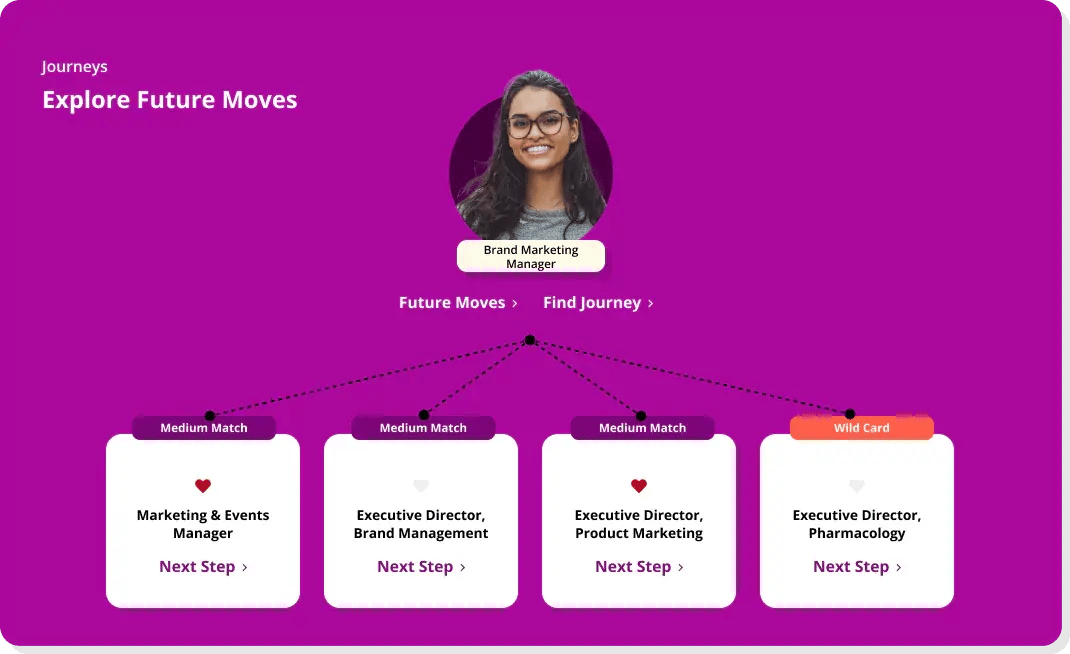
From SAP HCM data to skills-based talent decisions
SAP data looks different as raw records than when activated through a talent layer like Fuel50.
| SAP/SuccessFactors data | What it tells you | What Fuel50 helps activate |
|---|---|---|
| Employee records | Who works here and where they sit in the org | Personalized employee profiles, career journeys, and aspiration matching |
| Job architecture | What roles exist and how they relate to each other | Skills-based role paths, readiness views, and career pathing linked to real skill gaps |
| Vacancy data | Which roles are open | Internal role discovery, employee-to-vacancy matching, and redeployment |
| Learning data | What employees have completed | Learning recommendations tied to actual skill gaps and target roles |
| Skills and profile data | What people may be able to do | Skills validation, proficiency-level gap analysis, gig matching, mentoring, and succession pipelines |
| Org data | How the company is structured | Workforce planning insight, cross-functional mobility visibility, and internal talent supply intelligence |
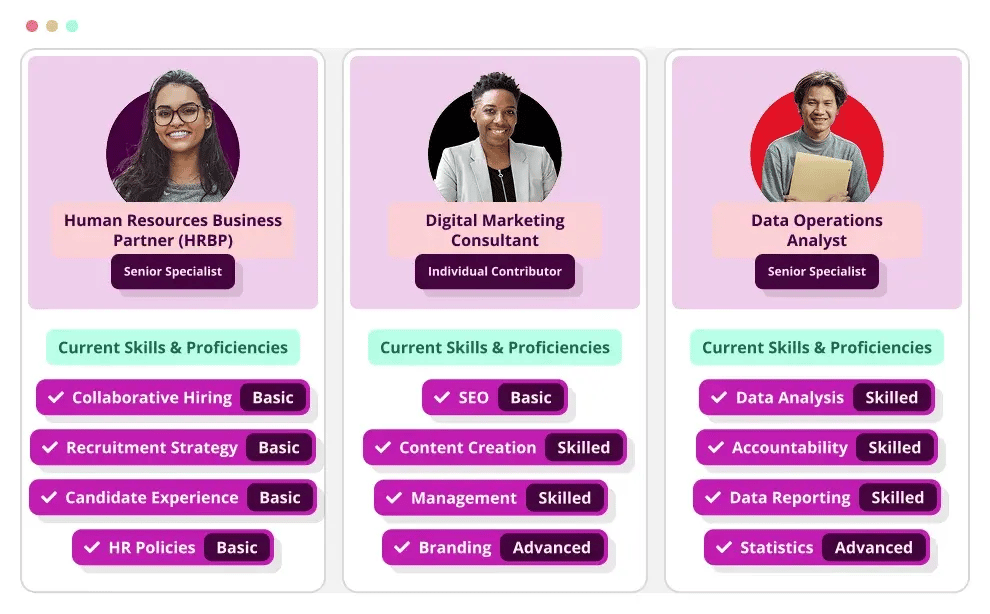
This is the gap most articles about SAP HCM miss. They explain what SAP is. They do not explain what HR teams still struggle to do after SAP is in place, which is connecting workforce data to actual skills movement, career growth, and internal mobility.
SAP HCM alternatives
SAP HCM alternatives fall into two categories depending on what you need to solve.
Full HCM suites
These are options for organizations considering replacing or consolidating their core HR, payroll, time, benefits, or workforce administration platform.
Workday HCM. A cloud-native HCM platform that combines HR, talent management, payroll, and workforce planning in a single system. Workday is known for a clean user interface, strong analytics, and its Skills Cloud for AI-driven skills intelligence. It is a common choice for large enterprises that want a modern cloud alternative to SAP ECC.
Oracle HCM Cloud. A comprehensive cloud HR suite covering the full employee lifecycle, from core HR and payroll to talent management, workforce planning, and HR analytics. Oracle HCM is often chosen by organizations already invested in the Oracle ecosystem and those with complex global requirements.
UKG (Ultimate Kronos Group). UKG offers a combined HCM and workforce management suite, with particular depth in time, scheduling, and labor management. It is a strong fit for organizations with large hourly or shift-based workforces.
Dayforce (formerly Ceridian). A single-application cloud HCM platform with real-time payroll processing, HR, benefits, workforce management, and talent management. Dayforce's continuous calculation engine is a differentiator for organizations that need real-time visibility into payroll and labor costs.
ADP. ADP's HCM offerings range from small-business payroll to enterprise-scale HR and talent management. ADP is widely adopted for payroll and benefits outsourcing and often serves as the payroll backbone in organizations that run a separate HCM for talent functions.
Talent activation layers
These work alongside SAP SuccessFactors (or any HCM), not instead of it. The organization keeps its system of record yet needs a better way to turn workforce data into skills visibility, internal mobility, career growth, and succession.
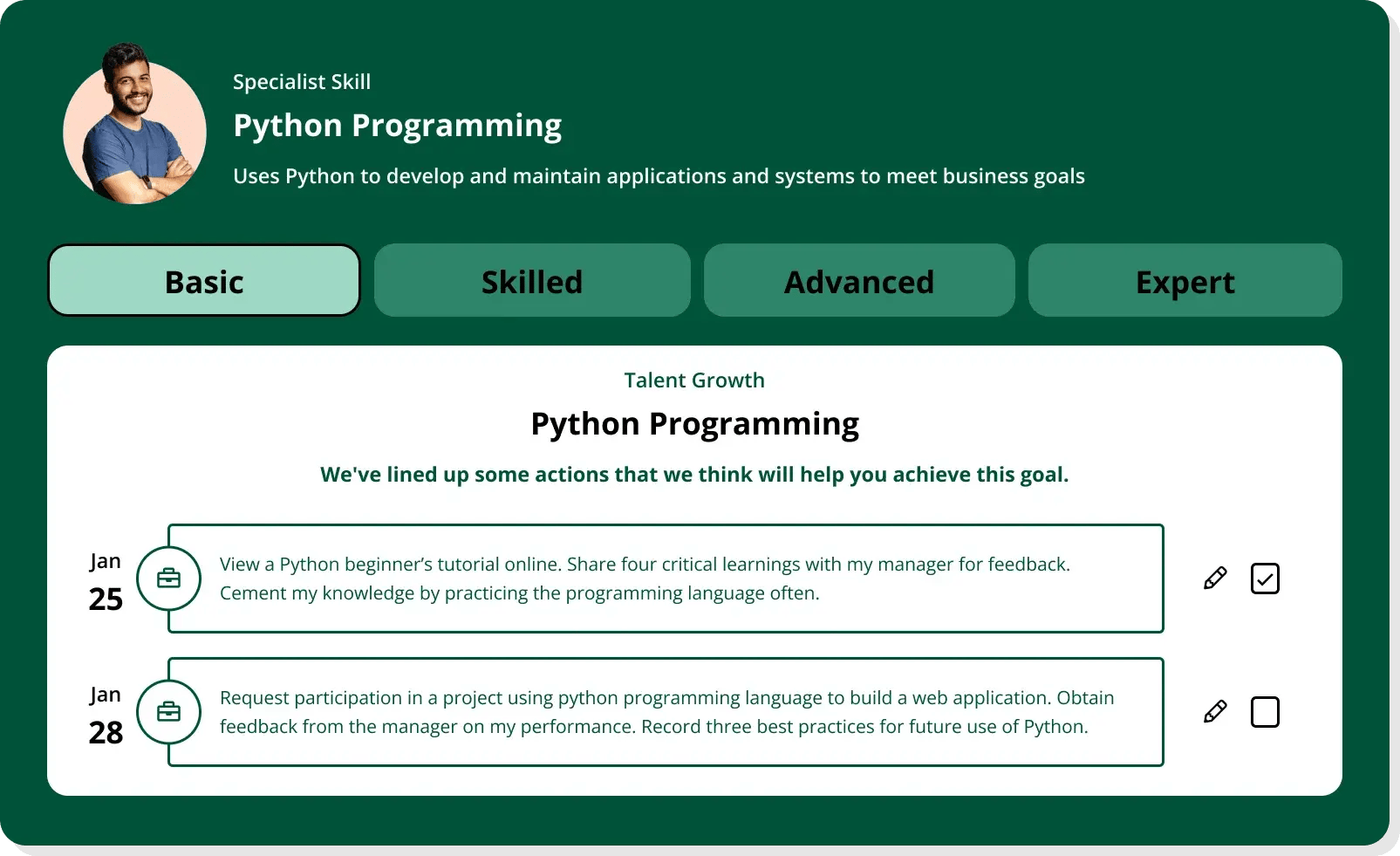
Fuel50. Fuel50 is an AI-powered skills intelligence platform and talent marketplace built on an expert-driven skills ontology of 5,000+ skills maintained by I/O psychologists. It integrates with SAP SuccessFactors, Workday, Oracle HCM, and other systems to activate people data for internal mobility, career pathing, gigs, mentoring, succession planning, and workforce planning. Fuel50's AI is bias-tested and explainable, and its skills framework includes proficiency levels across three dimensions so organizations can measure skill gaps with precision rather than relying on binary skill tags.
Fuel50 is the right fit when SAP SuccessFactors is already managing the HR system of record and the gap is in talent activation, meaning making skills visible, giving employees agency over their careers, helping leaders see who is ready for what, and connecting development to real business needs.
Frequently asked questions
What is SAP HCM? SAP HCM (SAP Human Capital Management) is SAP's HR software suite for managing employee records, organizational structures, payroll, time management, benefits, recruiting, personnel development, analytics, and workforce planning. It originated as an on-premise module within SAP ERP (ECC) and has evolved into the cloud-based SAP SuccessFactors HCM.
What is the full form of SAP HCM? SAP HCM stands for SAP Human Capital Management.
Is SAP HCM the same as SAP HR? SAP HR is the older, informal name for SAP's human resources module. SAP HCM is the broader term that encompasses the full suite of HR capabilities within SAP ERP. In practice, the two terms are used interchangeably.
Is SAP HCM the same as SAP SuccessFactors? No. SAP HCM typically refers to the on-premise HR capabilities within SAP ERP/ECC. SAP SuccessFactors is SAP's cloud-based HCM suite, which covers core HR, payroll, talent management, workforce planning, analytics, and employee experience management. SAP positions SuccessFactors as the successor to on-premise SAP HCM, and its product investment is now concentrated there.
What are the main SAP HCM modules? The main SAP HCM modules include Personnel Administration, Organizational Management, Time Management, Payroll, Benefits Administration, Recruiting (Personnel Recruitment), Learning and Event Management, Performance and Personnel Development, and HR Analytics and Reporting.
Is SAP HCM an HRMS? Yes. SAP HCM functions as a human resource management system (HRMS), covering core HR processes, payroll, time management, talent functions, and workforce reporting.
What is SAP HCM used for in HR? SAP HCM manages the operational backbone of HR, from storing employee data and processing payroll to tracking time and attendance, managing organizational structures, supporting recruiting and development, running compliance reports, and planning workforce capacity.
What are SAP HCM services? SAP HCM services typically refer to implementation, configuration, migration, and support services offered by SAP consulting partners. These services help organizations deploy SAP HCM modules, integrate with other systems, migrate from on-premise to SuccessFactors, and maintain the platform.
What are the limitations of SAP HCM? SAP HCM excels at managing HR data and processes yet has limitations in surfacing that data for talent activation. Employee-facing career experiences, skills visibility, internal mobility matching, and succession readiness are areas where most SAP environments need a complementary layer. Implementation complexity, customization costs, and the transition from on-premise to cloud are also common challenges.
How does Fuel50 work with SAP SuccessFactors? Fuel50 integrates with SAP SuccessFactors to sync people, role, organizational, vacancy, and skills data. SuccessFactors remains the HR system of record, while Fuel50 activates that data inside a skills-based talent marketplace. Employees see personalized career paths, gigs, mentors, and development recommendations. Leaders get visibility into skills supply, internal readiness, and succession pipelines.
Can Fuel50 replace SAP HCM? No. Fuel50 is not a core HCM system. It does not manage payroll, time, benefits, or employee master data. Fuel50 complements SAP HCM and SAP SuccessFactors by activating the skills, mobility, development, and succession use cases that sit on top of the HR system of record.
Already using SAP SuccessFactors? See how Fuel50 turns your SAP people data into a live, skills-based talent marketplace, so employees find roles, gigs, mentors, and development paths while leaders get clearer visibility into internal mobility and succession readiness. Talk to sales →
.webp?width=359&height=260&name=Blog%20Template%20-%20V1%20-%20Repetitive%20Pattern%20(26).webp)
.webp?width=359&height=260&name=Blog%20Template%20-%20V1%20-%20Repetitive%20Pattern%20(24).webp)
.webp?width=359&height=260&name=Blog%20Template%20-%20V1%20-%20Repetitive%20Pattern%20(38).webp)
.webp?width=359&height=260&name=Blog%20Template%20-%20V1%20-%20Repetitive%20Pattern%20(3).webp)
.webp?width=359&height=260&name=Blog%20Template%20-%20V1%20-%20Repetitive%20Pattern%20(21).webp)