


If you’re reading this, you probably already know that tracking employee skills in spreadsheets is a losing game. You know that your organization has skill gaps. You know those gaps cost you money—in missed projects, bad hires, compliance failures, and people who quit because they can’t see a future.
The real question isn’t whether you need competency management software. It’s which one actually solves your problem versus which one just moves your spreadsheet into a shinier interface.
We reviewed 15 platforms for this guide. We looked at their skills libraries, AI capabilities, assessment methods, compliance features, integration depth, and pricing transparency.
TL;DR
| Platform | Best For | Key Capabilities | Skills Library | AI | Pricing |
| Fuel50 | Enterprise | I/O Psychology-backed skills ontology, talent marketplace, skills architecture, career pathing, workforce insights | 5,000+ | Yes | Custom |
| TalentGuard | Enterprise | WorkforceGPT AI, competency frameworks, job profiling, career pathing | N/A | Yes | Custom (Bundled) |
| Kahuna | Enterprise | Frontline skills validation, compliance tracking, readiness dashboards, mobile assessments | Configurable | Yes | Custom |
| iMocha | Mid–Enterprise | AI skill assessments, skills taxonomy, job profiling, gap reports | 5,000+ | Yes | Custom (Free trial) |
| AG5 | SMB–Enterprise | Skills matrices, training tracking, certification alerts, audit readiness | Configurable | No | From ~€100/mo |
| Cloud Assess | SMB–Mid | Skills matrix, on-the-job assessments, competency tracking, compliance | Configurable | No | From $99/mo |
| SkillsDB | Mid–Enterprise | Skills tracking, audits, job role builder, succession planning | Configurable | No | Custom |
| Lexonis | Mid–Enterprise | AI framework builder, career pathing, proficiency mapping | Configurable | Yes | Custom |
| Think Eleven | SMB–Mid | SkillStation: training records, certifications, appraisals, compliance | N/A | No | Custom |
| Mintra | Enterprise | Trainingportal: safety competency assurance, LMS, rotating workforce mgmt | N/A | No | Custom |
| HRSG | Mid–Enterprise | CompetencyCore: AI job descriptions, pre-built competency library, career architect | 300+ | Yes | Custom |
| Cornerstone | Enterprise | Skills Graph, LMS, performance mgmt, content marketplace, compliance | N/A | Yes | Custom |
| Kahuna (Healthcare) | Enterprise | Clinical ladders, nurse competency checklists, Joint Commission compliance | Configurable | Yes | Custom |
| Cognology | SMB–Mid | Competency assessments, performance management, development plans | Configurable | No | Custom |
| Skills Base | SMB–Mid | Self-assessment surveys, skills matrix, gap analysis, team insights | Configurable | No | Free tier available |
What Actually Matters in Competency Management Software?
Every vendor will tell you they have “AI-powered skills management” and “actionable insights.” Here’s what those phrases mean in practice—and what to test for during your evaluation.
Skills data quality and governance. The single biggest differentiator between platforms is how they handle skills data. Some tools give you a blank canvas and expect you to build your own skills library from scratch—which sounds flexible until you realize it takes months. Others provide pre-built libraries but treat skills as static labels that never evolve. The best platforms offer an expert-maintained skills ontology (where skills are connected to each other, to roles, and to market trends) with governance tools so your HR team can customize without losing quality.
Assessment methods that produce trusted skills data. How does the platform actually validate that an employee has a skill? Self-assessment alone is notoriously unreliable. Look for multi-rater validation (self + manager + peer), evidence-based assessments, and skills tracking that captures proficiency levels—not just yes/no checkboxes.
Skills gap analysis that leads to action. Identifying skill gaps is table stakes. The question is: what happens after the gap is identified? The best tools connect gaps directly to development plans, learning resources, gigs, mentoring, and internal mobility opportunities. A gap report that sits in a dashboard is just a prettier spreadsheet.
Integration with your existing HR tech stack. Skills management software doesn’t exist in a vacuum. It needs to talk to your HRIS (Workday, SAP SuccessFactors, Oracle), your LMS, your performance management system, and ideally your BI tools. The depth of integration matters: is it a one-way CSV import, or a live, bidirectional API?
Strategic workforce planning capabilities. Can the tool help you answer questions like: “Do we have the skills to execute our 2027 strategy?” or “If we acquire this company, where are the capability overlaps?” This separates competency tracking software from competency management platforms. If you’re a CHRO, this is the feature that gets you a seat at the strategy table.
The 15 Best Competency Management Software Platforms in 2026
Here are 8 skills management software solutions you can choose from.
Fuel50 — Best for Enterprise Skills Intelligence and Talent Marketplace
Best for: Large enterprises (finance, pharma, tech, education, government) that want to move beyond skills tracking to a full skills-based organization model.
Core problem it solves: Most organizations have skills data scattered across disconnected systems—or worse, locked in managers’ heads. Fuel50 builds a single, continuously evolving skills architecture that connects skills data to career development, internal mobility, workforce planning, and talent decisions. It’s not just about knowing what skills you have; it’s about knowing what to do with them.
Here’s a scenario. You’re the CHRO at a mid-size pharma company. Your R&D team is pivoting toward cell and gene therapy, but you don’t know which of your 4,000 scientists have adjacent skills that could transfer. Meanwhile, your competitor just poached three of your best regulatory affairs people because they couldn’t see a career path. Sound familiar?
Fuel50 attacks both problems simultaneously. Its Skills Intelligence platform maps your entire workforce’s capabilities against current roles and future business needs, while its Talent Marketplace gives employees a personalized career experience that makes them want to stay.
What sets Fuel50 apart
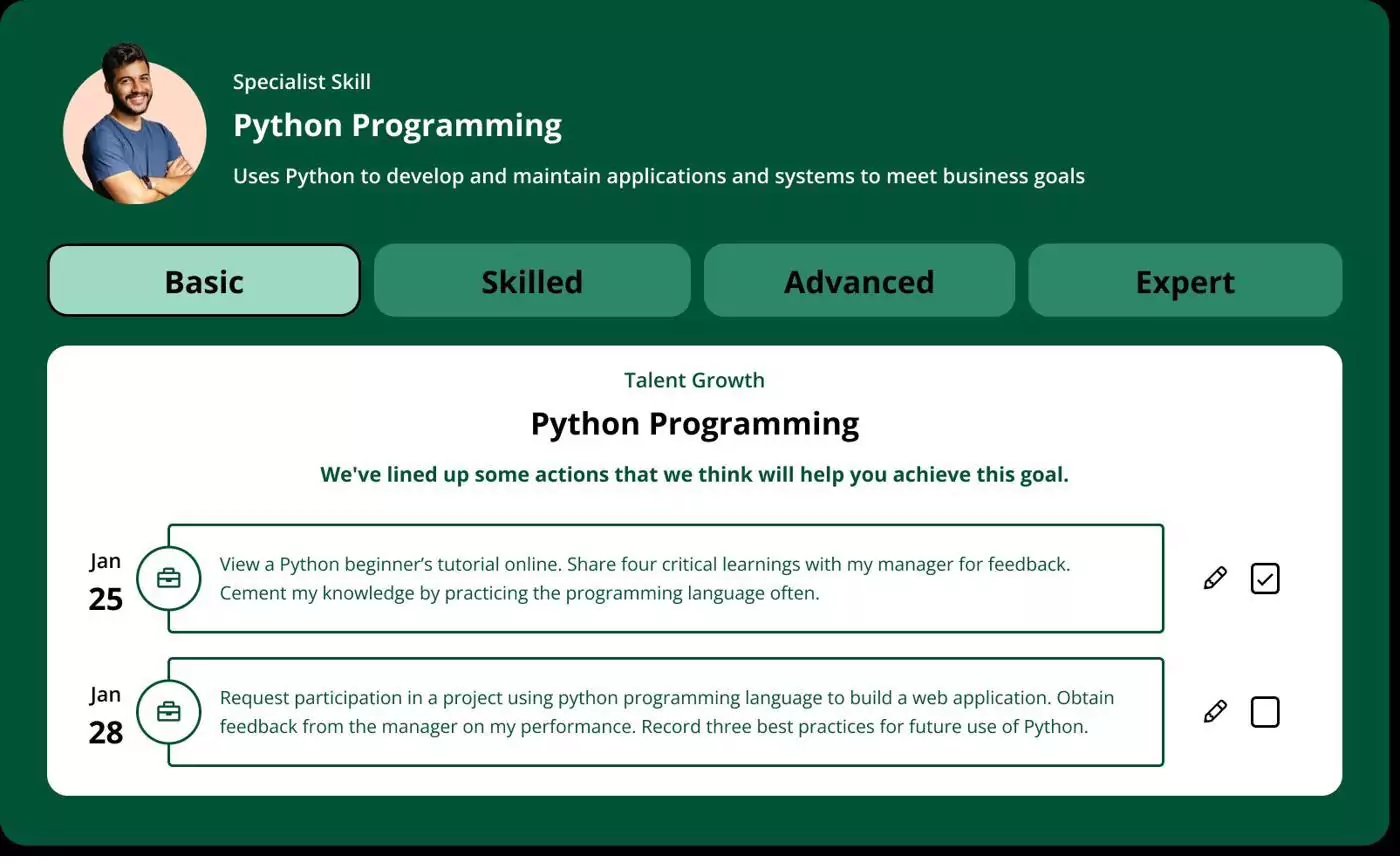
Expert-built skills ontology with 5,000+ capabilities. This isn’t a scraped database. Fuel50’s skills ontology is built and continuously maintained by a team of I/O psychologists and data scientists. Skills are organized in a multi-dimensional graph—showing how skills relate to each other, cluster into competencies, and evolve with market trends. Each skill includes detailed proficiency levels and behavioral indicators. When the market shifts (say, “responsible AI governance” suddenly becomes critical), it shows up in the ontology before it shows up in your competitors’ frameworks.
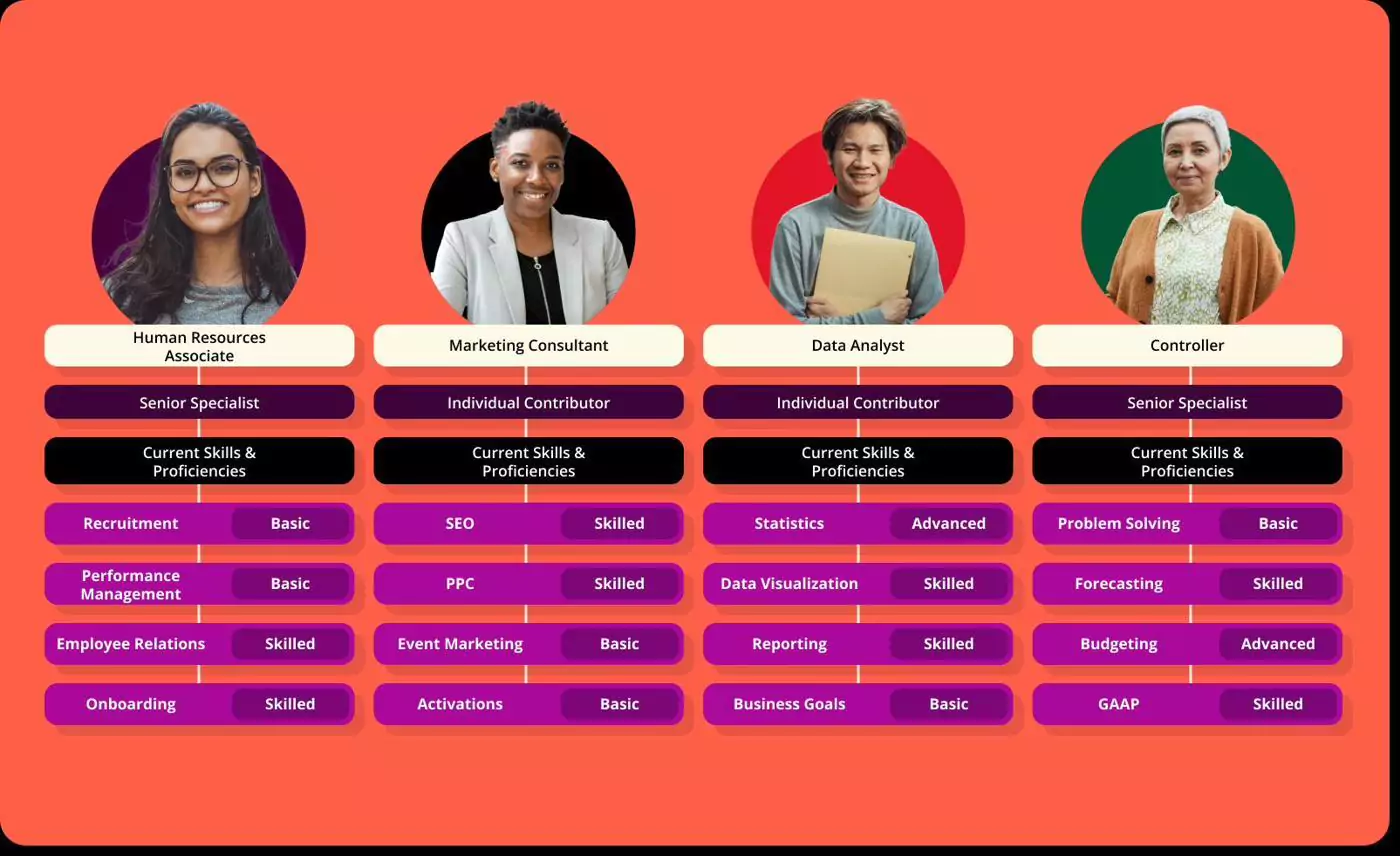
 Talent Blueprint™ for dynamic skills architecture. Fuel50’s AI analyzes your organization’s existing roles, skills, and structure, then maps them to market data to create a living workforce architecture. This eliminates the “job description graveyard” problem—where roles are defined once and never updated. The Talent Blueprint keeps your architecture aligned to reality, not to a document someone wrote three years ago.
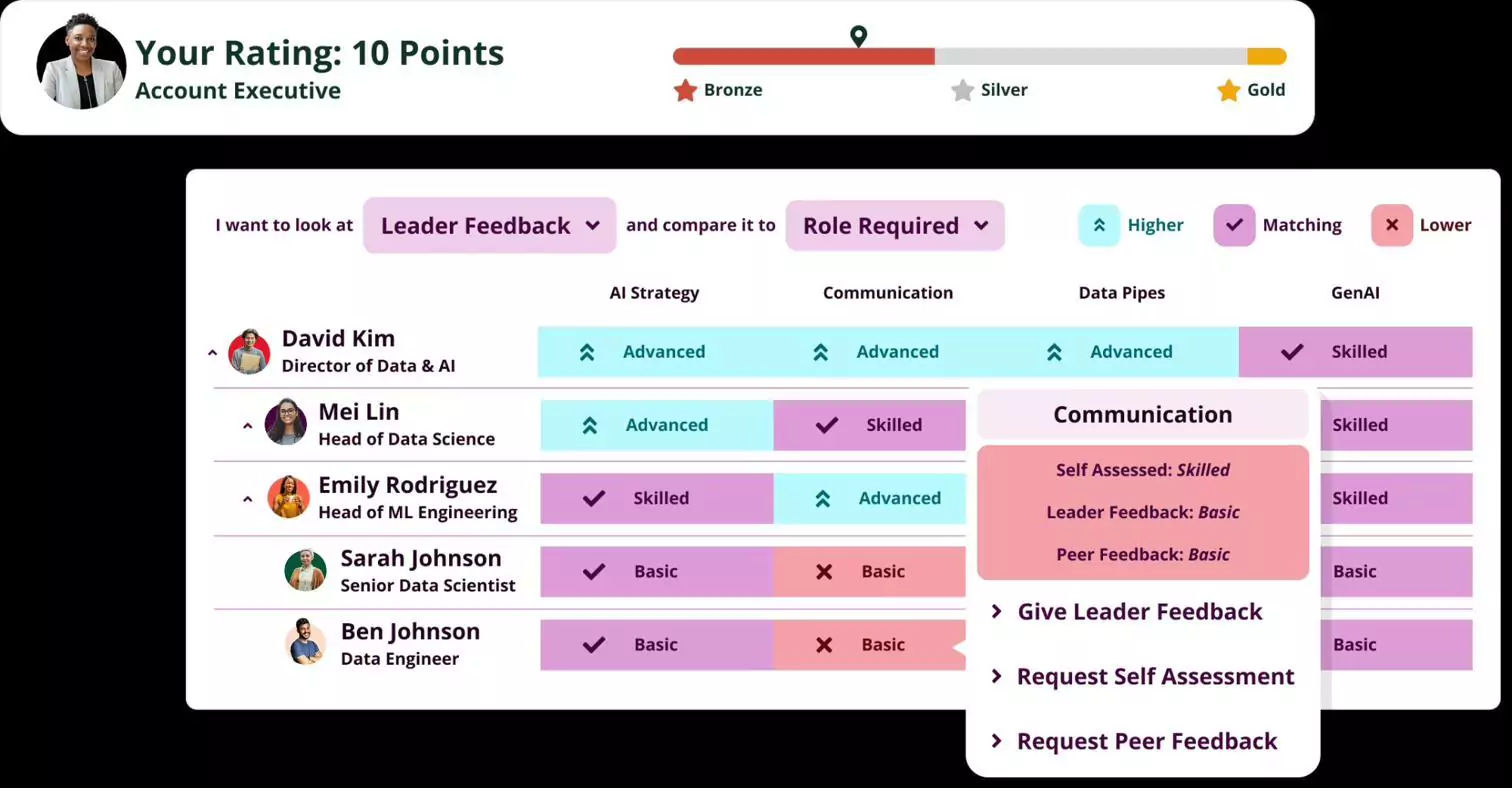
 Skills gap visibility at every level. Fuel50 doesn’t just tell you that skill gaps exist—it makes them visible at the individual, team, department, and organization level. Managers can see exactly where their teams are strong and where they’re exposed. CHROs can see whether the enterprise has the workforce skills to execute next year’s business strategy. That’s the difference between a skills matrix and skills intelligence.
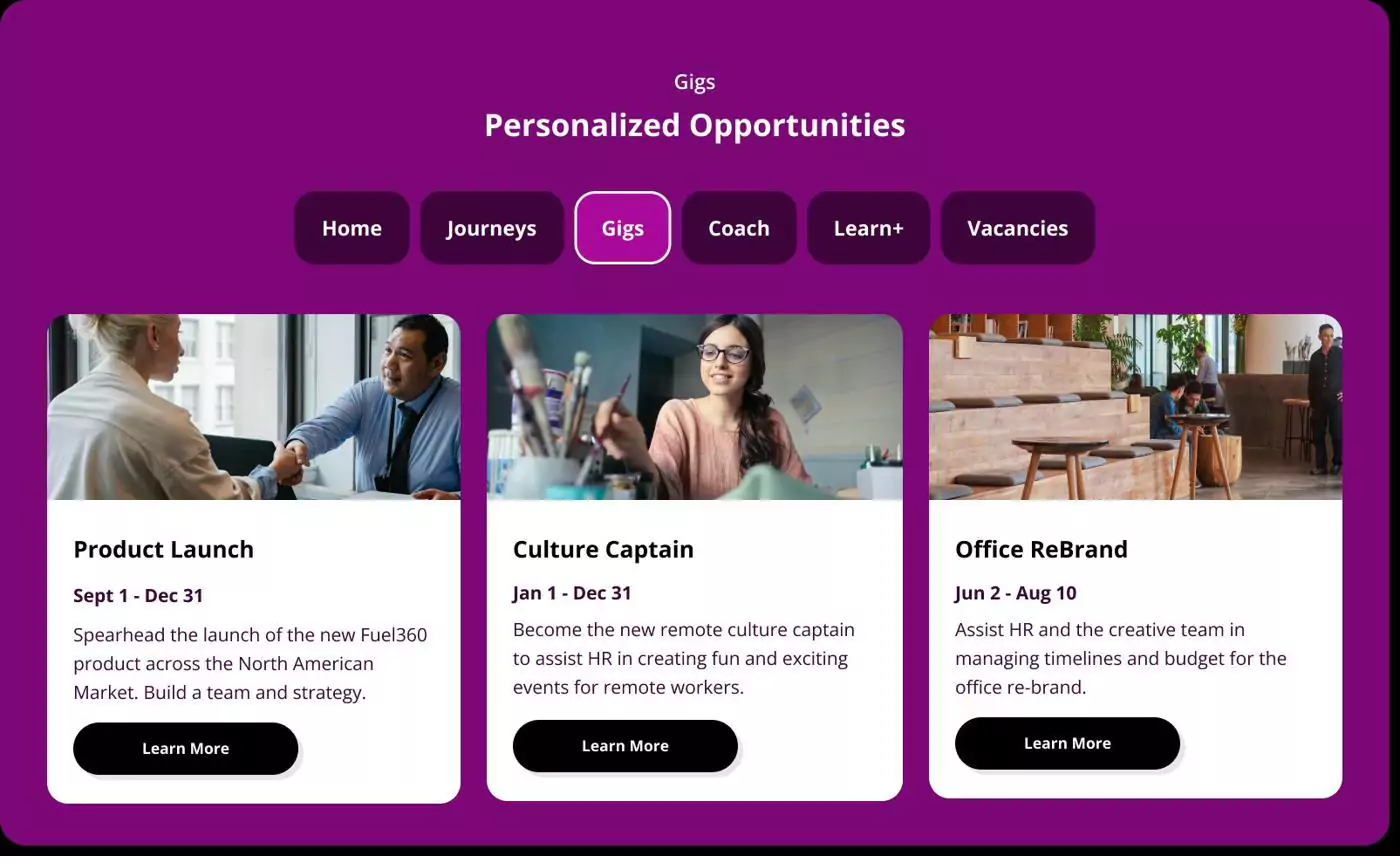
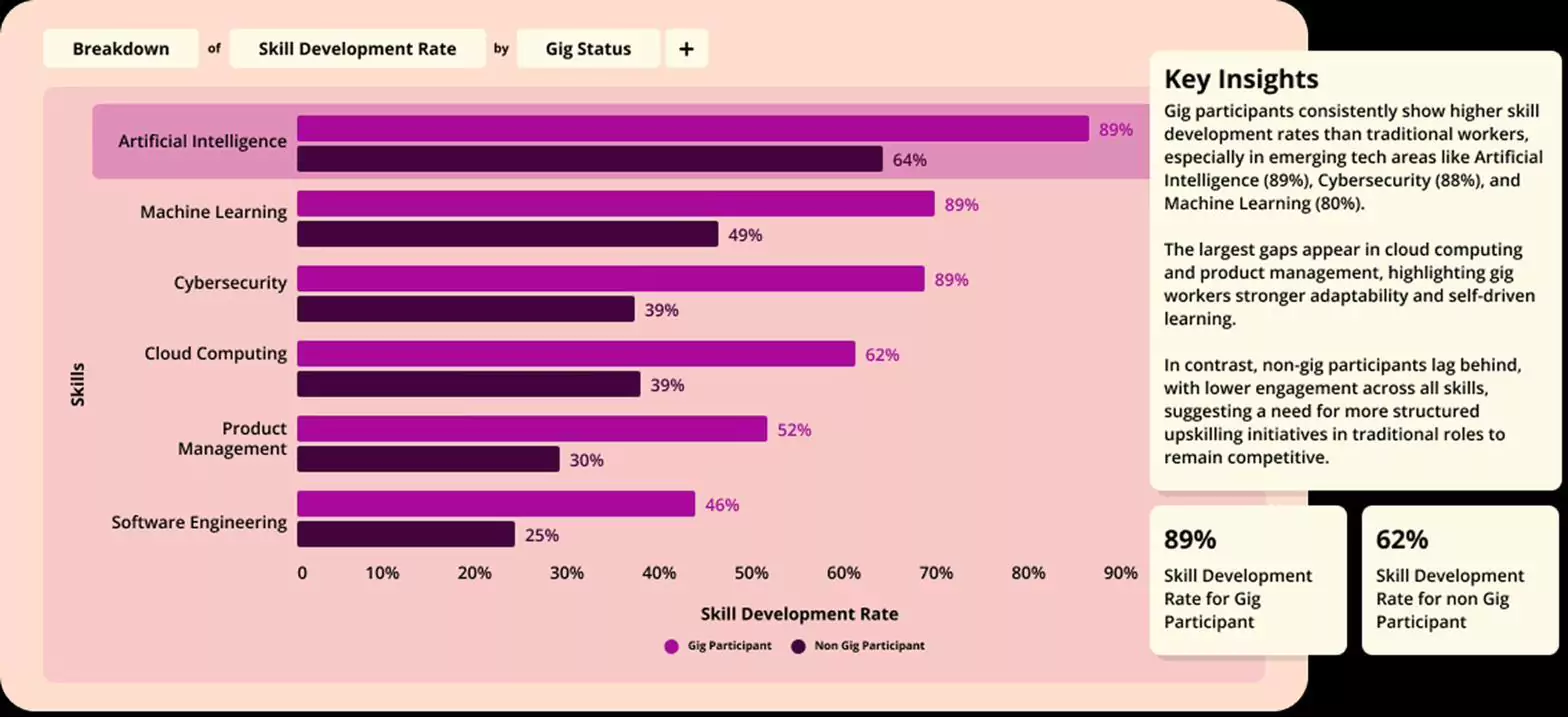 Hyper-personalized talent marketplace. Every employee gets a “career DNA” that evolves based on their skills, aspirations, and achievements. The platform uses this to surface personalized career paths, stretch assignments, gigs, mentors, and learning resources. This is what makes Fuel50 a retention tool, not just a tracking tool. When employees can see three or four possible futures inside your organization, they’re far less likely to look outside.
 Real-time skills intelligence and insights. Fuel50’s Insights module provides executive-level analytics: skills distribution, hot skills trends, retention risks, development ROI, and internal mobility metrics. These aren’t just dashboards—they’re the kind of talent intelligence that supports strategic workforce planning conversations at the board level.
Integrations
Fuel50 integrates with Workday, SAP SuccessFactors, Oracle, Microsoft Azure AD, leading LMS platforms, and BI tools. The integrations are bidirectional, meaning skills data flows in and out of your existing systems rather than creating another silo.
Pricing
Custom pricing based on organization size and modules selected. Fuel50 offers a Skills Intelligence solution (skills inventory, architecture, and insights) and a Talent Marketplace solution (career pathing, gigs, development, coaching, mobility, succession). You can start with Skills Intelligence and expand. See pricing details.
Who should consider Fuel50
Fuel50 is purpose-built for enterprise organizations (typically 2,000+ employees) in industries where skills complexity is high and talent competition is fierce—think financial services, pharma, tech, higher education, and government. If your priority is to close skill gaps, retain talent, and build a future workforce aligned to business strategy, Fuel50 is worth a serious look. If you just need basic compliance tracking for a 50-person team, it’s more than you need.
iMocha: Instantly create AI-powered job profiles with precision.
- Key capability: AI-driven skills assessment and management platform
- Key integrations: ATS platforms (Workday, Taleo, iCIMS), LMS systems, HRIS solutions
- Pricing: Custom pricing based on organization size and needs; free trial available
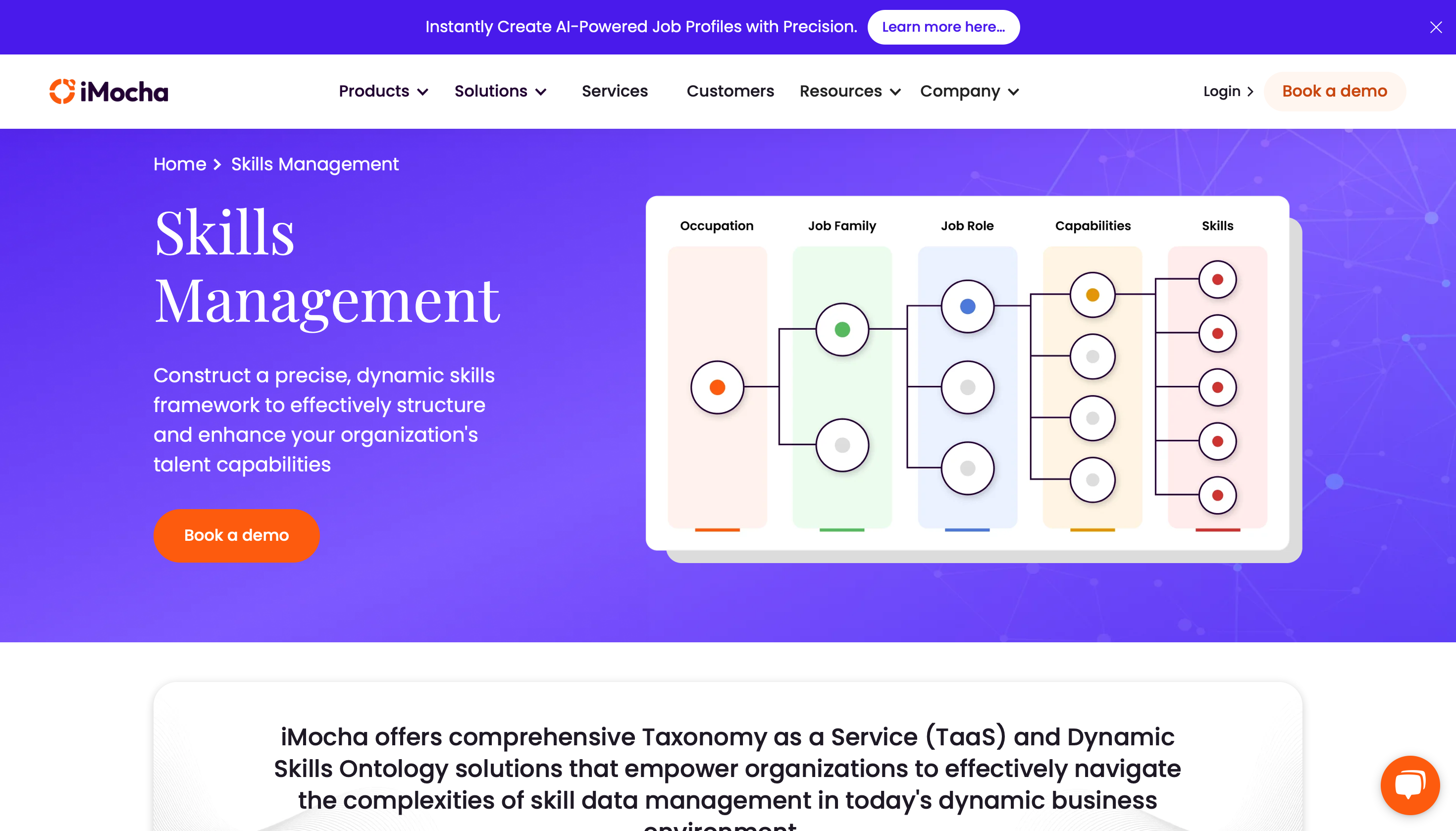
iMocha stands out in the skills management landscape with its focus on precision and AI-powered capabilities. Unlike traditional competency management tools that rely heavily on manual input or static databases, iMocha leverages artificial intelligence to create dynamic, accurate job profiles and skills assessments.
The platform’s strength lies in its vast skills taxonomy, boasting over 5,000 skills across multiple industries. This extensive database allows organizations to structure and define roles with a level of granularity that surpasses many competitors.
For instance, while a platform like SuccessFactors might offer a more general “project management” skill, iMocha can break this down into specific methodologies, tools, and even industry-specific project management nuances.
iMocha’s Dynamic Skills Ontology, covering 500+ skills, is another differentiator. This feature goes beyond simple skill listing to map complex relationships between skills, jobs, and people.
In practice, this means an organization can not only identify that an employee has “data analysis” skills but also understand how those skills relate to other competencies like statistical modeling or data visualization. This depth of insight is particularly valuable for companies in rapidly evolving industries where skill sets are constantly changing.
The platform’s AI-LogicBox feature is a game-changer for creating custom assessments. Unlike many competitors that offer pre-built tests or require manual question creation, iMocha’s AI can generate tailored questions based on specific job requirements. This not only saves time but also ensures that assessments are always relevant and up-to-date with industry standards.
Additionally, developing integrated training programs through iMocha helps address skill gaps by aligning training with organizational competencies and ensuring compliance.
Pros
- Extensive skills taxonomy and ontology for precise role definition
- AI-powered assessment creation for customized, relevant testing
- Strong integration capabilities with major HR tech systems
- Continuous updates to skills database to stay current with market trends
- Gap report displays differences between self-assessments and managerial evaluations, identifying areas for additional training or development
Cons
- May be overly complex for small organizations with simpler needs
- Pricing can be higher compared to more basic assessment tools
- The depth of features may require significant time investment for full utilization
TalentGuard — Best for AI-Automated Competency Framework Building
Best for: Enterprises that need to rapidly build or overhaul competency frameworks using AI automation.
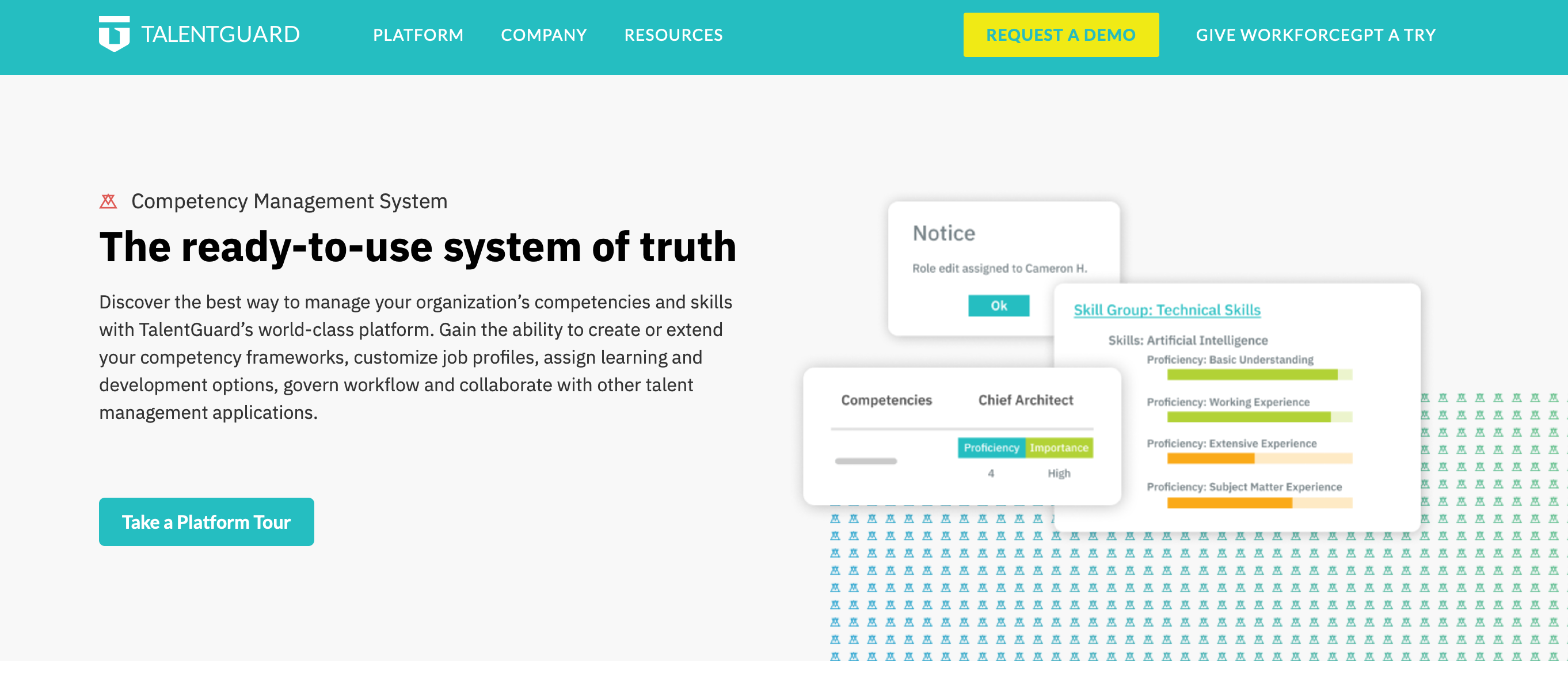
TalentGuard’s headline feature is WorkforceGPT, an AI copilot that generates job descriptions, skill profiles, and competency mappings at scale. For organizations sitting on hundreds of outdated job descriptions, this is genuinely useful—it compresses months of manual framework work into weeks.
The platform is modular. The “Automate” bundle handles framework creation. “Assess” adds skills assessments and gap analysis. “Engage” brings in career pathing and learning. “Optimize” adds workforce planning. This bundled approach means you can scale up without switching vendors, though it also means the full-featured experience requires a significant investment.
Strengths: AI-powered framework generation is genuinely time-saving. The platform covers the full talent management lifecycle. Strong focus on creating a centralized “system of truth” for competency data.
Considerations: AI-generated job descriptions and skill profiles still require human review—an important step some organizations skip. Pricing can be opaque since it depends on which bundle(s) you select. Organizations seeking a simpler skills tracking solution may find the platform more complex than necessary.
Pricing: Custom, based on selected bundles and organization size.
Kahuna — Best for Frontline Workforce Competency Validation
Best for: Healthcare, energy, manufacturing, and aerospace organizations that need validated, audit-ready skills data for frontline workers.
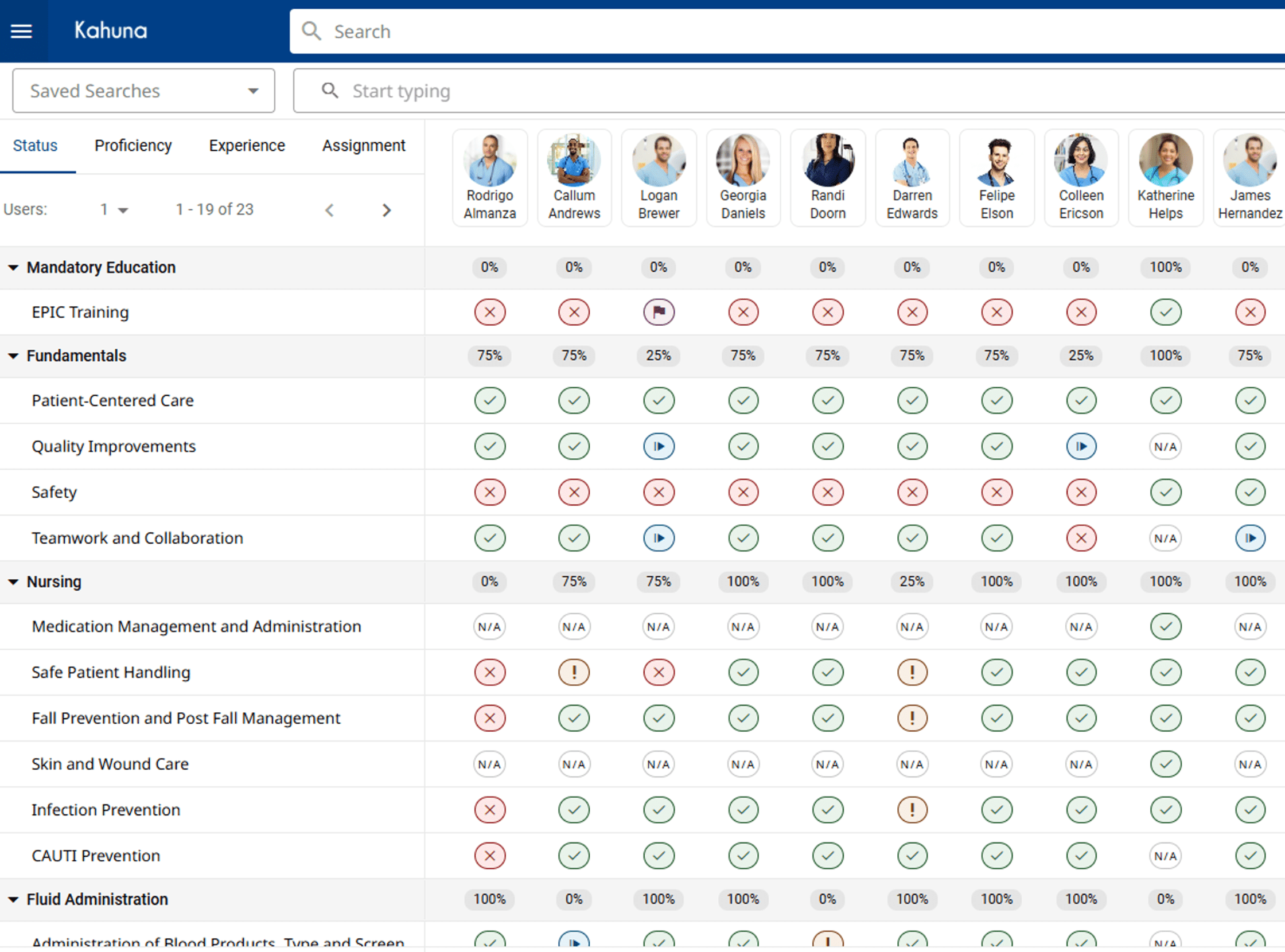
Kahuna solves a very specific problem: in regulated industries, you need to prove that employees are competent—not just assume it. The platform focuses on validated skills data through multi-method assessments (observation, peer review, supervisor sign-off, checklists) and maintains audit-ready records.
Its Team Matrix gives managers a real-time heatmap of their team’s competency status, and its Talent Finder helps staffing teams quickly locate employees with specific validated skills. The mobile app supports offline assessments—critical for field workers who aren’t sitting at desks.
Strengths: Purpose-built for compliance-heavy, safety-critical environments. Trusted by organizations like Shell and Cedars-Sinai. Integrates with Oracle, SAP SuccessFactors, Cornerstone, UKG, and Docebo. Offline mobile assessments are a differentiator.
Considerations: The platform’s strength in frontline validation means it’s less focused on career development, talent marketplace, and the employee experience side of skills management. Organizations looking for an end-to-end skills-based talent strategy may need to pair Kahuna with another platform.
Pricing: Custom enterprise pricing.
iMocha — Best for AI-Powered Skills Assessment at Scale
Best for: Organizations that need to assess and benchmark employee skills across a large workforce, especially for hiring and internal mobility decisions.
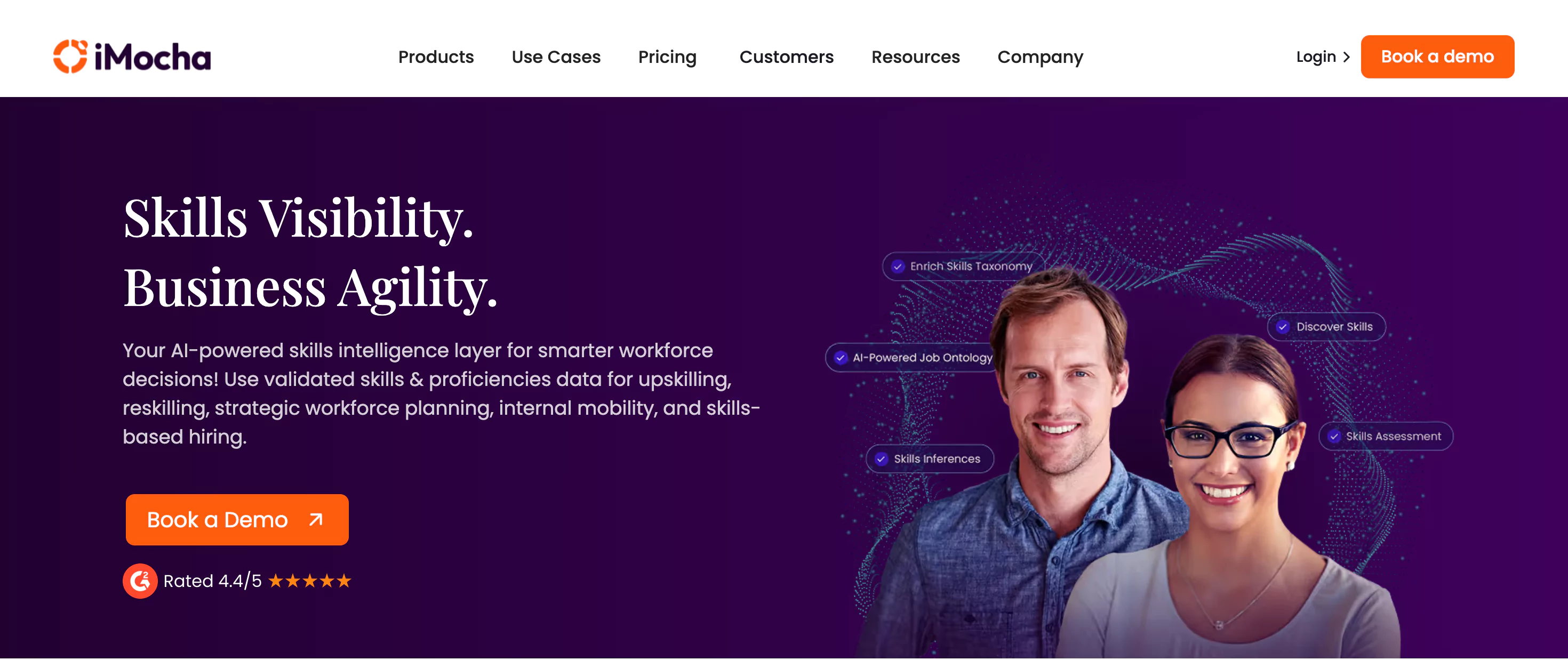
iMocha started as a pre-hire assessment platform and expanded into skills management. Its core advantage is assessment depth: over 5,000 skills across multiple industries, with AI-generated custom assessments (AI-LogicBox) that adapt to specific job requirements. The platform’s skills gap reports compare self-assessments against manager evaluations, highlighting discrepancies.
Its dynamic skills ontology maps relationships between 500+ skills, helping organizations understand adjacencies (e.g., how “data analysis” connects to “statistical modeling” and “data visualization”). This is useful for identifying reskilling pathways.
Strengths: Unmatched assessment library and AI-powered test creation. Strong integrations with ATS platforms (Workday, Taleo, iCIMS) and HRIS. Gap reports that compare multiple perspectives on skill levels.
Considerations: The assessment-first approach means the platform is stronger on measuring skills than on developing them. Career pathing, internal mobility, and workforce planning features are less mature than dedicated talent marketplace platforms. Pricing can run higher than basic assessment tools.
Pricing: Custom pricing.
AG5 — Best for Replacing Spreadsheet-Based Skills Tracking
Best for: Manufacturing, logistics, food & beverage, and operations teams that need to move from Excel-based skills matrices to a centralized, visual skills tracking platform.
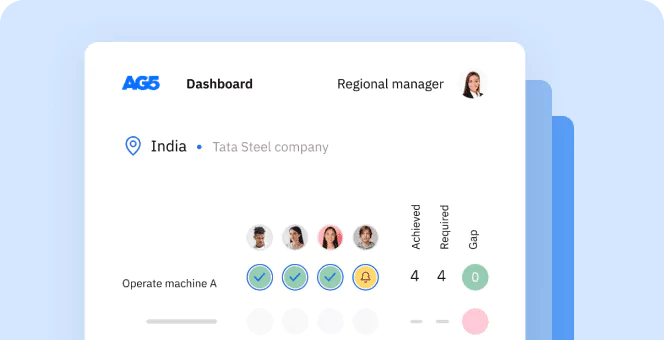
AG5 is the anti-complexity play. If your current “competency management system” is a color-coded Excel file that three people maintain and nobody fully trusts, AG5 is built for you. The platform turns spreadsheet-based skills matrices into visual, interactive dashboards where multiple managers can update and track employee skills and training requirements in real time.
Certification expiration alerts, audit-readiness workflows, and integration with HR and learning systems make it particularly strong for compliance-driven environments. G2 reviewers consistently praise its ease of setup—most teams are live within weeks.
Strengths: Extremely user-friendly for managers and operators. Fast implementation. Strong in compliance and certification tracking. Available in 30+ languages. Good value for operations-focused teams.
Considerations: AG5 is fundamentally a skills tracking tool, not a talent management platform. It doesn’t offer career pathing, talent marketplace functionality, succession planning, or strategic workforce planning. Organizations that need to connect skills data to broader talent strategy will outgrow it. Reporting capabilities are basic.
Pricing: Starts around €100/month. Custom pricing for larger deployments.
Cloud Assess — Best for On-the-Job Skills Assessment for Deskless Workers
Best for: Construction, trades, field services, and other industries with deskless workers who need practical, observational skill assessments rather than online tests.

Cloud Assess’s visual skills matrix gives managers an at-a-glance view of workforce competencies across roles, departments, and locations. But its real strength is in practical assessment—the platform supports on-the-job observation, offline assessments on mobile devices, and competency tracking tied to real-world task performance.
For organizations with strict training compliance requirements, the ability to set expiry dates for certifications and automatically trigger reassessments is valuable. The platform is cloud-native and works well for distributed teams.
Strengths: Strong mobile and offline capabilities. Visual skills matrix is intuitive. Good compliance tracking with automated reassessments. Competitive pricing for smaller organizations.
Considerations: Less suitable for knowledge workers or white-collar skills management. Analytics and reporting are basic compared to enterprise platforms. Limited information on specific third-party integrations.
Pricing: Skills Matrix from $99/month. Custom pricing for the Pro version.
SkillsDB — Best for Structured Skills Audits with Hands-On Support
Best for: Mid-market organizations that want a comprehensive skills audit and need vendor support to build their competency framework from scratch.
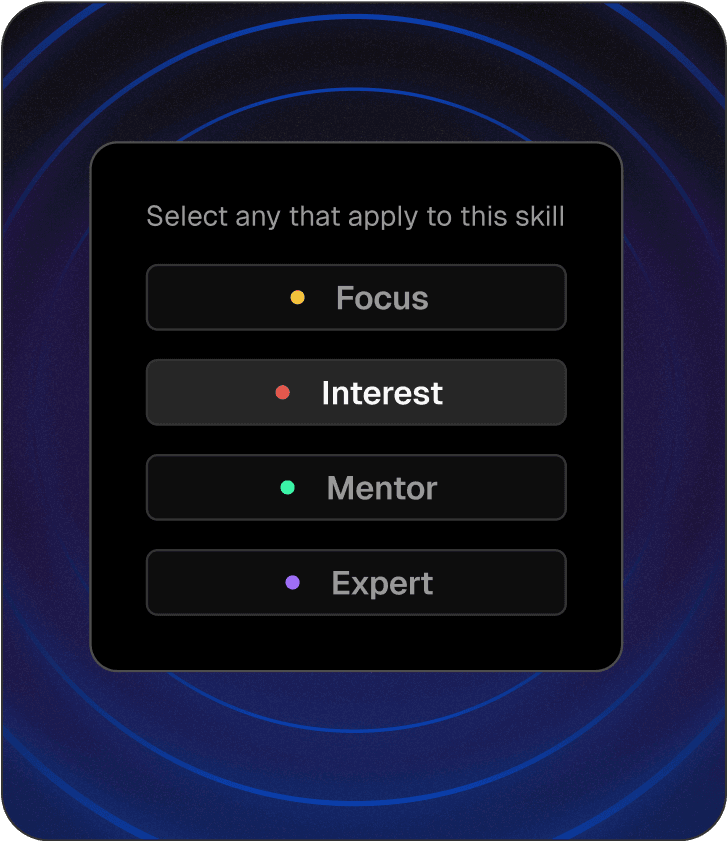
Where TalentGuard automates framework creation with AI, SkillsDB takes a more hands-on approach. The platform provides dedicated onboarding specialists who help organizations structure their skills libraries and competency frameworks. For teams that are overwhelmed by the prospect of “where do we even start?”, this human support is a meaningful differentiator.
The Job Role Builder Tool enables collaborative creation of job roles tailored to the organization. Skills audit workflows provide a structured, step-by-step process for assessing workforce capabilities before investing in development programs or hiring.
Strengths: Dedicated onboarding and implementation support. Strong skills audit methodology. Highly customizable job role and competency frameworks. Proven track record.
Considerations: Lacks the AI-powered automation of newer competitors. The hands-on approach means longer implementation timelines. Pricing isn’t publicly transparent.
Pricing: Custom. Contact SkillsDB directly.
Lexonis — Best for Career Pathing Built on Competency Frameworks
Best for: Organizations that want to link competency frameworks directly to career development and succession planning.
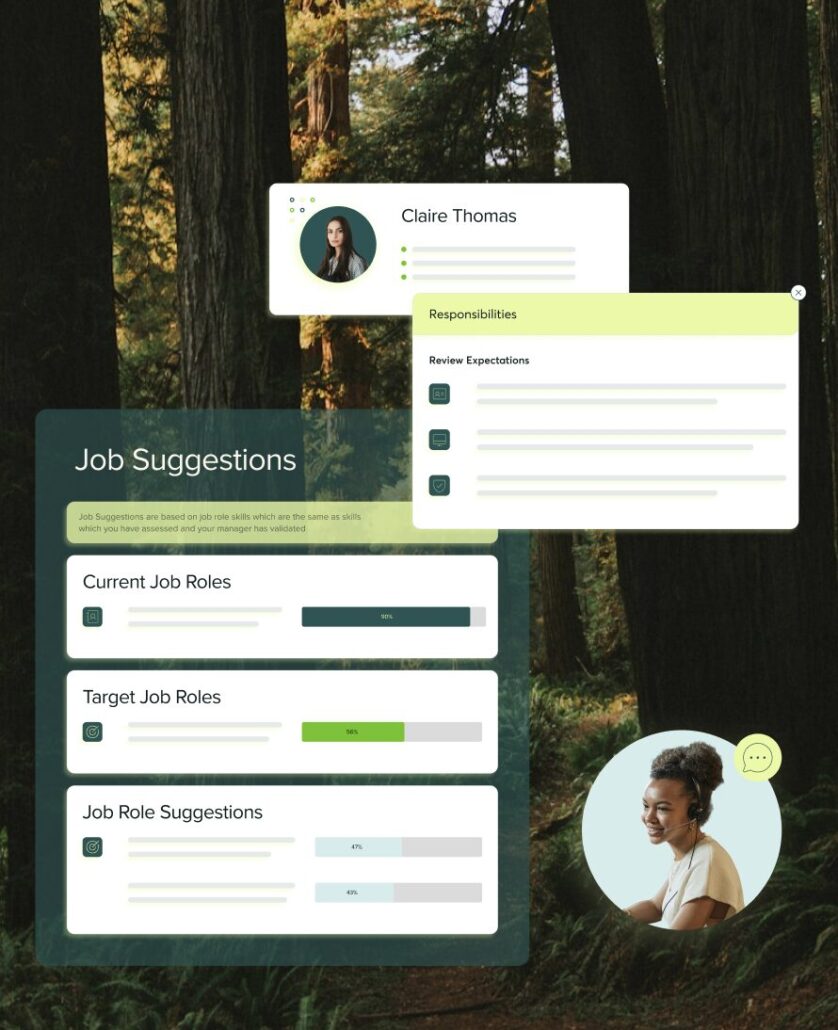
Lexonis combines pre-built frameworks with AI-powered customization. Its TalentScape module visualizes career ladders and maps learning activities to competencies, making it straightforward for employees to see what skills they need for their next role and how to develop them.
The platform’s tiered offerings (Essentials, TalentScape, CareerTrack) let organizations start small and scale. ISO 27001 accreditation and Microsoft Azure hosting address data security concerns for enterprise buyers.
Strengths: Strong career pathing and visualization tools. AI-assisted framework building saves setup time. Scalable tiers. Solid data security credentials.
Considerations: More specialized than broad HR platforms. Limited public information on integrations and pricing. May not be sufficient as a standalone workforce planning solution.
Pricing: Custom. Contact Lexonis.
Think Eleven (SkillStation) — Best for Compliance-Focused Training and Competency Records
Best for: Organizations in regulated industries that need to maintain detailed, evidence-based competency records for audits and compliance.
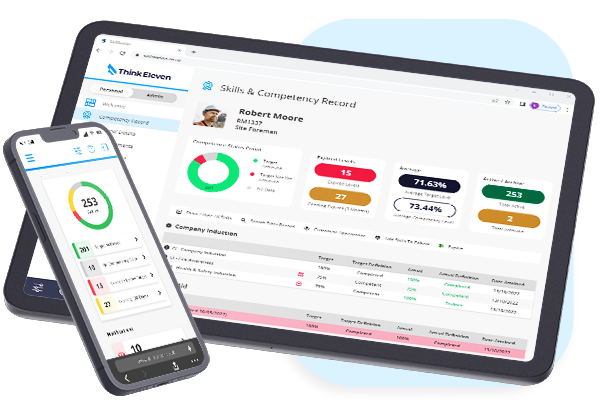
SkillStation is a full-spectrum platform covering training records, certification management, and competency assessments. Its modular design lets organizations add performance appraisals, career planning, and eLearning as needed.
The standout feature is evidence-based competency records: the platform tracks an employee’s entire journey toward proficiency, including training completed, assessments passed, and supporting documentation. During an audit, this is gold.
Strengths: Comprehensive compliance tracking. Evidence-based competency records for audit readiness. Modular and scalable. Customizable dashboards.
Considerations: More focused on compliance tracking than employee development or talent strategy. Limited public integration information. Pricing requires direct inquiry.
Pricing: Custom. Request a demo for a quote.
Mintra (Trainingportal) — Best for Safety-Critical Industries with Rotating Workforces
Best for: Maritime, oil & gas, energy, and other high-risk industries where competency failures have safety implications.
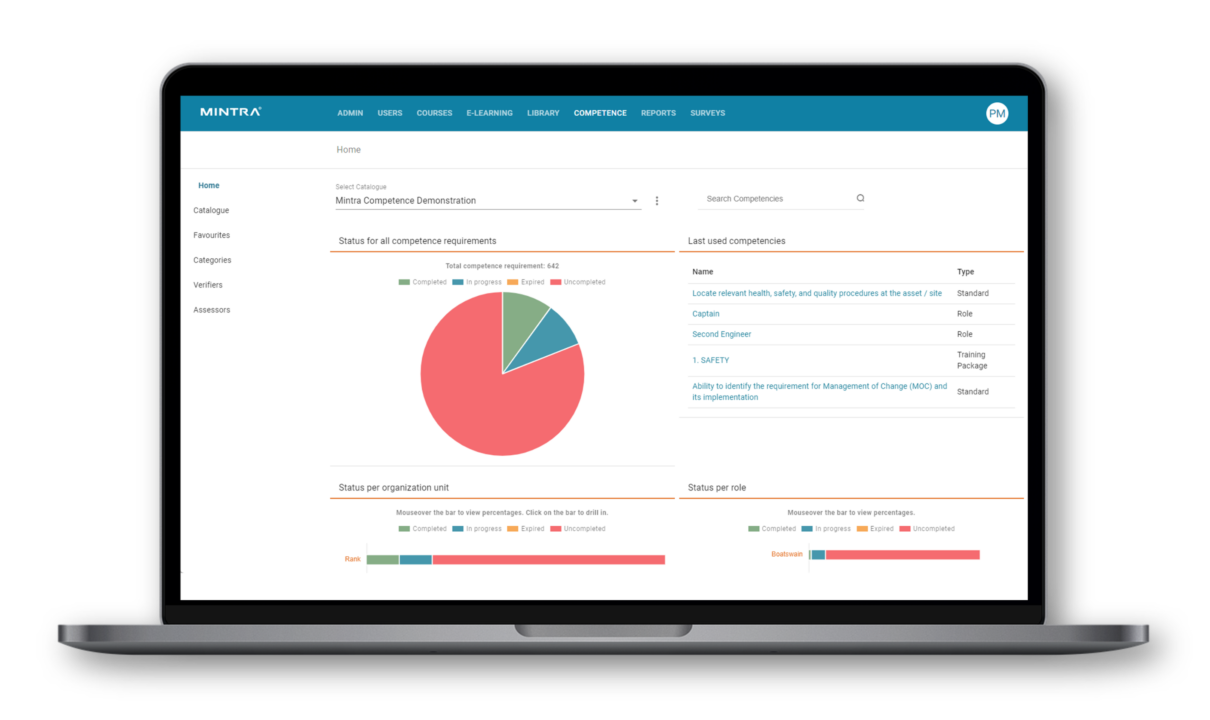
Mintra’s Trainingportal was developed in close collaboration with safety-critical industries. Its competency model is built on three pillars: knowledge, skill, and practice. This isn’t just “did they pass the test?”—it’s “can they demonstrate the skill in a real environment, and do they practice it regularly?”
For organizations with rotating workforces (common in energy and maritime), Mintra tracks competency across rotations and ensures skills are maintained even when they’re not being actively used. The integrated LMS means identified gaps trigger training automatically.
Strengths: Deep specialization in safety-critical competency assurance. Integrated LMS creates a closed loop between gap identification and training. Built for rotating workforce management.
Considerations: Highly specialized—not a good fit for industries outside high-risk environments. Limited public information on integrations with broader HR tech stacks.
Pricing: Custom. Contact Mintra.
HRSG (CompetencyCore) — Best for Rapid Job Description Creation
Best for: HR teams that need to quickly modernize job descriptions and build competency frameworks with a strong pre-built library.
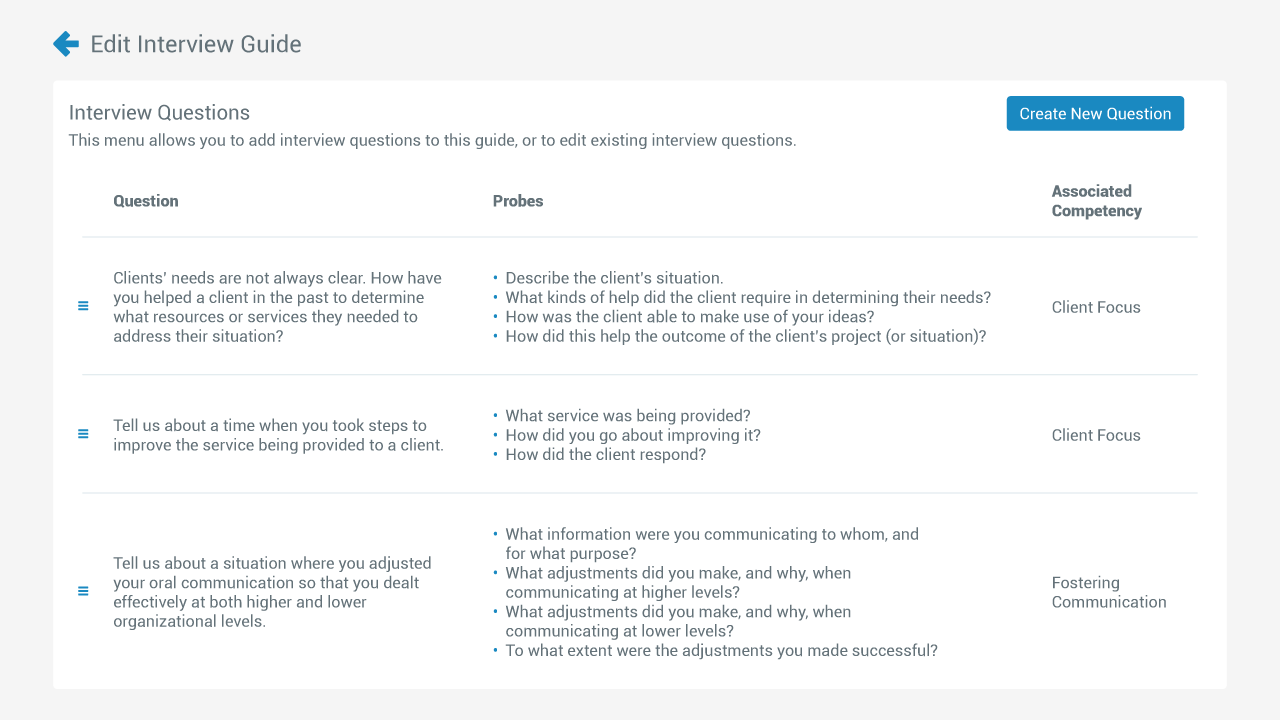
HRSG’s CompetencyCore uses AI to generate job descriptions from an extensive content library of 300+ validated competencies. The platform is focused on the foundational work of competency management: defining roles, mapping skills and competencies to those roles, and creating a common language across the organization.
Its Career Architect module helps organizations build career paths based on competency progression. The library’s depth—with behavioral indicators at multiple proficiency levels—means organizations can get a rigorous competency framework running without starting from zero.
Strengths: Extensive, pre-validated competency library. AI-powered job description generation. Strong foundational framework building.
Considerations: More focused on framework creation than ongoing skills tracking and development. Less emphasis on employee-facing features like career pathing and talent marketplace. Custom pricing only.
Pricing: Custom.
Cornerstone — Best for Organizations Already in the Cornerstone Ecosystem
Best for: Large enterprises already using Cornerstone’s LMS and performance management modules who want to add skills management.
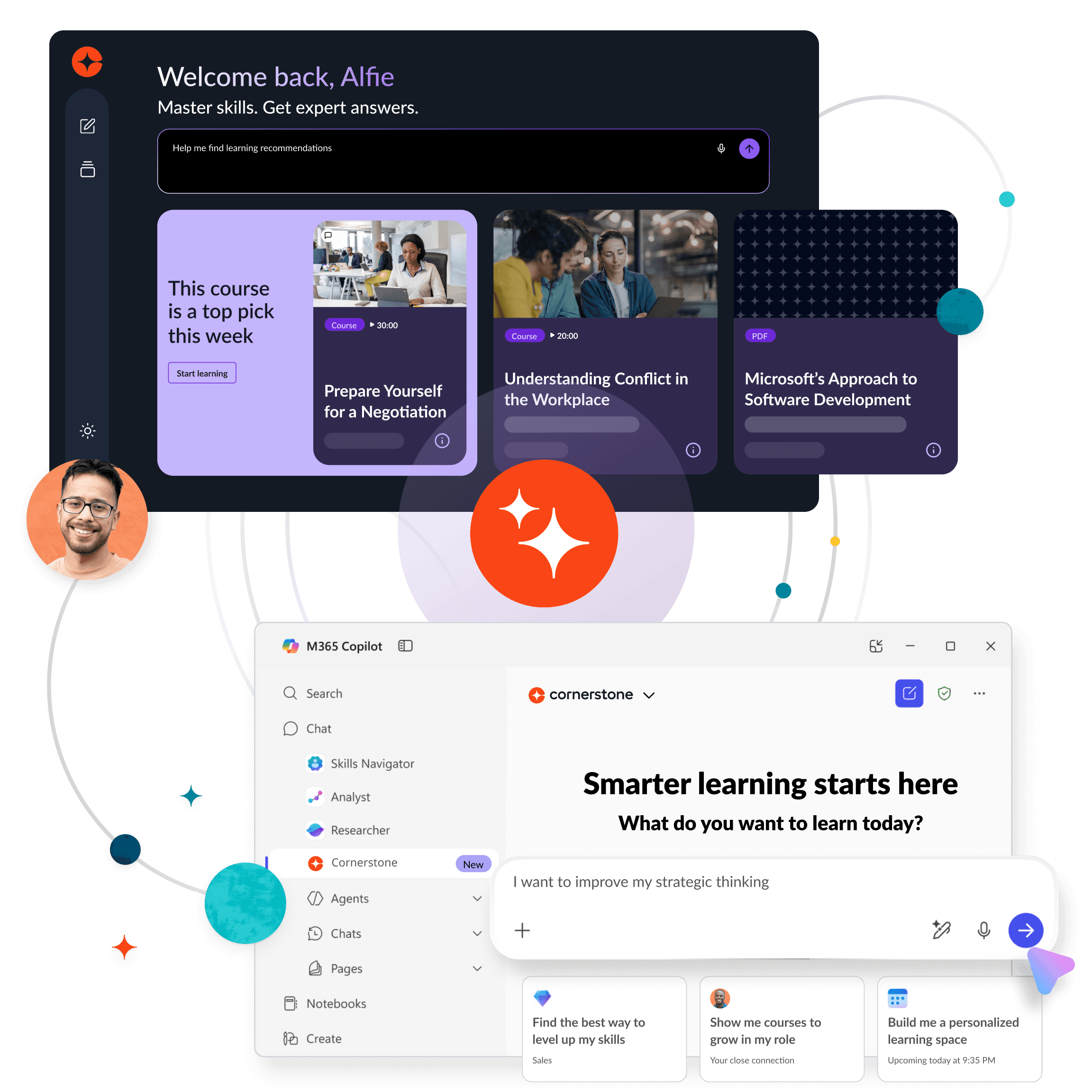
Cornerstone’s Skills Graph is embedded within its broader talent management suite, which includes one of the market’s largest LMS platforms. If your organization already runs learning and performance on Cornerstone, adding skills management is a natural extension—everything shares the same data layer.
The platform’s content marketplace offers access to a vast library of learning content, and its compliance management features are mature. AI-powered skill profiles help map employees to roles and development opportunities.
Strengths: Seamless integration with Cornerstone’s LMS and performance management. Massive content library. Strong compliance management. Enterprise-grade scalability.
Considerations: Skills management is a module within a larger suite, not the platform’s primary focus. The skills ontology isn’t as deep or expert-maintained as purpose-built alternatives. Organizations not already in the Cornerstone ecosystem face a significant implementation effort. Can be expensive.
Pricing: Custom enterprise pricing.
Skills Base — Best for Lightweight Self-Assessment and Skills Visibility
Best for: Small to mid-size organizations or teams within larger organizations that want quick skills visibility through self-assessment surveys.
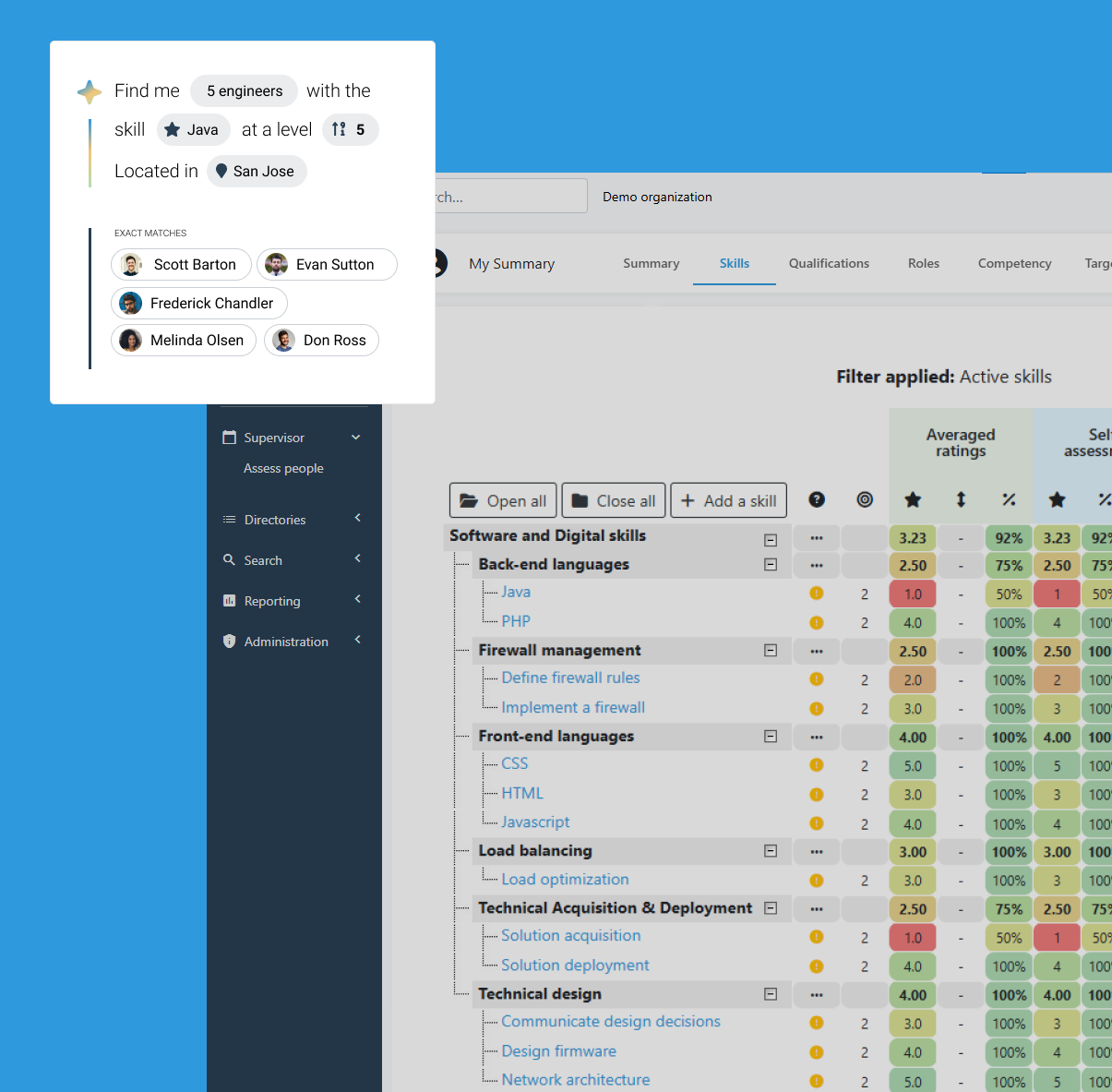
Skills Base takes a minimalist approach: employees complete self-assessment surveys, and the platform generates a skills matrix showing capabilities across teams and departments. It’s the fastest path from “we have no skills data” to “we have a basic skills inventory.”
The free tier makes it accessible for organizations testing the waters. Paid plans add more detailed analytics, team insights, and gap analysis capabilities.
Strengths: Free tier available. Very fast setup. Good for initial skills discovery. Simple, clean interface.
Considerations: Self-assessment only—no validation or evidence-based assessment. Limited development planning and career pathing features. Not designed for compliance or regulated environments. You’ll likely outgrow it quickly.
Pricing: Free tier available. Paid plans for advanced features.
Dossier — Best for Healthcare Credential and Competency Tracking
Best for: Healthcare organizations that need to track clinical credentials, certifications, and competencies in a regulated environment.
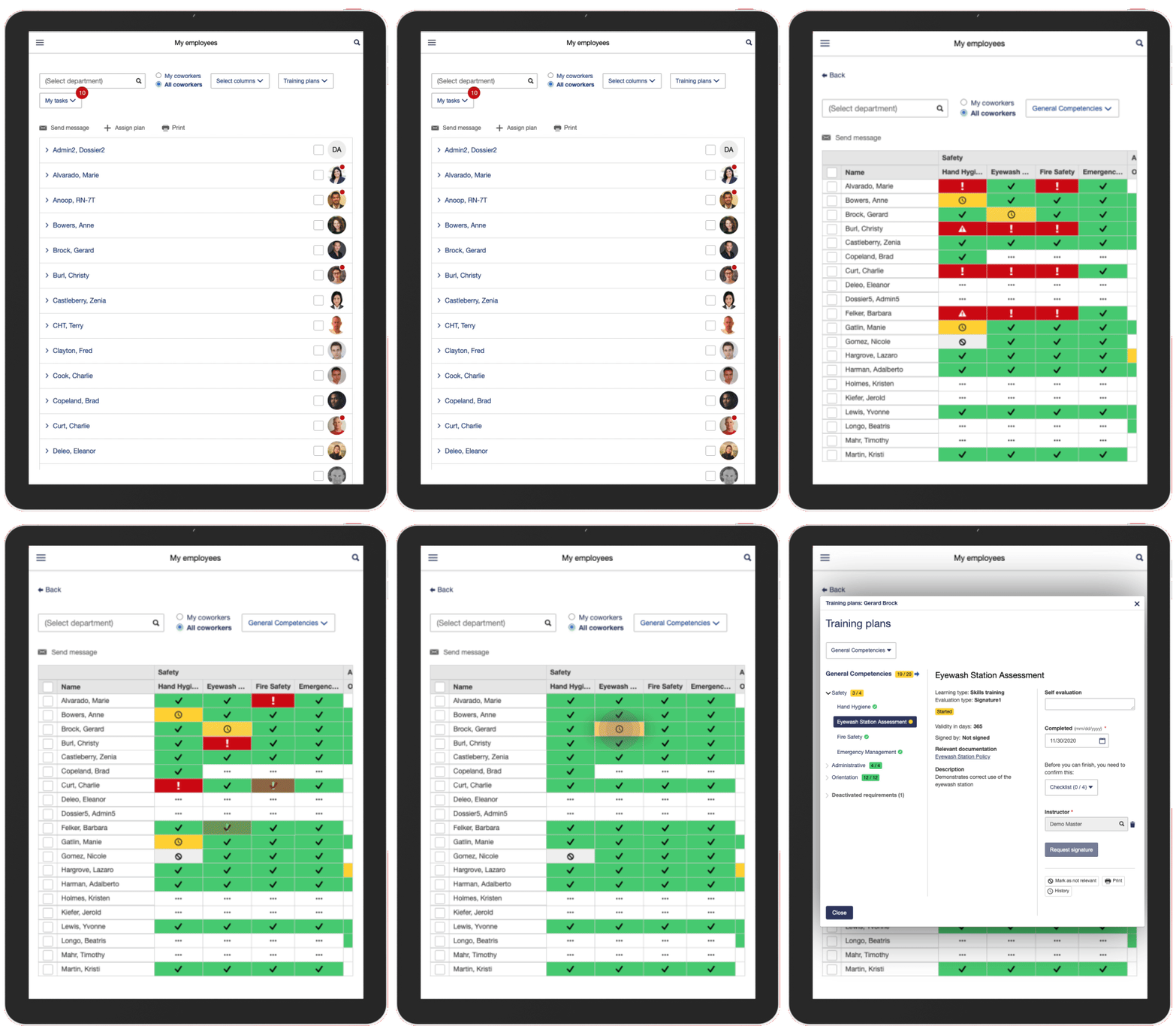
Dossier (originally StaffGarden) specializes in healthcare credentialing and competency tracking. The platform manages provider enrollment, credential verification, and competency documentation—critical in healthcare where regulatory compliance around staff qualifications is non-negotiable.
For healthcare HR teams managing hundreds of clinicians with varying certifications, renewal dates, and competency requirements, Dossier centralizes what would otherwise be a logistical nightmare.
Strengths: Purpose-built for healthcare compliance. Strong credential management. Reduces risk in credentialing workflows.
Considerations: Highly specialized for healthcare. Not suitable for general enterprise competency management. Limited public information on broader HR integrations.
Pricing: Custom. Contact Dossier/StaffGarden.
How to Choose the Right Competency Management Software?
There is no single “best” competency management software. There is only the best fit for your organization’s specific situation. Here’s how to narrow your decision.
Start with your actual problem, not a feature list
Are you trying to replace a spreadsheet? AG5 or Cloud Assess will get you running in weeks. Do you need compliance-grade competency validation for frontline workers? Kahuna or Mintra are built for that. Are you building a skills-based organization where skills data drives career development, workforce planning, and business strategy? That’s where platforms like Fuel50 deliver differentiated value.
Consider your organization’s maturity
If you’re just starting your skills journey, you might not need—and won’t be ready for—an enterprise skills intelligence platform. Start with a skills inventory, get your data right, and then expand to more strategic capabilities. Fuel50 supports this staged approach: you can start with Skills Intelligence and add the Talent Marketplace as your organization matures.
Ask hard questions during demos
Every vendor will demo beautifully. Push beyond the demo with questions like: How long does implementation actually take? What does your skills library look like out of the box? How is the skills data maintained and updated? What do integrations with [your specific HRIS] actually look like? Can I talk to a customer in my industry?
Don’t underestimate change management
The best skills management platform in the world fails if employees don’t engage with it. Look for platforms that invest in the employee experience—personalized career paths, intuitive interfaces, and clear value to the individual, not just to HR. This is where platforms with a talent marketplace (like Fuel50) tend to outperform pure back-office tools on adoption.


